What Are the Tantras? Ancient Esoteric Scripture in Hinduism & Buddhism
Mar 20, 2026
The Tantras are ancient esoteric scriptures and instructional texts that emerged in north India around the 6th century, offering detailed methods for achieving spiritual liberation (moksa) and self-realization within a single lifetime.
Unlike earlier spiritual traditions that promised enlightenment after lifetimes of gradual purification, the Tantras made an audacious claim that liberation is possible now, in this body, in this life. The tantras also shared instructions for how to enjoy earthly pleasures (bhukti).
The word "tantra" itself means "to weave," and these scriptures teach the weaving together body and spirit, the material and the divine, consciousness and energy into a unified path. Where other traditions saw the physical world as an obstacle to transcend, Tantra saw it as the very space from which enlightenment could arise.
The Word Tantra: Meaning, Roots, and Early Usage
The Sanskrit word "tantra" comes from the verbal root tan (तन्), which has several related meanings: "to stretch," "to extend," "to expand," or "to weave."
From this root, the noun "tantra" (तन्त्र) was formed with the suffix -tra, which typically indicates an instrument or means of accomplishing something. So grammatically, "tantra" means "that which stretches" or "that which extends," specifically, an instrument or tool for extending or weaving.
The classical Sanskrit term "tantra" had several concrete meanings before it became associated with esoteric scriptures:
- A loom — the physical apparatus used for weaving cloth
- The warp of a fabric — the threads stretched lengthwise on a loom
- A framework or structure — any systematic arrangement that holds elements together
- A doctrine or system — an organized body of principles or teachings
- A scientific or technical treatise — instructional texts on specific subjects
You can find the word "tantra" used this way across ancient Indian literature. Medical texts like the Charaka Samhita use "tantra" to mean chapters or sections of systematic instruction. The Arthashastra, a political text, uses the term to refer to organized systems of governance. Philosophical texts employ it to describe coherent doctrinal systems.
"Tantra" originally meant any systematic, organized presentation of knowledge, particularly practical, instructional knowledge.
The Tantric Path in Ancient Scripture
The word "tantra" first took on religious meaning around the 5th-6th centuries CE, when it began referring to a specific type of scripture. These new texts had several defining features. First, they claimed to come directly from gods. Hindu tantras said they were revealed by Shiva, Vishnu, or the Goddess, while Buddhist tantras claimed the Buddha taught them in special divine realms. Second, they contained secret teachings meant only for initiated students, not for public distribution. Third, they focused on practical instructions and included detailed step-by-step methods for rituals, meditation, and yogic techniques.
Finally, they presented themselves as authoritative scripture that was just as valid as, or even superior to, older texts like the Vedas or Buddhist sutras. By the 7th-8th centuries, both Hindu and Buddhist traditions were using "tantra" as the standard name for this entire category of esoteric instructional texts.
In the original Sanskrit usage, "tantra" always meant a text, specifically, a scripture containing systematic spiritual methods and instructions. The word referred to the book or teaching itself, not to the practices described in it. You would study a tantra and then practice what it taught, the same way you might read a cookbook and then cook the recipes. The tantra was the instruction manual, not the cooking. For over a thousand years, tantras were authoritative guides that required interpretation by qualified teachers. They provided coherent methods aimed at achieving liberation.
Tantric Lineages & The Historical Emergence of the Tantras
Between the 6th and 10th centuries CE, tantric traditions exploded across the Indian subcontinent, transforming both Hinduism and Buddhism in ways that would permanently reshape Asian religious life.
Multiple tantric traditions emerged simultaneously across different regions, in different religious communities, developing distinct but related practices and texts.
When Did The Early Tantras Actually Appear?
Pinpointing exact dates is difficult because early tantric texts don't provide composition dates, many texts claim timeless divine origin rather than human authorship. Texts were revised and expanded over centuries, and oral transmission preceded written texts by unknown periods. But scholarly consensus places the emergence around the 6th century CE, with major expansion through the 10th century.
The earliest datable references to tantric texts and practices appear in the 6th-7th centuries. Chinese Buddhist pilgrims traveling to India in the 7th century describe encountering tantric practices they found novel and sometimes shocking. Inscriptions from this period reference tantric deities and rituals that don't appear in earlier sources. The earliest layers of texts like the Niśvāsatattvasaṃhitā, a foundational Śaiva tantra, likely date to the 6th-7th centuries based on linguistic analysis and doctrinal content. Early Buddhist tantras like the Mahāvairocana Sūtra probably emerged in the 7th century, representing the beginning of what would become Vajrayāna Buddhism.
By the 8th-10th centuries, tantric literature was flourishing across India. Hundreds of tantric texts were being composed and circulated. Massive commentarial traditions were developing around core tantras, with scholars writing detailed explanations and philosophical elaborations. Royal courts were patronizing tantric teachers and institutions, providing land grants and funding for temples and monasteries. Tantric practices had become mainstream in many regions.
Where Did Tantric Traditions Emerge?
The geographical origins are debated, but most evidence points to several key regions as centers of early tantric development. Kashmir and the northwestern territories, including parts of modern Pakistan and the surrounding Himalayan areas, constituted a major center of tantric development, particularly for Śaiva traditions focused on the god Shiva. The sophisticated philosophical systems of Kashmir Shaivism emerged here between the 8th-11th centuries, producing some of the most intellectually refined tantric thought. Major tantric teachers like Abhinavagupta, whose 10th-11th century works synthesized and systematized centuries of tantric practice and philosophy, worked in Kashmir. The region's relative isolation in mountain valleys may have provided space for experimentation away from orthodox brahmanical centers.
Bengal and the northeastern regions including Assam were crucial centers for both Hindu and Buddhist tantra. The Kālikā Purāṇa and other Śākta tantras focused on goddess worship have strong connections to this region. The great cremation grounds along the Ganges in Bengal became legendary sites for tantric practice, particularly for traditions involving transgressive rituals. Buddhist Vajrayāna tantra also flourished in Bengal before spreading to Tibet, making the region a critical transmission point between Indian and Tibetan Buddhism. The famous tantric adepts Tilopa and Nāropa, whose lineages would become central to Tibetan Buddhism, were associated with Bengal.
South India, particularly Tamil Nadu and surrounding regions, developed their own tantric traditions with distinctive characteristics. The Śaiva Siddhānta school became especially prominent here. Temple-based tantric practice became especially important in the south, where tantric rituals were incorporated into the daily worship cycles of major temples.
Regions like Odisha in eastern India, Madhya Pradesh in central India, and parts of Gujarat in western India also produced tantric texts and communities, though perhaps less prominently than the major centers. Odisha in particular developed important Śākta traditions and became known for its tantric goddess temples.
The Hindu Tantras
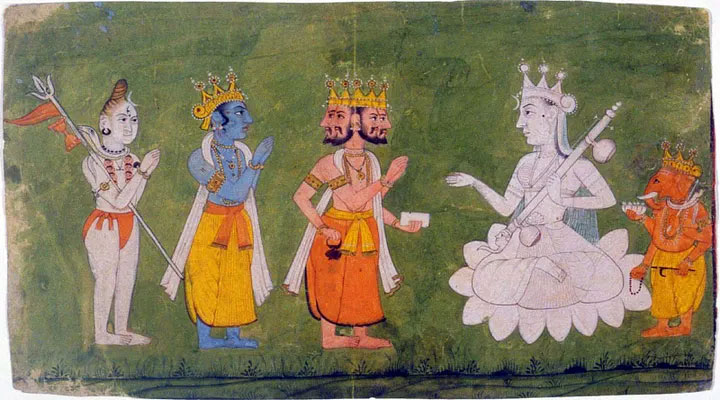
Śaiva (Shiva-focused) Tantras
Śaiva Siddhānta Tradition:
This is the most widespread and "orthodox" branch of Śaiva tantra, particularly dominant in South India from around the 9th century onward. Śaiva Siddhānta developed a sophisticated dualistic theology where Shiva is understood as the supreme lord distinct from individual souls and matter, though he ultimately liberates souls through his grace. These texts were practiced primarily by brahmin priests who maintained conventional social respectability while incorporating tantric techniques into their practice.
The Śaiva Siddhānta corpus consists of 28 primary āgamas (the term they prefer over "tantra"), each typically divided into four sections: knowledge (jñāna), yoga, ritual procedures (kriyā), and conduct (caryā). These texts provided the ritual foundation for major South Indian temple traditions and influenced temple architecture, daily worship routines, and priestly training for centuries.
Key texts:
- Niśvāsatattvasaṃhitā — One of the earliest surviving Śaiva tantras (6th-7th century), representing an early stage before Śaiva Siddhānta fully systematized. Contains five books dealing with everything from cosmology to ritual procedures to yogic practices.
- Rauravāgama — An important systematic text dealing with temple construction, image installation, initiation rituals, and daily worship procedures.
- Kiraṇāgama — Focuses particularly on initiation rites and the theology of Shiva's grace.
- Mataṅgapārameśvara — Extensive treatment of vidyā (spiritual knowledge) and the paths to liberation.
- Parākhyatantra — Detailed instructions on ritual, particularly fire offerings and worship procedures.
- Ajitamahātantra — Comprehensive treatment of temple ritual, initiation, and the relationship between Shiva and the soul.
Bhairava Tantras (Transgressive Traditions):
The Bhairava tantras focus on fierce, wrathful manifestations of Shiva called Bhairava, and they represent a diverse stream within Śaiva practice. These traditions emerged roughly contemporaneously with or slightly earlier than Śaiva Siddhānta mentioned above but took a radically different approach.
Many Bhairava tantras prescribed practices that deliberately violated brahmanical norms and included meditation in cremation grounds, consumption of meat and alcohol, use of human skulls and bones as ritual implements, sexual practices, and engagement with death and impurity. The aim was rapid transformation, using shocking and impure elements to shatter ordinary consciousness and transcend social conditioning. Texts like the Brahmayāmala demonstrate this transgressive approach and were considered too dangerous or inappropriate for mainstream practitioners.
However, not all Bhairava tantras followed this path. The Vijñāna Bhairava Tantra, for instance, presents 112 subtle meditation techniques focused on breath, awareness, sensation, and the direct recognition of consciousness.
Key texts:
- Brahmayāmala — One of the most important and earliest tantras (7th-8th century), massive in scope, dealing with fierce goddesses, elaborate rituals, sexual practices, and transgressive elements. Hugely influential on later tantric development.
- Jayadrathayāmala — Another extensive early tantra focusing on yoginīs (female tantric deities/practitioners) and containing detailed ritual instructions including transgressive practices.
- Siddhayogeśvarīmata — Centers on the goddess Siddhayogeśvarī and contains elaborate ritual systems, sexual practices, and methods for acquiring supernatural powers.
- Tantrasadbhāva — Important early text dealing with yoginī worship and transgressive ritual.
- Svacchandatantra — "The Tantra of One's Own Will"—focuses on Svacchanda Bhairava, contains extensive material on mantra, ritual, and yogic practice.
- Netra Tantra — Focuses on Amṛteśa (Netreśa), a form of Shiva, dealing with protection, exorcism, and yogic practices.
- Vijñānabhairava — Also known as the Vigyan Bhairav TantraVigyan Bhairav Tantra, this is a relatively short but profound text presenting 112 meditation techniques for realizing ultimate consciousness.
Kashmir Shaivism/Trika Tradition:
Kashmir Shaivism emerged in Kashmir between the 8th-12th centuries as a non-dual Śaiva tradition that integrated Bhairava tantra practices with sophisticated philosophical elaboration. Unlike the dualistic Śaiva Siddhānta, Kashmir Shaivism taught that ultimate reality is one consciousness (Śiva) that freely manifests as everything through its power (Śakti). The individual soul is not separate from Śiva but has forgotten its true identity. Liberation comes through recognition (pratyabhijñā) of one's true nature as Śiva.
The Trika ("threefold") school within Kashmir Shaivism particularly emphasized the integration of three main goddesses (Parā, Parāparā, and Aparā) and three primary energies. These traditions maintained tantric ritual practices while developing elaborate philosophical systems that addressed metaphysics, aesthetics, linguistics, and consciousness studies.
Key texts:
- Mālinīvijayottaratantra — Core Trika scripture dealing with the goddess Mālinī and presenting the essential non-dual philosophy and practices of the tradition.
- Svacchandatantra — Also important in Kashmir Shaivism, interpreted through non-dual philosophy.
- Vijñānabhairava — Central to Kashmir Shaivism's meditation practices, interpreted as methods for recognizing pure consciousness.
- Parātriṃśikā — Short but important text on Śakti and the power of mantra, extensively commented on by Abhinavagupta.
- Rudrayāmala — Important early tantra dealing with Rudra forms and various ritual and yogic practices.
Śākta (Goddess-focused) Tantras
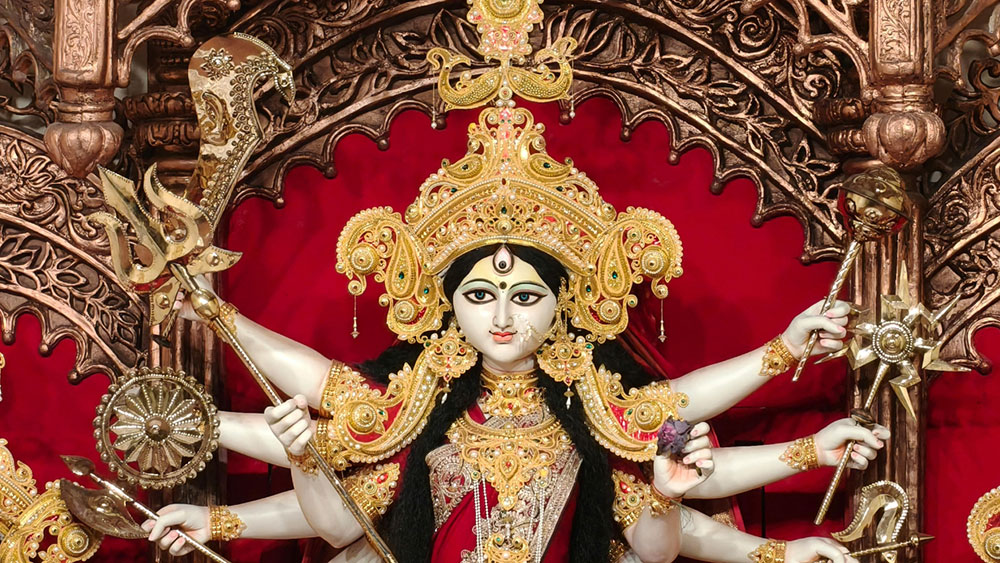
Śrīvidyā Tradition:
Śrīvidyā ("Auspicious Knowledge") is a sophisticated goddess-centered tradition focusing on Tripurasundarī (also called Lalitā or Śrī), the "Beautiful Goddess of the Three Cities." This tradition became particularly popular among brahmin practitioners and royalty from around the 10th century onward.
Central to Śrīvidyā is the Śrīcakra or Śrīyantra, an intricate geometric diagram of nine interlocking triangles that represents the goddess and the cosmos. Practitioners engage in sophisticated mantra practices (particularly the fifteen-syllable Pañcadaśī mantra or sixteen-syllable Ṣoḍaśī mantra), and meditation on the yantra's structure. The tradition developed detailed theological and philosophical systems explaining the metaphysics of sound, the structure of reality, and methods for realizing the goddess as supreme consciousness.
Key texts:
- Tantrarajatantra — "King of Tantras"—comprehensive treatment of Śrīvidyā ritual, mantra, and philosophy.
- Yoginīhṛdaya — "Heart of the Yoginī"—important text on the Śrīcakra, its worship, and the metaphysics of the goddess.
- Vāmakeśvara Tantra — Central Śrīvidyā text dealing with the worship of Tripurasundarī and ritual procedures.
- Nityāṣoḍaśikārṇava — Focuses on the worship of the sixteen Nityā goddesses associated with the lunar phases.
- Paraśurāma Kalpasūtra — Detailed ritual manual for Śrīvidyā worship attributed to the sage Paraśurāma.
Kālī/Fierce Goddess Traditions:
These traditions center on fierce, often terrifying forms of the goddess, particularly Kālī, Tārā, Chinnamastā, and other Mahāvidyās (Great Wisdom goddesses). These traditions flourished particularly in Bengal and northeastern India. The fierce goddesses are understood as embodying the destructive, transformative aspects of divine power, such as through Kālī with her necklace of skulls dancing on Śiva's corpse, Chinnamastā holding her own severed head.
These traditions often incorporated meditation in cremation grounds, rituals involving the "five M's" (pañcamakāra—meat, fish, wine, parched grain, and sexual union, all beginning with 'M' in Sanskrit), use of impure substances, and deliberate violation of caste and purity rules. The practices aimed at transcending conventional dualities of pure/impure, sacred/profane, through direct confrontation with what society considered most polluting and terrifying.
Key texts:
- Mahānirvāṇa Tantra — "Great Liberation Tantra"—relatively late (17th-18th century) and more sanitized than earlier texts, but widely known and influential, dealing with Kālī worship and tantric practice.
- Kulārṇava Tantra — Important text of the Kaula tradition, dealing with the worship of Kuladevi and transgressive ritual including the pañcamakāra practices.
- Kālikā Purāṇa — Though titled a Purāṇa, functionally a tantric text focused on Kālī and Kāmākhyā, containing detailed tantric rituals and practices associated with the Kāmākhyā temple in Assam.
- Niruttara Tantra — Focuses on the goddess Tārā and her worship, particularly important in Bengal.
- Todala Tantra — Centers on Tārā and includes detailed ritual instructions and mantra practices.
- Kubjikāmata Tantra — Extensive text focusing on the goddess Kubjikā, containing elaborate ritual systems and yogic practices.
- Ṣaṭsāhasrasaṃhitā — Large collection dealing with Kubjikā worship and various tantric practices.
Vaiṣṇava (Vishnu-focused) Tantras/Āgamas
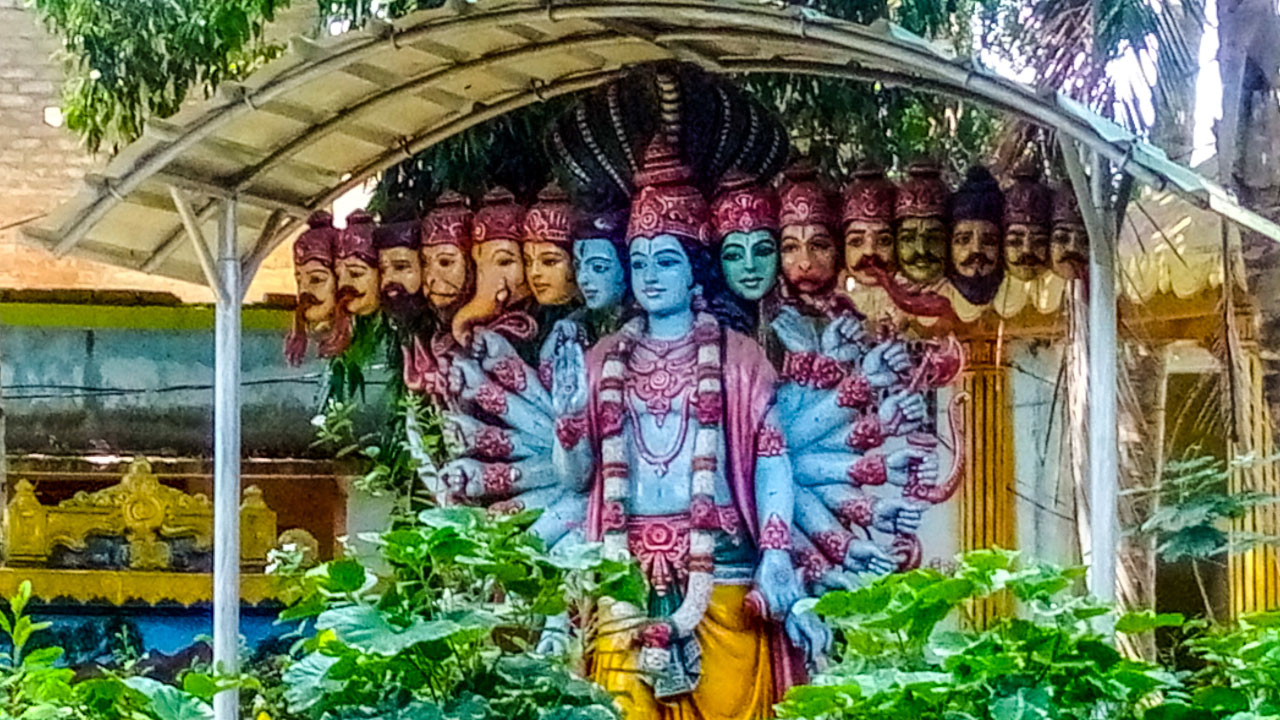
Pāñcarātra Tradition:
The Pāñcarātra tradition represents Vaiṣṇava tantra, which are tantric practices focused on Vishnu and his avatars, particularly Krishna. This tradition predates the explosion of Śaiva and Śākta tantra, with roots possibly extending to the early centuries CE. Pāñcarātra became the ritual foundation for many Vaiṣṇava temples, particularly in South India.
Pāñcarātra theology is generally less transgressive than Śaiva and Śākta tantra. It maintains devotional bhakti as central while incorporating tantric ritual technologies. The tradition emphasizes the worship of Vishnu's vyūha forms (emanations) which include Vāsudeva, Saṅkarṣaṇa, Pradyumna, and Aniruddha, and developed sophisticated image worship, temple ritual, and initiation systems.
Key texts:
- Jayākhya Saṃhitā — One of the core Pāñcarātra texts, dealing with cosmology, ritual, and temple worship.
- Sāttvata Saṃhitā — Important text on ritual procedures, initiation, and temple practices.
- Pauṣkara Saṃhitā — Focuses on image worship, temple construction, and daily worship routines.
- Īśvara Saṃhitā — Deals with theology, ritual, and the relationship between Vishnu and devotees.
- Ahirbudhnya Saṃhitā — Extensive philosophical treatment of Pāñcarātra metaphysics, cosmology, and practice.
- Lakṣmī Tantra — Unique text presenting teachings from the perspective of Lakṣmī (Vishnu's consort), dealing with Śakti theology within a Vaiṣṇava framework.
Buddhist Tantras (Tantric Buddhism)
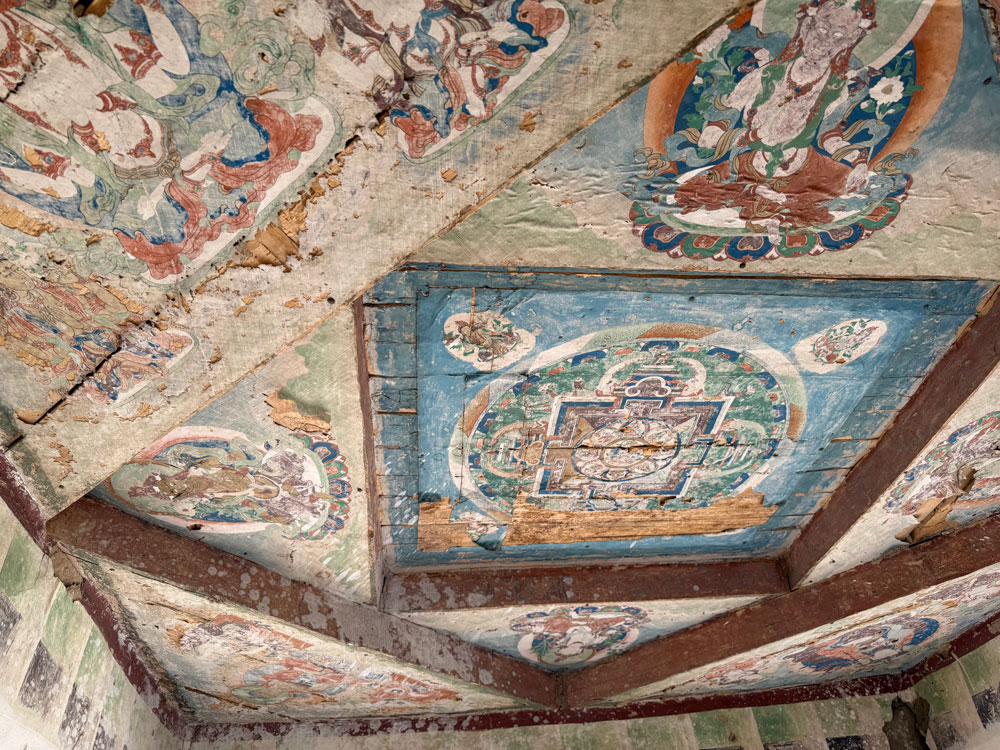
Buddhist tantras are traditionally classified into four categories (in Tibetan tradition) or three (in earlier Indian classification), representing increasingly advanced and esoteric practices. This classification reflects both the perceived power and danger of the practices and the level of practitioner qualification required.
Kriyā Tantras (Action Tantras)
Kriyā tantras represent the earliest and most "external" level of Buddhist tantra, emphasizing ritual purity, external worship procedures, and seeing the deity as an external lord to be honored and supplicated. These texts focus heavily on ritual cleanliness, bathing, proper dress, precise offerings, and elaborate external ceremonies. The practitioner maintains a clear distinction between themselves and the deity, approaching the deity as a servant approaches a lord.
Liberation comes through the deity's grace combined with the practitioner's devotion and proper ritual performance. These are considered suitable for practitioners who are still developing and not ready for more advanced non-dual practices.
Key texts:
- Susiddhikara Sūtra — Important early text on ritual procedures, mantra recitation, and methods for accomplishing various goals through tantric ritual.
- Susiddhikara Sūtra — "Questions of Subāhu"—deals with ritual procedures, purification, and proper worship methods.
Caryā Tantras (Performance Tantras)
Caryā tantras represent a transitional category balancing external ritual (as in Kriyā) with internal meditation and visualization. The relationship to the deity shifts where the practitioner now relates to the deity more as a friend than as a distant lord, though still maintaining some distinction. These texts introduce more sophisticated visualization practices while retaining emphasis on ritual purity and external worship.
Key texts:
- Mahāvairocana Sūtra (Vairocanābhisaṃbodhi) — Major text sometimes classified as Caryā, sometimes as Kriyā or Yoga tantra. Presents teachings of Vairocana Buddha, including extensive mandala systems, visualization practices, and ritual procedures. Extremely influential in East Asian esoteric Buddhism (Shingon in Japan, Tangmi in China).
Tantric Yoga Tantras
Yoga tantras emphasize internal meditation and visualization over external ritual, though ritual elements remain important. The practitioner now visualizes themselves as the deity, not merely honoring an external figure but identifying with the enlightened form. This represents a significant shift toward non-dual practice. The relationship is now one of equals or even identity, like friends of equal status.
These texts introduce elaborate visualization systems, complex mandala meditations, and sophisticated understanding of how visualization transforms consciousness. The practitioner maintains stable visualization of themselves as the deity while understanding this deity-form as manifesting enlightened qualities.
Key texts:
- Sarvatathāgatatattvasaṃgraha — "Compendium of All the Principles of the Tathāgatas"—one of the most important Yoga tantras, presenting an elaborate system of five buddha families, detailed mandala structures, and initiation rituals. Hugely influential on the development of later Buddhist tantra.
- Vajraśekhara Sūtra — "Vajra Peak Sutra"—deals with the vajra (diamond/thunderbolt) symbolism, mandala practices, and advanced visualization.
- Paramādya Tantra — Important Yoga tantra dealing with supreme primordial buddha-nature and methods for its realization.
Anuttarayoga Tantras (Highest Yoga Tantras / Unsurpassed Yoga Tantras)
Anuttarayoga tantras represent the most advanced, esoteric, and powerful Buddhist tantric practices. These texts introduce methods considered capable of producing buddhahood most rapidly, potentially within one lifetime or even within years through intensive practice.
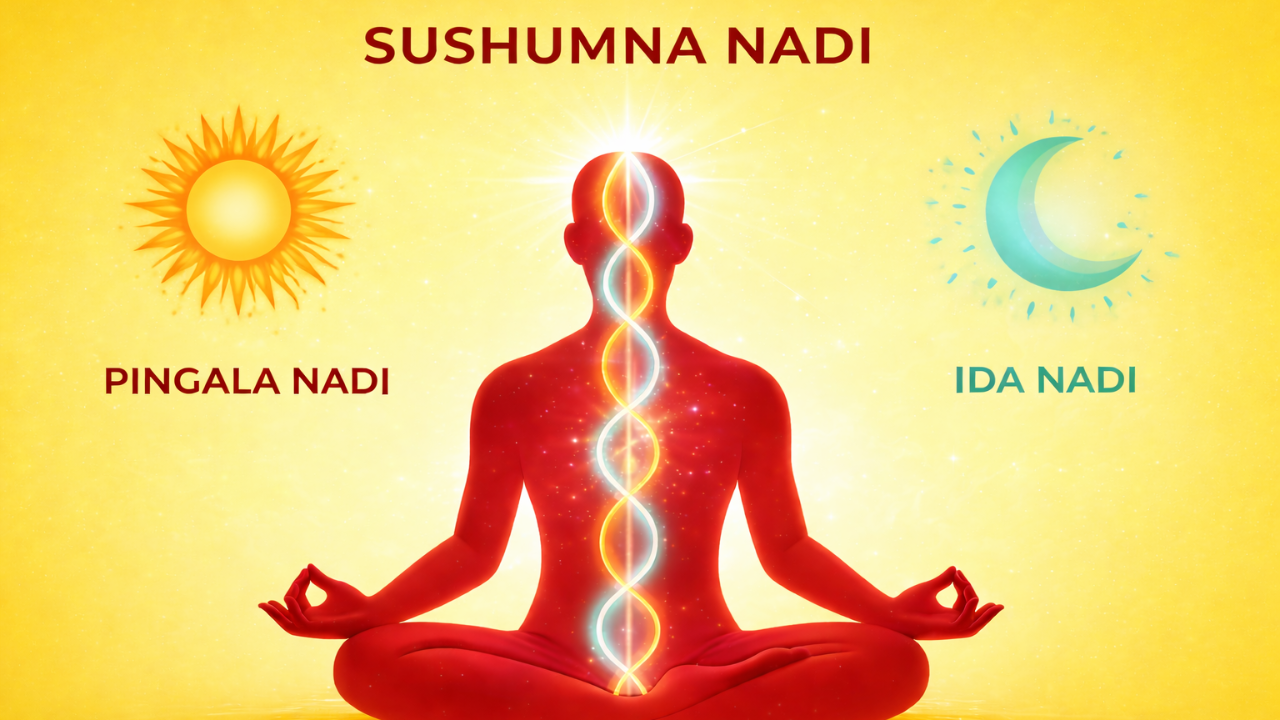
The philosophy is fully non-dual: practitioner and deity are ultimately identical, nirvana and samsara are not different realms but different experiences of the same reality, all phenomena are understood as empty yet appearing, and negative emotions are directly transformed into wisdom rather than suppressed. These practices work directly with the subtle body, which are chakras, channels, energies, and consciousness.
Anuttarayoga tantras are further divided into three subcategories:
Father Tantras (emphasizing method/skillful means/compassion):
Father tantras emphasize the development of illusory body and work particularly with the subtle body's channels and energies. They focus on methods for recognizing the empty, illusory nature of all phenomena and developing skillful means for benefiting beings.
Key texts:
- Guhyasamāja Tantra — "Secret Assembly Tantra"—one of the earliest and most important Anuttarayoga tantras (probably 8th century), presenting elaborate practices for realizing the illusory nature of reality and achieving buddhahood through sexual yoga and subtle body practices.
- Yamāntaka Tantra — Focuses on Yamāntaka (Vajrabhairava), the wrathful buffalo-headed form who defeats death itself. Contains practices for overcoming death and achieving immortality through realization.
- Vajrabhairava Tantra — Related to Yamāntaka, focusing on the fierce manifestation of Mañjuśrī as Vajrabhairava, with elaborate visualization and mantra practices.
Mother Tantras (emphasizing wisdom/emptiness):
Mother tantras emphasize the experience of clear light mind and work particularly with bliss and emptiness unified. They focus on wisdom and the direct realization of emptiness, and often include sexual yogas understood as methods for generating blissful states that are then unified with emptiness realization.
Key texts:
- Cakrasaṃvara Tantra — "Wheel of Great Bliss"—major Mother tantra focusing on the deity Cakrasaṃvara (Heruka) in union with Vajravārāhī, including sexual yoga practices and cremation-ground imagery. Extremely important in Tibetan Buddhism.
- Hevajra Tantra — Another major Mother tantra, presenting the two-faced, four-armed Hevajra embracing his consort Nairātmyā. Contains detailed instructions on sexual yoga, the nature of reality, and methods for realizing the union of bliss and emptiness.
- Caṇḍamahāroṣaṇa Tantra — Focuses on wrathful deity practices and transformation of anger into wisdom.
- Buddhakapāla Tantra — Centers on a specific form practicing skull cup symbolism and transformation of death into enlightenment.
Non-dual Tantras (integrating both aspects):
Some tantras are classified as integrating both method and wisdom equally, or as transcending the father/mother distinction.
Key texts:
- Kālacakra Tantra — "Wheel of Time"—unique and complex tantra (probably 10th-11th century) incorporating astrology, cosmology, physiology, history, and prophecy alongside tantric practice. Presents an elaborate system of outer, inner, and alternative Kālacakra, with practices involving complex calculations, astrological correlations, and subtle body work. Developed a distinct tradition with its own institutional structures. Sometimes classified separately from other Anuttarayoga tantras.
- Guhyagarbha Tantra — "Secret Essence Tantra"—extremely important in the Nyingma (ancient) school of Tibetan Buddhism, presenting teachings on the primordial buddha Samantabhadra and methods for recognizing primordial purity.
Tantric Texts and Scriptural Transmission
The Tantras are instructional manuals and practical guides for accomplishing specific spiritual and worldly results through precise techniques. This practical, technical character distinguishes tantric literature from virtually all earlier Indian religious texts. The Vedas, while containing ritual instructions, are primarily hymns and cosmological speculation. The Upanishads are philosophical dialogues exploring the nature of ultimate reality. The Buddhist sutras present the Buddha's teachings in narrative and doctrinal form. The Puranas tell mythological stories of gods and cosmic history. The Tantras provide step-by-step instructions for practices that produce experiences, attainments, and transformations in the practitioner.
Tantric knowledge was never meant to be freely available to anyone who could read. The texts themselves repeatedly insist that their contents must be kept secret, transmitted only to qualified and initiated students, never revealed to the unworthy. The fundamental mechanism of tantric transmission was initiation (dīkṣā in Hindu traditions, abhiṣeka in Buddhist traditions). Without initiation from a qualified guru, a person could not legitimately practice tantra. Practicing tantric techniques without proper initiation is not only ineffective but dangerous, potentially resulting in spiritual harm, madness, or worse. The student approached a teacher (guru) who had himself been initiated and trained in a particular tantric lineage. If the teacher accepted the student, a formal initiation ritual was performed.
After initiation, instruction continued through oral teaching from the guru. The written texts, even when available, were understood as incomplete without this oral commentary. The guru explained what the text really meant, demonstrated how practices should actually be performed, corrected the student's understanding and technique, and revealed "hidden" or "secret" aspects of the teaching not found in the written words.
Tantric Texts and the Khajuraho Temples
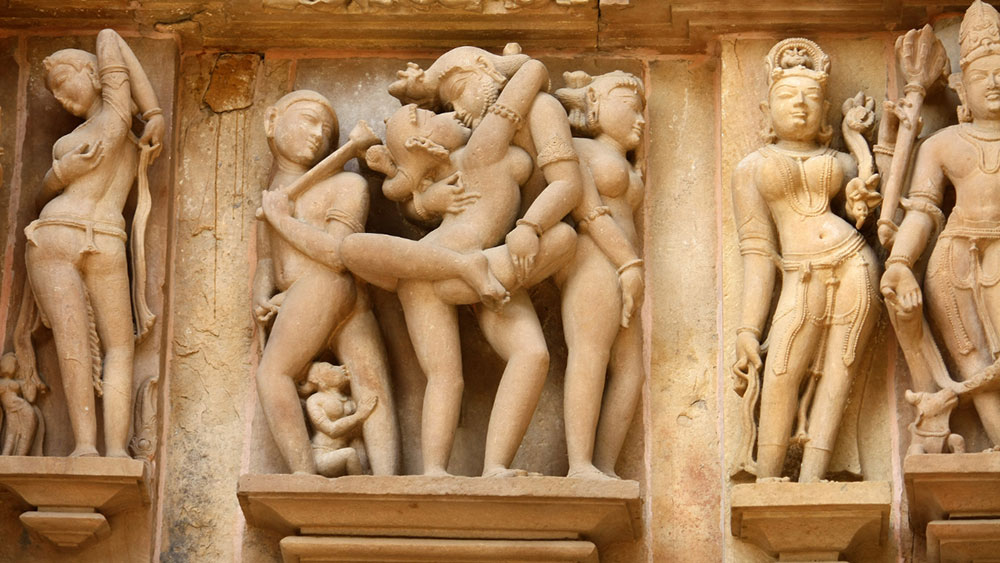
The Khajuraho temples and the tantric scriptures emerged during the same historical period. The temples at Khajuraho, constructed primarily between the 9th and 11th centuries, give us a rare window into how tantric ideas were being understood and applied in real time. They show us what tantra looked like when it was a living, evolving force.
Of the original 85 temples built by the Chandela rulers, 22 survive today as a UNESCO World Heritage Site. These buildings are physical expressions of tantric philosophy being translated into architecture, sculpture, and sacred space during the very period when the major tantric texts were being written.
Specifically, the Kaula and Kapalika lineages (both transgressive Bhairava tantric traditions) are documented as having a presence there, along with Bhairavi practitioners and female tantric adepts who played important roles in initiatory rites. This means that while texts like the Brahmayāmala and various Bhairava tantras were circulating and being copied, practitioners were simultaneously building temples designed to embody those same teachings.
Core Tantric Teachings and Philosophy
Earlier Indian spirituality, both Hindu and Buddhist, generally taught that liberation required withdrawing from worldly involvement. The renunciant ideal dominated, which means leave your family, abandon possessions, live as a wandering ascetic or forest hermit, meditate in isolation, transcend bodily needs and desires. The world and the body were seen as obstacles to overcome, traps that bound you to suffering and ignorance. Tantric traditions argued that renouncing the world wasn't necessary and might even be counterproductive. Instead of fleeing from embodied existence, tantra taught practitioners to engage it fully as the vehicle for transformation. The body is the very instrument of liberation.
This meant using the world itself as a means of liberation. The logic is that if everything is ultimately divine or empty of inherent existence, then nothing is truly impure. The distinction between pure and impure, sacred and profane, is a mental construction that tantric spiritual practice seeks to dissolve. By engaging with what conventional morality considers most polluting or dangerous within carefully structured ritual contexts with specific intentions, the practitioner breaks through limiting conceptual beliefs and realizes the fundamental purity or emptiness of all phenomena.
Sexual Energy in Tantra & Sacred Sexuality
Sexual practices exist in some tantric traditions, but sexuality is one possible expression among many techniques, not tantra's central focus or defining characteristic. The overwhelming majority of tantric literature deals with mantra recitation, deity visualization, fire rituals, meditation techniques, philosophical concepts, energy channel work, and non-sexual yogic practices. Sexual elements appear in specific sub-traditions, particularly in certain Bhairava tantras and the highest Buddhist tantras, but even within these texts, sexual practices typically occupy limited sections alongside extensive non-sexual material.
A complete tantric curriculum might involve years of foundational practices before any sexual techniques were introduced, and many accomplished practitioners never engaged in sexual practices at all. The sexual union of male and female practitioners symbolizes the union of consciousness and energy, wisdom and compassion, Shiva and Shakti, emptiness and bliss, which are fundamental metaphysical principles that tantric philosophy understands as underlying all reality.
In Buddhist tantra, sexual union represents the non-duality of wisdom (female) and compassion (male), or the inseparability of emptiness and bliss. The physical act serves as a support for advanced meditation techniques working with subtle body energies.
The historical reality is that most tantra practitioners did not perform sexual rites, and those who did represented a small minority engaged in advanced, highly specialized practices. The vast majority of tantric practitioners, both historically and today, practice entirely non-sexual forms of tantra. Even within traditions that included sexual practices in their text, these were restricted to specific initiatory levels, required special qualifications, and were practiced only by a small number of advanced practitioners. Many texts present sexual practices as options for highly qualified individuals while providing alternative non-sexual methods for achieving the same results.