Who Is Guru Rinpoche? The Life & Teachings of Padmasambhava
May 26, 2026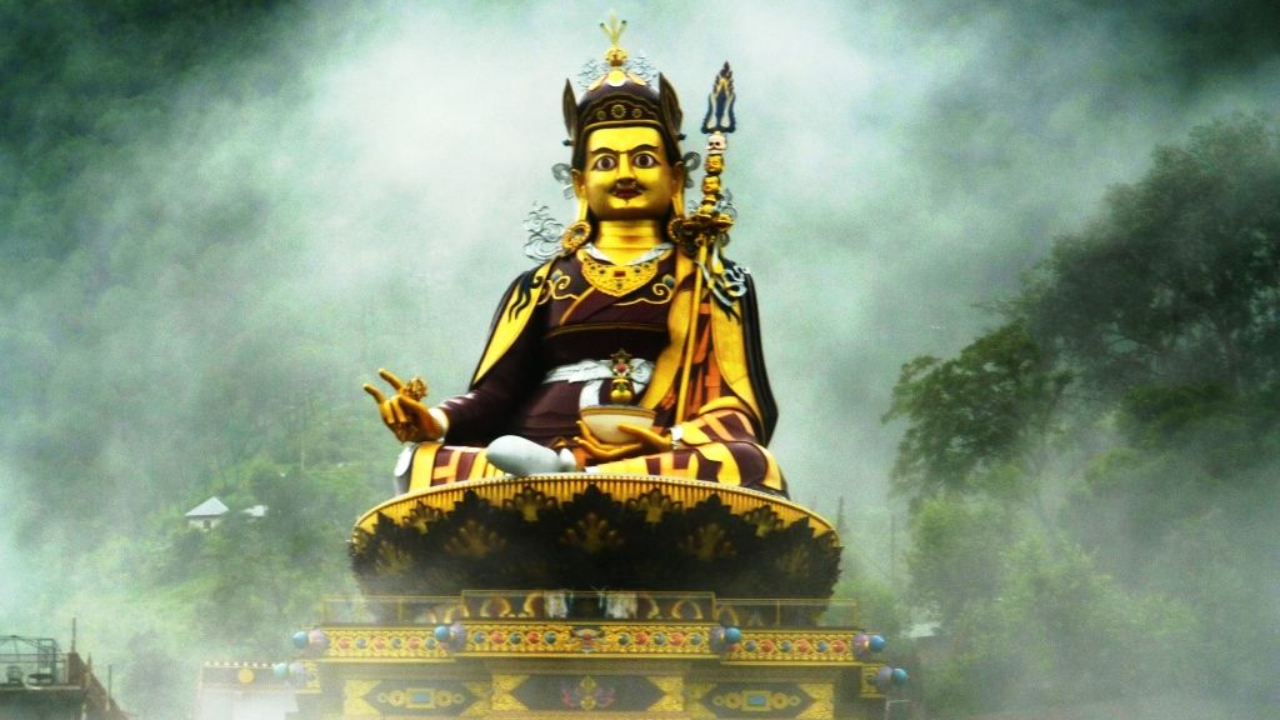
Padmasambhava arrived in Tibet in the 8th century at the invitation of King Trisong Detsen, who had been trying, and failing, to build the first Buddhist monastery on Tibetan soil. The problem was the indigenous spirits and deities of the land itself, whose interference kept dismantling whatever was built by day. No ordinary monk could solve that. So the king sent for someone who wasn't one.
Padmasambhava, also called Guru Rinpoche, the Lotus-Born Guru, and the Glorious Lotus Born, was already legendary. Born miraculously from a lotus in the Dhanakosha lake in Oddiyana, he had spent lifetimes mastering Tantric practice, defeating demons, and transmitting the most advanced teachings of Vajrayana Buddhism across India and the Himalayas. When he reached Tibet, Samye Monastery was completed and the first Tibetan monks were ordained. Through this, a tradition was born.
He is venerated as the Second Buddha and a direct manifestation of Buddha Amitabha. He transmitted the Dzogchen teachings, known as the most direct path to recognizing the nature of mind. He established Tantric ritual lineages still practiced today. He hid thousands of terma (treasure teachings) throughout Tibet, embedded in rock and earth and the minds of future students, to be revealed by tertöns across the coming centuries as the world needed them.
He is also said to have never died. He departed Tibet on a rainbow body, and according to tradition remains accessible and can be approached through guru yoga.
This article traces who Padmasambhava was as a human teacher in 8th-century Tibet, and who he is as a timeless Buddha in the living tradition of Vajrayana practice today.
Etymology, Identity, and Titles
The Meaning of Guru Padmasambhava
Padmasambhava comes from Sanskrit. Padma meaning lotus, sambhava meaning arising or born, with his name being lotus-Born.
The lotus grows from mud. Its roots are buried in the silt at the bottom of ponds and lakes, submerged in the same murky water that, from above, appears still and dark. And yet the flower that emerges is immaculate and untouched by the conditions it rose through. In Buddhist symbolism, the lotus is the image of enlightenment arising within samsara, of a mind that moves through the six realms of conditioned existence without being contaminated by them.
Titles Across Traditions
Padmasambhava is known by many names, and each one carries a distinct register of meaning.
In Tibet, he is most commonly called Guru Rinpoche, sometimes spelled Guru Rimpoche or Guru Rinpoché depending on the transliteration. Rinpoche is a Tibetan honorific meaning "precious" or "precious one," used for highly realized lamas and teachers. Guru Rinpoche therefore translates simply as the Precious Guru.
In English, he is widely referred to as the Lotus-Born Guru or simply the Lotus Born, foregrounding his miraculous origin. The Sanskrit Glorious Lotus Born appears in more formal liturgical contexts.
But within the Nyingma school of Tibetan Buddhism, which is the tradition he founded, Padmasambhava is also understood through his eight manifestations, known in Tibetan as Guru Tshengye. These are eight aspects of a single enlightened presence, each emphasizing a different quality or activity. They include:
- Guru Pema Gyalpo (Lotus King) — his form as a prince of Oddiyana, embodying regal compassion
- Guru Nyima Ozer (Ray of Sunlight) — the wandering yogi, associated with solar energy and the transmission of Dzogchen
- Guru Senge Dradog (Lion's Roar) — the wrathful emanation, subjugating demons and obstacles
- Guru Loden Chokse — the scholar and wisdom-holder, who mastered every tradition of his era
- Guru Pema Jungne (Lotus-Born) — his primordial form, born from the lake in Oddiyana
- Guru Shakya Sengge (Lion of the Shakyas) — his manifestation in the guise of a Buddhist monk
- Guru Dorje Drolo — the most wrathful aspect, riding a tigress, associated with the subjugation of the most powerful spirits of Tibet
- Guru Tsokye Dorje (Lake-Born Vajra) — the thunderbolt-holder, emphasizing his indestructible awakened nature
These eight forms are depicted extensively in Tibetan thangka painting and invoked in specific ritual and practice contexts.
Historical vs Mythological Identity
Within Tibetan Buddhist tradition, Padmasambhava's biography is received as sacred history and is seen to be accurate, authoritative, and in many cases directly revealed through terma teachings hidden by Padmasambhava himself and discovered centuries later. The primary source texts, including the Padma Kathang (Chronicle of Padma), revealed by the tertön Orgyen Lingpa in the 14th century, describe his miraculous birth, his eight manifestations, his travels across India and Tibet, and his eventual departure on a rainbow body.
Academic Buddhist scholars generally agree that Padmasambhava was a real historical figure, a Tantric master from the region of Oddiyana (likely in present-day Pakistan or Afghanistan) who traveled to Tibet during the reign of King Trisong Detsen, around the late 8th century. His role in establishing Samye Monastery and transmitting Vajrayana teachings is considered historically credible.
The Miraculous Birth & Mythic Origins
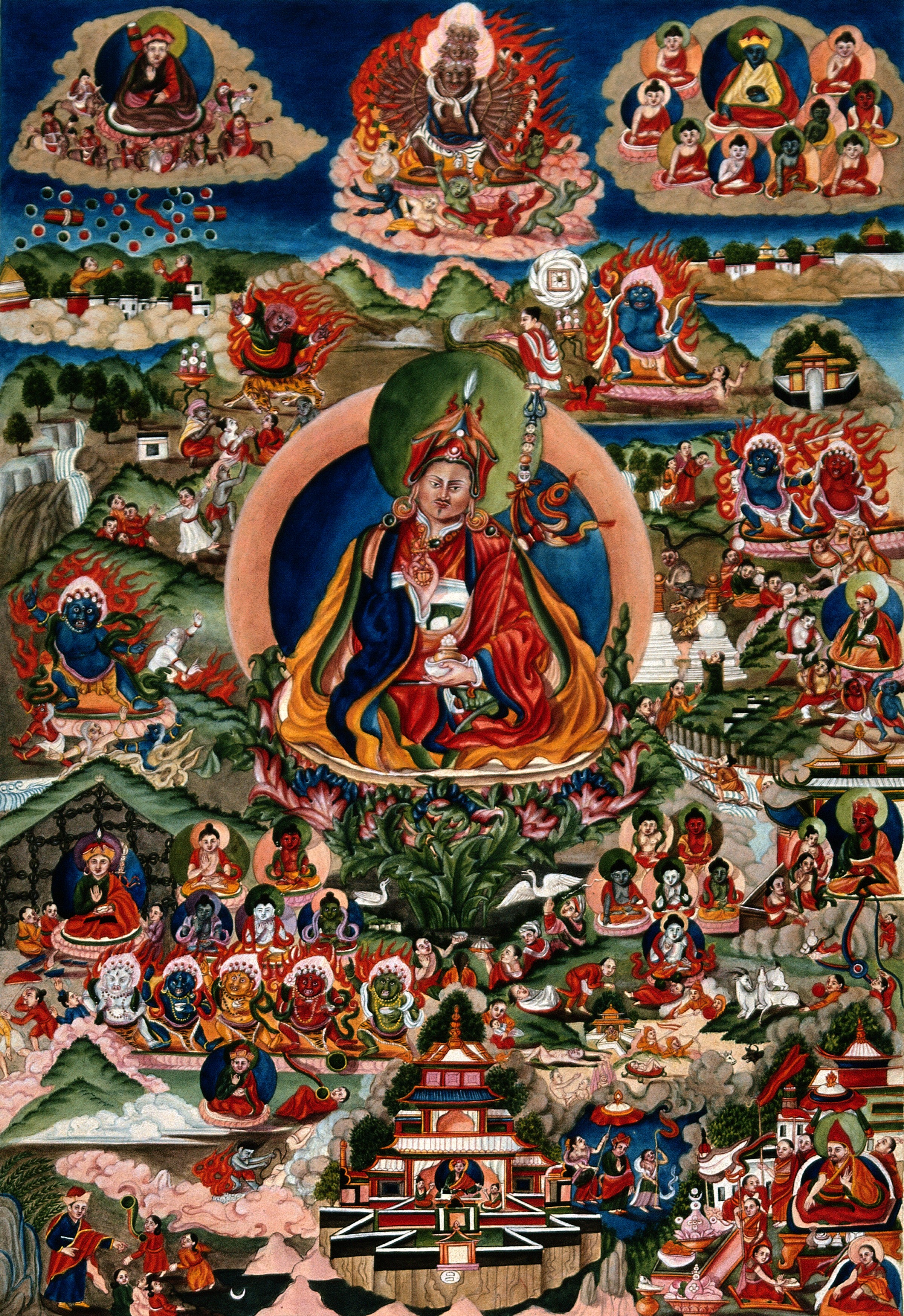
There is no ordinary beginning to Padmasambhava's story. He did not enter the world through a mother's womb, shaped by the conditions of karmic inheritance like every other sentient being. According to the sacred biographies held within the Nyingma tradition, he simply appeared fully formed, radiant, and already awake, seated in the heart of a lotus blossom floating on the Dhanakosha lake in the kingdom of Oddiyana.
What appeared was a young child, perhaps eight years old in appearance, seated in the royal posture of an enthroned king. There was no moment of transition from unconsciousness to awareness. Just presence, already complete.
This is why the tradition understands him not as an advanced bodhisattva working toward enlightenment but as a fully enlightened Buddha who chose the form of a human teacher. In Vajrayana cosmology, he is seen as an emanation of Buddha Amitabha, the Buddha of Infinite Light who presides over the pure realm of Sukhavati, appearing in a form that could move through the human world and transmit the most direct teachings.
The specific geography of that time and place, however, is where the accounts begin to diverge.
The sacred biographies place his birth at Lake Dhanakosha in Oddiyana, a kingdom that most contemporary scholars identify with the Swat Valley in present-day Pakistan, though some locate it further west into Afghanistan. Oddiyana occupies a charged position in Vajrayana cosmology, it is understood as one of the great cradles of Tantric transmission, the place where the dakinis gathered and where advanced teachings were held in concentrated form.
Other traditions offer different accounts. Some place his origins in India proper, associating him with the great monastic university at Nalanda or with specific Indian tantric lineages. These accounts tend to emphasize his human biography more heavily rather than his miraculous appearance on the lake. They are not necessarily in conflict with the lotus birth narrative so much as they are operating in a different register, addressing the question of his historical formation rather than his primordial nature.
Early Life, Renunciation, and Spiritual Formation
Royal Upbringing and Exile
The child who appeared on the lotus was found by a fisherman, or in some accounts drawn to shore by the attention of the king himself, and brought into the court of Indrabhuti, the ruler of Oddiyana. Indrabhuti, who had no heir, recognized something extraordinary in the child and adopted him as his son. The lotus-born boy became a prince.
What followed was a royal upbringing in the fullest sense, with fine clothes, formal education, training in statecraft and martial arts, the cultivation of all the refinements expected of a future king. By most accounts he excelled at everything placed before him, and by some he took a consort and lived for a time as a householder, inhabiting the role of crown prince with apparent completeness. From the outside, the trajectory was clear that this child would rule Oddiyana.
But something else was also present. The sacred biographies describe a quality of awareness in the young Padmasambhava that the palace could not contain. There was a restlessness that was not dissatisfaction but recognition and the sense of a being who already knew what lay beyond the life being prepared for him. He had not forgotten what he was in the way that ordinary birth causes forgetting.
The break, when it came, was deliberate, and in most accounts, violent in its symbolism. In a single act (the specific details vary across traditions), Padmasambhava created the conditions for his own exile. Whether this was accident or intent is a question the tradition leaves productively open. He was expelled from the kingdom, stripped of his royal status, and cast into the charnel grounds, which were the cremation grounds where corpses were left and where, in the Tantric world, some practitioners went to confront impermanence directly.
Training Under Masters
What followed was decades of training under some of the most realized beings of his era.
He studied under Ananda, one of the principal disciples of the historical Buddha Shakyamuni, receiving transmissions of the Vinaya and early Buddhist teachings. He trained with Prabhahasti, receiving the outer Tantras. He received the inner Tantras from Buddhaguhya and Shri Singha, the latter being one of the key figures in the lineage of Dzogchen, the teaching of the Great Perfection, the most direct pointing at the nature of mind that Vajrayana contains. From Manjushrimitra he received further Dzogchen transmissions. From Garab Dorje, understood as the first human lineage holder of Dzogchen he received the essential pointing-out instructions.
This curriculum, if it can be called that, was each master peeling back another layer of what stood between Padmasambhava and the full recognition of what he already was. The tradition emphasizes that he mastered everything he received, including Sanskrit grammar and mantra, the outer and inner Tantric systems, the yogic disciplines of tummo (inner heat), dream yoga, the practices of the completion stage. He was becoming a vessel precise enough to transmit them.
He also received transmission from the wisdom dakinis, the fierce, luminous feminine intelligences who in Vajrayana hold the most secret teachings in their keeping. At the charnel ground of Rajgriha, he encountered the dakini Kungamo, who conferred empowerment directly. At other sacred sites, further dakinis appeared, transmitting through symbol, through dream, through direct introduction. In the Vajrayana understanding, the dakinis are the ones who confirm whether a practitioner has truly arrived, and they confirmed Padmasambhava completely.
Founding of Samye Monastery: The First Buddhist Monastery
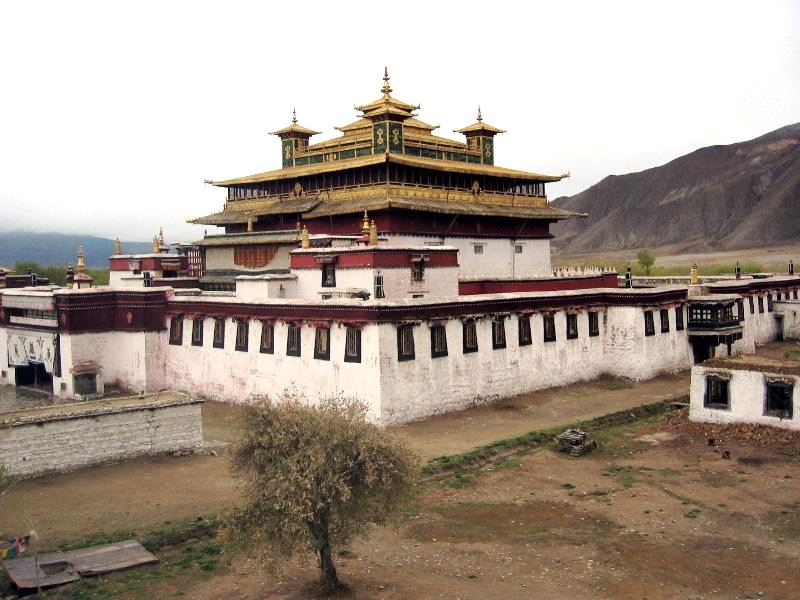
Once the territorial spirits had been subdued and the land itself was no longer actively hostile, the practical work could begin. King Trisong Detsen's original goal, to build Tibet's first Buddhist monastery, was finally possible. The site chosen was a flat plain on the northern bank of the Brahmaputra River in central Tibet, and the monastery that rose there was called Samye.
What made Samye unusual from the start was that the entire monastery was laid out as a physical mandala, a sacred diagram representing the structure of the Buddhist universe, made permanent in stone, wood, and earth.
At the center of Buddhist cosmology stands Mount Meru, understood as the axis around which all existence turns, surrounded by a series of continents, oceans, and mountain ranges arranged in concentric rings. Samye was built to mirror this exactly. The central temple represented Mount Meru itself. Smaller temples were arranged around it to represent the surrounding continents and subcontinents. The whole complex was enclosed within a circular outer wall representing the boundary mountains at the edge of the world-system. To move through the monastery was to move through the structure of reality as Buddhism understood it.
Samye was being consecrated as a sacred field, a space where the boundary between ordinary reality and enlightened vision was intentionally collapsed. Padmasambhava's role in the construction was to consecrate what was being built, binding the protective forces of the land to guard it and ensuring that what had been hostile territory became, energetically, ground fit for awakening.
Samye was completed around 779 CE. It still stands today.
Guru Rinpoche’s Life in Tibet
Padmasambhava's time in Tibet is traditionally understood as spanning many years. Some accounts say a few decades, others suggest much longer, and the picture that emerges across the sacred biographies is of someone who moved constantly, meeting people at every level of society and adjusting his approach to each one.
He taught King Trisong Detsen directly, transmitting advanced Vajrayana teachings to a ruler who was both patron and student. The king was a genuine practitioner of Bhuddism, and Padmasambhava treated him as one, transmitting initiations and instructions that went far beyond what was required for royal ceremonial purposes. A king who was himself a Vajrayana practitioner created conditions in which the teachings could spread through the culture rather than remaining confined to monasteries.
He taught the great Tibetan translators, the lotsawas, who were doing the difficult work of rendering Sanskrit texts into Tibetan. Translation in the Vajrayana context requires the translator to have genuine experiential understanding of what is being translated, and Padmasambhava transmitted the necessary empowerments and instructions to ensure that what arrived in Tibetan was not just accurately worded but spiritually intact.
Most significantly, he gathered and trained his closest Tibetan students, a group known as the twenty-five disciples, or Jewel Sons, each of whom achieved high levels of realization under his direct guidance. This group included figures who would become pillars of the Nyingma tradition, including Yeshe Tsogyal, his primary Tibetan consort and the woman who memorized and preserved vast amounts of his teaching; the translator Vairotsana, who traveled to India multiple times at great personal risk to bring back tantric transmissions; and Namkhai Nyingpo, Gyalwa Chokyang, and others who each mastered specific aspects of the Vajrayana path. These twenty-five were the transmission vessels through whom his lineage would survive beyond his physical presence in Tibet.
Core Teachings and Philosophy
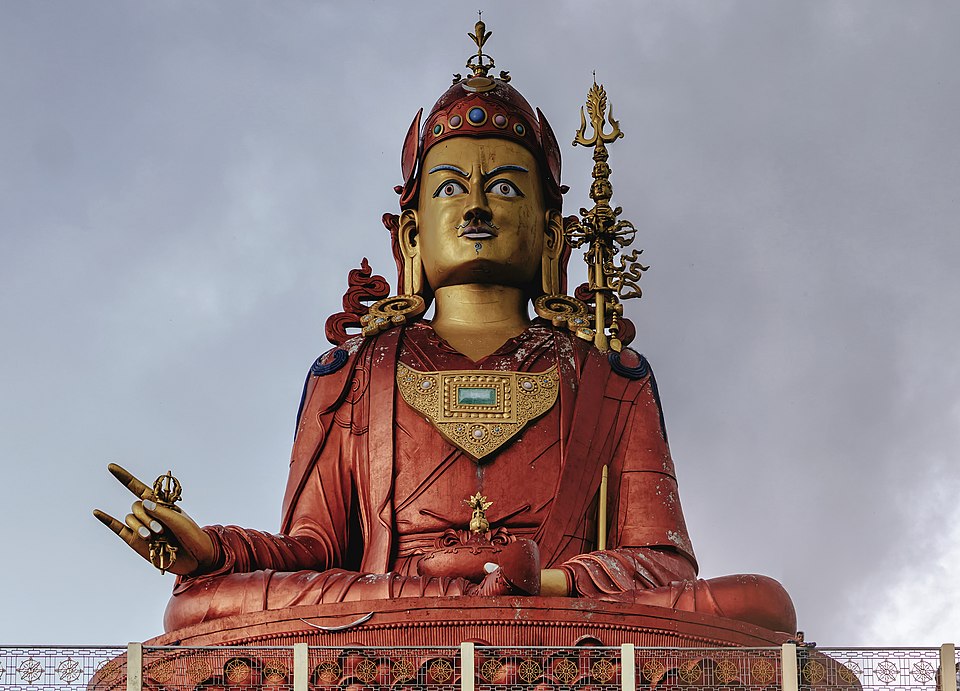
The Nature of Mind
Everything in Padmasambhava's teaching rests on a single foundational claim that the mind is not broken. It does not need to be fixed, purified from the outside, or rebuilt into something it currently is not. Beneath every state of confusion, every moment of anger or fear or grasping, the mind's fundamental nature is already awake, already luminous, already free, already exactly what enlightenment is said to be.
In Tibetan, the nature of mind is called rigpa, meaning pure awareness, the knowing quality of consciousness prior to any conceptual overlay. Rigpa is not a state that comes and goes. It is not something achieved through meditation and lost when meditation ends. It is the ever-present ground of all experience, the space within which every thought, emotion, and perception arises and dissolves without ever actually touching it. What obscures rigpa is marigpa, ignorance, the habitual failure to recognize what is already the case. And ignorance, unlike the obscurations imagined by less direct paths, can be resolved through direct recognition.
This recognition is what Padmasambhava's teachings point at. The entire Dzogchen framework and the Great Perfection is organized around the question of how to introduce a student's mind to its own nature directly, without the detour of progressive stages. The Tibetan term for this introduction is ngo sprod, literally "pointing out," and it refers to the moment when a qualified teacher directs the student's awareness back at itself in such a way that rigpa is recognized rather than merely understood conceptually.
Related to this is the concept of chöying, the ultimate sphere, or the expanse of reality, which refers to the total field of awareness within which all phenomena appear. Chöying is the nature of space itself as experienced from within rigpa, which is boundless, unobstructed, and inseparable from the awareness that recognizes it. In Padmasambhava's teachings, the recognition of rigpa and the recognition of chöying are the same moment seen from two angles, the knowing and the known collapsing into a single open presence.
The Path to Enlightenment
If the nature of mind is already pure, the obvious question is: why is a path necessary at all?
Padmasambhava's answer, consistent with the broader Vajrayana framework, is that recognizing the nature of mind once is not the same as stabilizing that recognition. Habitual patterns accumulated over lifetimes do not dissolve in a single moment of clarity. What is seen clearly in one sitting can be lost again the moment the mind returns to its ordinary habits. The path exists to stabilize the recognition of what is already the case, until that recognition is no longer interrupted by anything.
Two elements are central to this stabilization in Padmasambhava's teaching. The first is devotion and the second is direct experience.
Devotion in the Vajrayana is a precise orientation of the practitioner's mind toward the teacher and the teachings that functions as the fastest known vehicle for the transmission of realization. The logic is that rigpa cannot be described or transferred conceptually, it can only be pointed at, and the pointing only lands when the student's mind is open enough to receive it. Devotion opens that receptivity. A mind contracted around its own certainty, its own positions, its own assessments of what is and isn't possible, is a mind that cannot receive the pointing. A mind that has genuinely dissolved its resistance to the teacher through trust earned through direct experience of the teaching's validity is a mind available for recognition.
This is why guru yoga sits at the center of Padmasambhava's practical teaching system. Guru yoga is a meditation practice in which the practitioner dissolves the boundary between their own mind and the mind of the guru, entering the awakened nature the teacher embodies.
Body, Speech, and Mind
One of the distinguishing features of Vajrayana practice, and one that Padmasambhava embedded deeply into the Tibetan tradition, is that the path engages the totality of the practitioner.
This three-part framework that includes body, speech, and mind, known in Tibetan as ku, sung, tuk, reflects a specific understanding of what a human being is and how transformation actually works. In most contemplative traditions, transformation is understood primarily as a mental event, where you change your view, you purify your intentions, you cultivate better mental states. The body is at best a support for mental practice. In Vajrayana, the body is itself a site of practice and a vehicle with its own energetic structure that must be engaged directly if the transformation is to be complete.
Sacred Prayers, Mantras, and Liturgical Practices
The Vajra Guru Mantra
Om Ah Hum Vajra Guru Padma Siddhi Hum.
This is the root mantra of Padmasambhava. It consists of twelve syllables that function simultaneously as his name, his essence, his invitation, and his complete teaching compressed into sound. It is the most widely recited mantra in the Nyingma tradition and one of the most recited mantras in Tibetan Buddhism as a whole.
Mantra is the sound-body of an awakened mind and the vibrational signature of a specific quality of enlightened awareness, encoded in syllables that carry that quality directly into the practitioner's stream of experience when recited with the right view, the right motivation, and the empowerment that establishes the connection. The mantra is Padmasambhava, in the dimension of sound.
Om Ah Hum are the three seed syllables that appear across Vajrayana practice as the sound-bodies of body, speech, and mind respectively, or more precisely, of the awakened dimensions of body, speech, and mind. Om purifies and invokes the vajra body, the indestructible physical dimension of awakened being. Ah purifies and invokes the vajra speech, the dimension of expression that communicates without distortion. Hum purifies and invokes the vajra mind, the dimension of awareness that knows without obscuration. Together they function as a complete purification of the three dimensions of the practitioner's experience, opening the ground for what follows.
Vajra, Sanskrit for thunderbolt or diamond, refers to the indestructible quality of enlightened awareness: and the recognition that rigpa cannot be destroyed, contaminated, or altered by any condition, the way a diamond cannot be scratched by anything softer than itself. Invoking vajra establishes the practitioner in the understanding that what they are calling on is not a conditional or fragile presence but something that has never been touched by confusion.
Guru in the Vajrayana context it refers to the principle of transmission itself, the capacity of awakened mind to communicate its nature to unawakened mind through direct contact. Guru here points not only at Padmasambhava as an individual but at the entire mechanism by which liberation is made available.
Padma — lotus — invokes the lotus family of awakened activity, associated in Vajrayana cosmology with Buddha Amitabha and with the activity of magnetizing and drawing beings toward awakening through compassion, beauty, and the irresistible quality of genuine presence. Padmasambhava belongs to the lotus family by nature and by name, and invoking padma calls the specific quality of his compassionate activity into the practitioner's experience.
Siddhi means accomplishment or attainment, specifically the accomplishments of Vajrayana practice, both the ordinary siddhis (practical capacities that arise as signs of genuine progress) and the extraordinary siddhi of full enlightenment itself. Invoking siddhi is a direct request that may the accomplishments of this practice actually arrive, may the practice bear the fruit it is intended to bear.
Hum closes the mantra as it closed the opening triad, sealing everything that has been invoked, driving it into the heart center of the practitioner, making the transmission intimate and inward rather than external and conceptual
The Seven Line Prayer
The Seven Line Prayer is the primary liturgical invocation of Guru Rinpoche across all schools that engage his teachings, recited at the opening of practice sessions, at the beginning of teachings, at moments of transition and crisis, and as a daily practice in its own right. According to the tradition, it arose spontaneously from the expanse of awareness itself, and was transmitted through the dakinis.
The prayer reads, in a standard English translation:
Hung. In the northwest of the land of Oddiyana, On the pollen bed of a lotus flower, You attained the most marvellous supreme siddhi. You are renowned as the Lotus Born, Surrounded by a retinue of many dakinis. I follow your example ,please bestow your blessings. Guru Padma Siddhi Hum.
The opening Hung, the seed syllable of the vajra mind, the same syllable that closes the Vajra Guru mantra is an immediate invocation of the indestructible awareness that the entire prayer is addressed to, a single syllable that establishes the energetic ground before the first word of the text arrives.
The first two lines locate Padmasambhava precisely, northwest of Oddiyana, on a lotus. In Vajrayana, precise sacred geography is transmission and naming the location correctly connects the practitioner to the actual field of energy where the event being invoked took place, the way a precise frequency tunes a receiver to a specific signal.
The third line names what happened there, which is the attainment of the most marvellous supreme siddhi. This is the full realization of enlightenment, the complete accomplishment that contains all others.
The fourth line names him the Lotus Born. The fifth acknowledges his retinue and the dakinis who surround him, who recognized and confirmed his realization, and who hold the most secret transmissions of the Vajrayana in their keeping.
The sixth line is the pivot of the prayer and its most personally direct moment: I follow your example — please bestow your blessings. This is the practitioner speaking in their own voice, making a commitment and a request simultaneously. The commitment is to follow the example and to actually walk the path that Padmasambhava walked. The request is for blessing, called jinlab in Tibetan, a term that means the transformation of the practitioner's mind through contact with awakened mind. The practitioner is not asking for external help. They are asking for the internal transformation that genuine contact with Padmasambhava's presence makes possible.
The final line, Guru Padma Siddhi Hum, is the seed of the Vajra Guru mantra itself, sealing the prayer by returning to the most essential sound-form of his nature.
The Terma Tradition and Hidden Teachings
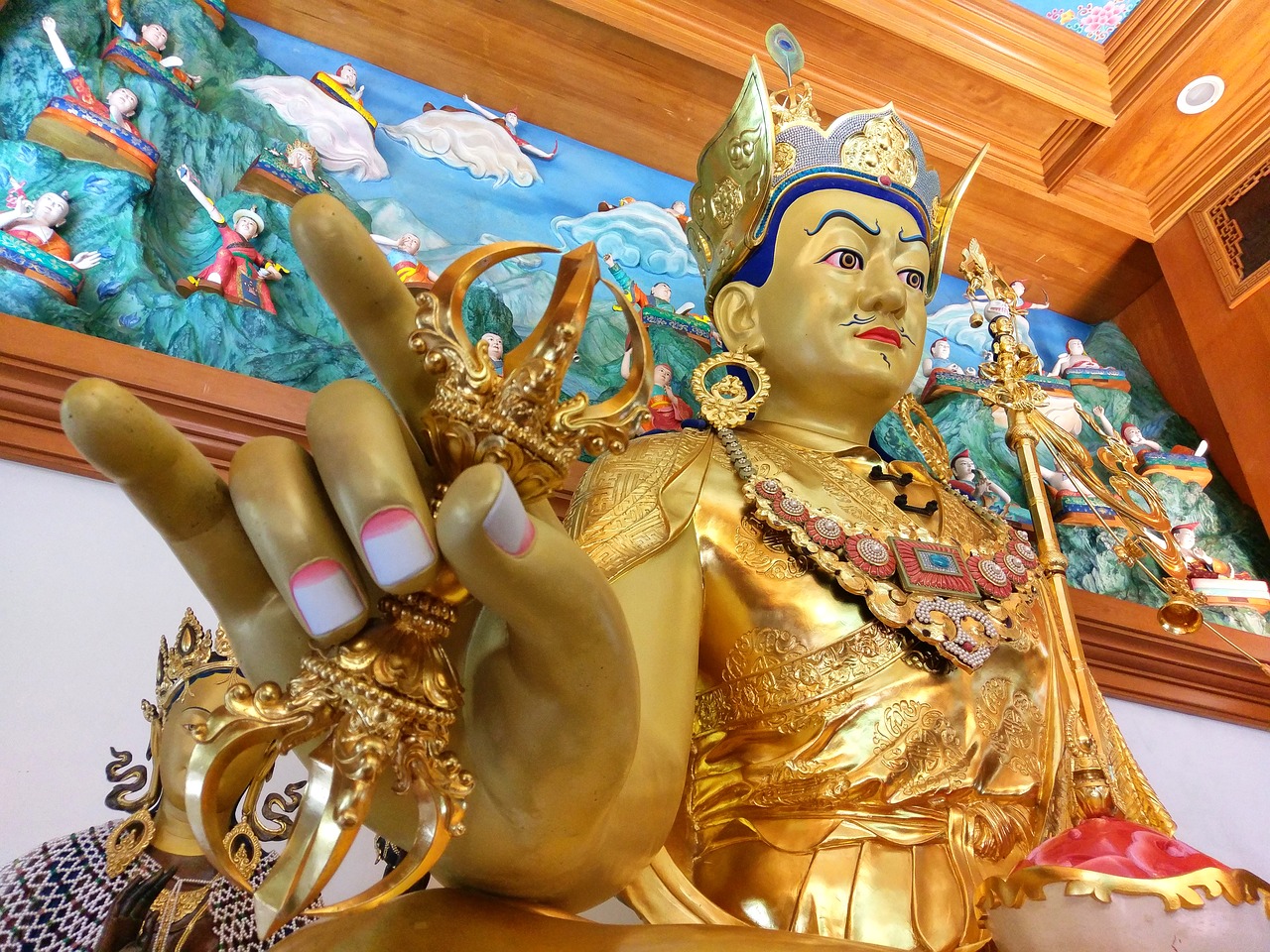
What are Termas?
Before Padmasambhava left Tibet, he hid the teachings.
He hid them because he understood something about time that most teachers do not account for, that the beings who most need a specific teaching are not always alive when that teaching is being given. The practitioners of the 8th century were not the same minds, with the same obstacles and the same capacities, as the practitioners of the 12th century or the 20th. A teaching perfectly calibrated for one era can be inaccessible or even counterproductive in another. The terma system, the tradition of hidden treasure teachings, was Padmasambhava's solution to this problem.
Terma is a Tibetan word meaning treasure or hidden treasure. It refers to teachings that Padmasambhava (and to a lesser extent other masters, particularly Vimalamitra) concealed throughout Tibet and the Himalayan region with the explicit intention that they would be discovered and revealed at a specific future time by a specific practitioner, the tertön, or treasure revealer, whose realization and whose era made them the right recipient for that particular transmission.
The range of what can function as a terma vessel is broader than most people expect. The most commonly known form is the sa ter, earth treasure. This is physical objects concealed in rocks, caves, lakes, temples, and sacred sites throughout Tibet. These might be actual manuscripts written in a symbolic script called dakini script that only the destined tertön can read, or ritual objects, statues, and sacred substances whose function is to carry and transmit a specific blessing. The landscape of Tibet is understood within the Nyingma tradition as essentially a library, a vast physical archive of Padmasambhava's transmissions waiting for the right moment and the right person to unlock them.
Less physically tangible but equally real within the tradition are the gong ter, mind treasures. These are teachings that Padmasambhava did not conceal in physical objects but directly in the mind-streams of his closest disciples, to be reawakened in a future life when the conditions were right. A practitioner who carries a mind treasure does not remember it the way one remembers a learned text. It arises spontaneously, completely, and fully formed from within their own awareness at the moment of ripeness, as if it were always known and had simply been waiting to surface. The tertön does not compose the teaching. They receive it from within themselves, from the transmission Padmasambhava planted there in a previous life.
A third category is the dag nang ter, which are teachings revealed through visionary experience and direct encounters with Padmasambhava, with the dakinis, or with other enlightened beings in a state of awareness that is neither ordinary waking consciousness nor dream, but a third condition the tradition considers more rather than less reliable than either. These visions are understood as transmissions, received in a state of awareness clear enough to be a genuine channel.
The Role of the Wisdom Dakinis
In Vajrayana Buddhism, the dakinis are the dynamic, unpredictable, wisdom-holding principle of the tradition. They are the force that moves between the ordinary world and the awakened world, that guards the most secret teachings, that tests practitioners for genuine readiness and grants transmission when that readiness is confirmed. The Tibetan word for dakini, khandroma, means "sky-goer" or "she who moves through space," pointing at the quality of unconditioned awareness that they embody and transmit.
When Padmasambhava concealed the termas, the dakinis were the guardians he assigned to them. Their function is to ensure that a terma reaches only the practitioner it was intended for, at the time it was intended to arrive. A terma discovered by the wrong person at the wrong time can be harmful, or it can be lost through a teaching of extraordinary depth misunderstood or misused by a practitioner whose realization is not yet deep enough to hold it.
The dakini script ensures a transmission can only be read by a mind that has the realization to match it, the way certain things can only be seen when the eye looking has been trained to see them.
Disciples, Lineages, and Transmission
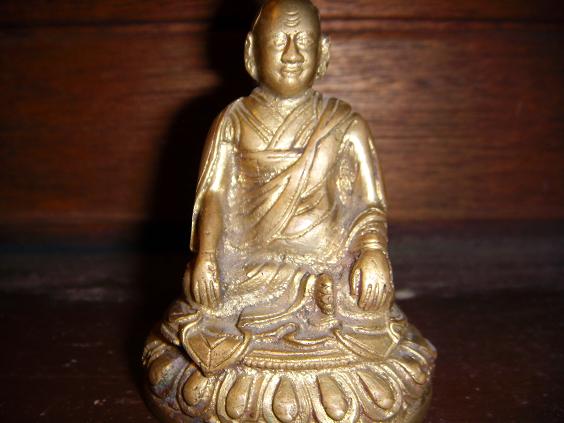
Key Figures in the Lineage
Longchenpa
Longchen Rabjam, 1308–1364 — is considered the greatest systematizer of Dzogchen in Tibetan history. He did not receive his transmission directly from Padmasambhava, but through the lineage that Padmasambhava established, supplemented by direct visionary encounters with Padmasambhava himself and with the dakini Yeshe Tsogyal. What Longchenpa accomplished was to take the vast, scattered body of Dzogchen teaching, the Nyingma tantras, the terma revelations, the oral instructions of multiple lineages, and synthesize it into a coherent philosophical and practical framework without reducing its depth. His Seven Treasuries and the Trilogy of Natural Freedom remain among the most important texts in the entire Tibetan Buddhist canon.
Jigme Lingpa
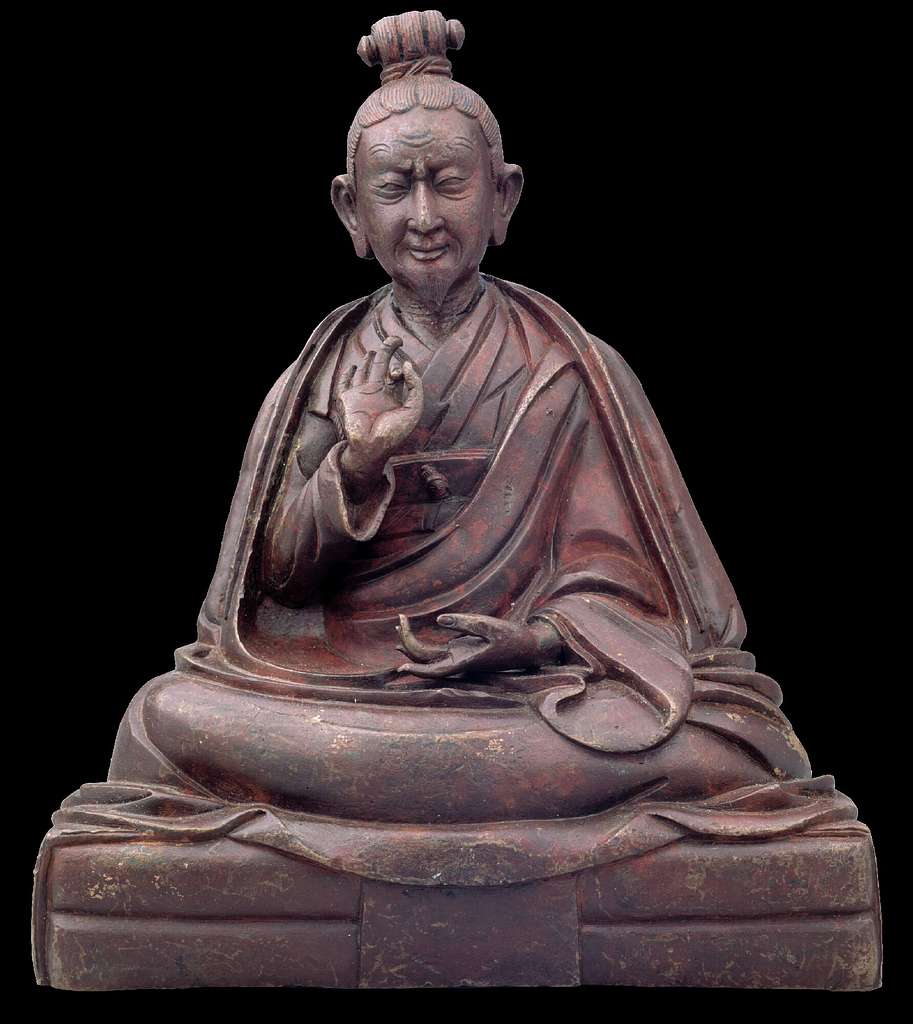
Jigme Lingpa, circa 1730–1798, was a tertön who received the entire Longchen Nyingtik cycle, through a series of visionary encounters with Longchenpa across three years of retreat. This cycle, which combines Dzogchen instruction with guru yoga practice centered on Padmasambhava, became one of the most widely practiced Nyingma teaching cycles in the world and remains central to living practice today.
Dudjom Rinpoche
Jigdrel Yeshe Dorje, 1904–1987 — was the first supreme head of the Nyingma school in the modern era and the figure most responsible for carrying the Nyingma transmission through the catastrophe of the Chinese occupation of Tibet and into the wider world. He was himself a major tertön, a Dzogchen master of the highest level, and a prolific author whose Nyingma School of Tibetan Buddhism remains the definitive scholarly and practitioner's account of the tradition he embodied. When the Tibetan diaspora scattered the teachers and practitioners of every school across India, Nepal, Europe, and the Americas, Dudjom Rinpoche was the stabilizing presence that ensured the Nyingma transmission survived intact.
Sacred Geography: Monasteries, Caves, and Hidden Lands
Samye Monastery
Samye is where the Tibetan Buddhist world began.
Built in the 8th century as a physical mandala on the northern bank of the Brahmaputra River in central Tibet, Samye survived political suppression, sectarian conflict, fire, earthquake, and the systematic destruction of the Cultural Revolution, during which significant portions of the complex were damaged or demolished. It was restored after 1980 and remains an active monastery today as a functioning religious institution where monks practice, teachings are given, and pilgrims arrive from across Tibet and the wider Tibetan Buddhist world.
Meditation Caves
Across Tibet, Nepal, and the broader Himalayan region, the landscape is marked by caves where Padmasambhava meditated and sites that are still saturated with the energy of what was realized there. These caves are among the most important pilgrimage destinations in the Tibetan Buddhist world, and they are used as active retreat locations by practitioners today.
Maratika
The caves at Maratika in eastern Nepal hold a particular status. It was here, according to the tradition, that Padmasambhava practiced the Amitayus, the long-life deity, together with his consort Mandarava, and attained the realization of the vidyadhara of immortal life: the recognition that awareness itself is beyond birth and death, that what he fundamentally was could not die even if the body did. This realization did not make him physically immortal in the ordinary sense. It dissolved the distinction between life and death at the level of his awareness, completing one of the most important stages of his formation. Maratika remains an active retreat site. Practitioners who do long-life practice there report an intensity of the transmission that they do not find in other locations.
Asura Cave
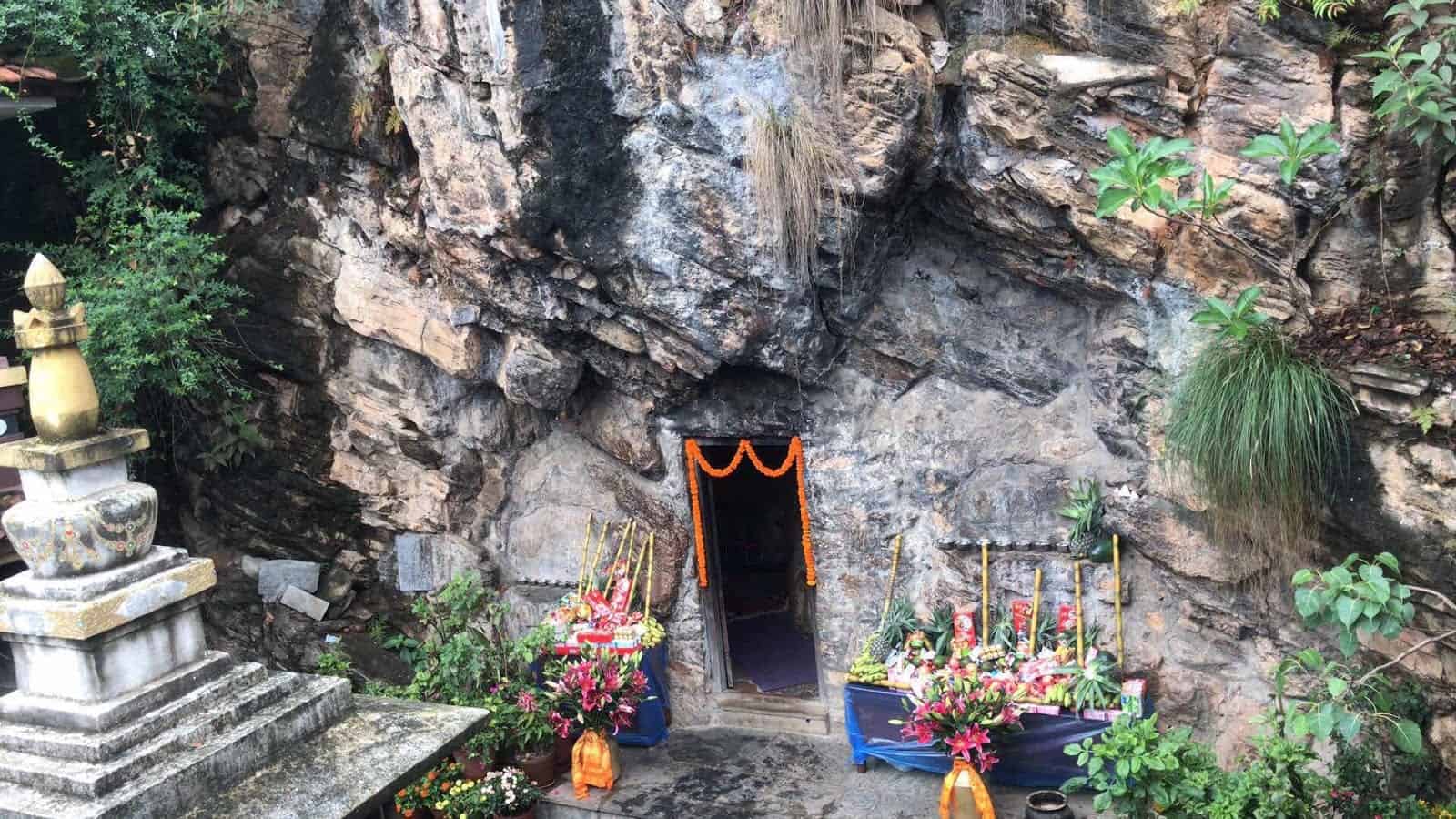
Photo credit: samyeinstitute.org
Yangleshö, present-day Pharping, in the Kathmandu Valley just south of the city is where Padmasambhava attained his highest Dzogchen realization, the vidyadhara of Mahamudra, together with his consort Shakyadevi. The cave where this occurred, Asura Cave, sits above the valley and can still be entered today. Below it is another cave associated with Vajrayogini, and the entire hillside is understood as a power place of the highest order, a location where the boundary between ordinary perception and enlightened perception is particularly thin. Multiple retreat centers have grown up around it, and practitioners from across the world come to do intensive practice in the energetic field that Padmasambhava's realization left there.
Paro Takstang
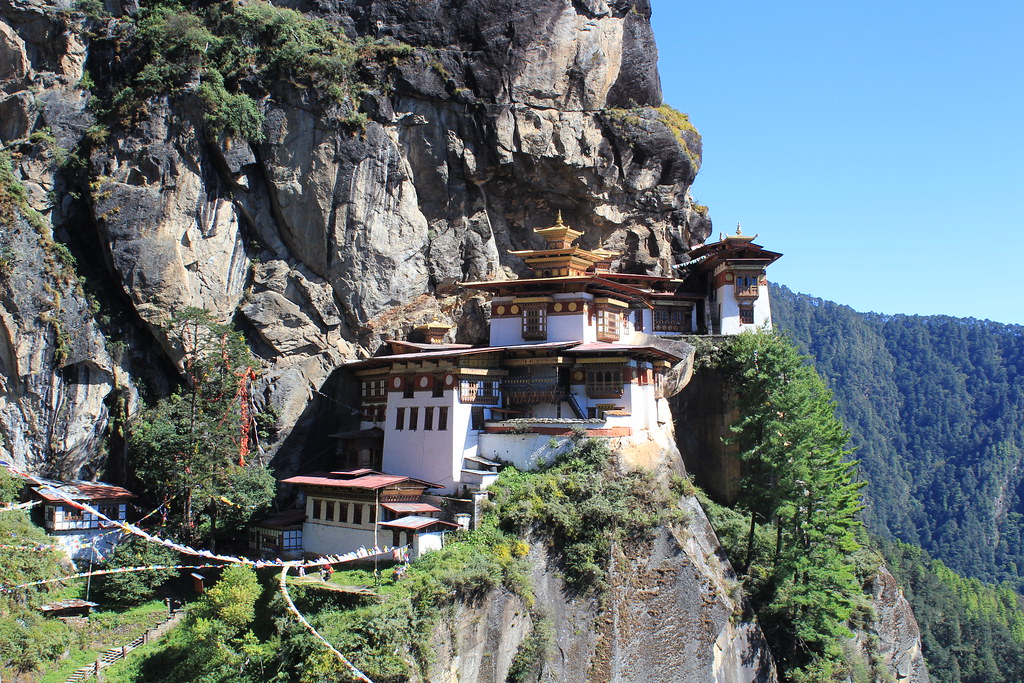
Paro Taktsang, the Tiger's Nest, in Bhutan is perhaps the most visually dramatic of Padmasambhava's cave sites, built into a sheer cliff face at 3,000 meters above sea level in the Paro valley. According to the tradition, Padmasambhava flew to this location on the back of a tigress, which was a transformation of his consort Yeshe Tsogyal, and meditated there in the wrathful form of Guru Dorje Drolo, subduing the local spirits of Bhutan and establishing the conditions for Buddhism to take root in the kingdom. The monastery complex built around the cave has become one of the most recognized images of Tibetan Buddhist culture globally, but for practitioners it is not the architecture that draws them. It is the cave itself, and the specific transmission of wrathful compassionate energy that Padmasambhava's practice there established.
Chimphu hermitage
In Tibet proper, the Chimphu hermitage above Samye, which is a complex of caves spread across a hillside an hour's walk from the monastery is where Padmasambhava gave his most advanced Dzogchen teachings to his closest disciples. It is understood as one of the most sacred sites in all of Tibet, a place where the Dzogchen transmission is particularly accessible, and where practitioners who do retreat in the caves can draw directly on the energy of the original teachings given there. Yeshe Tsogyal herself practiced at Chimphu extensively. The tradition holds that the dakinis are particularly present there and that the conditions for Dzogchen realization are unusually ripe.
Rewalsar Lake
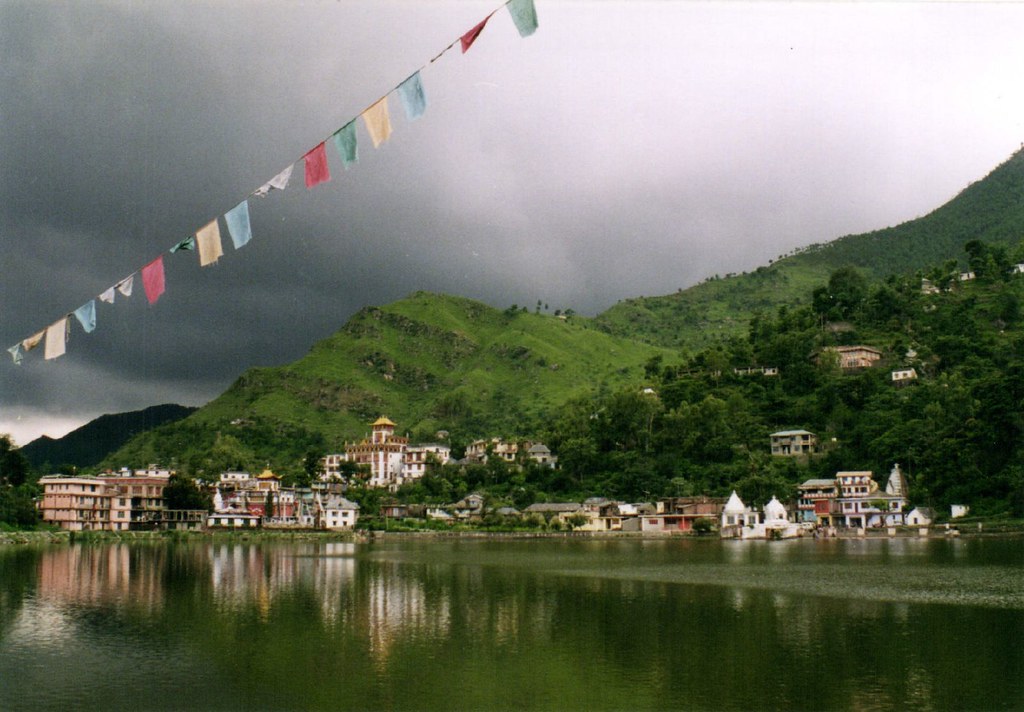
In the hills of Himachal Pradesh in Northern India, a small lake sits at the center of a hidden valley that three traditions, namely Hindu, Sikh, and Buddhist, each consider sacred for their own reasons. For Vajrayana practitioners, Rewalsar is known by its Tibetan name, Tso Pema, the Lotus Lake, and its significance is inseparable from Padmasambhava and his consort Mandarava.
It was here that Padmasambhava came to practice with Mandarava, the princess daughter of the local king. When her father discovered that his daughter had taken up with a wandering Tantric yogi, he had Padmasambhava arrested and sentenced to be burned alive. A pyre was built and lit. What the king found when he arrived to confirm the execution was not ash, it was Padmasambhava, seated in meditation at the center of the flames, the fire having transformed into the lake that now bears the name Tso Pema. The king, along with his court, took refuge on the spot. Mandarava remained with Padmasambhava, and together they continued their practice in the cave above the lake that can still be visited today.
Books, Texts, and Buddhist Literature
The Lotus-Born: The Life Story of Padmasambhava
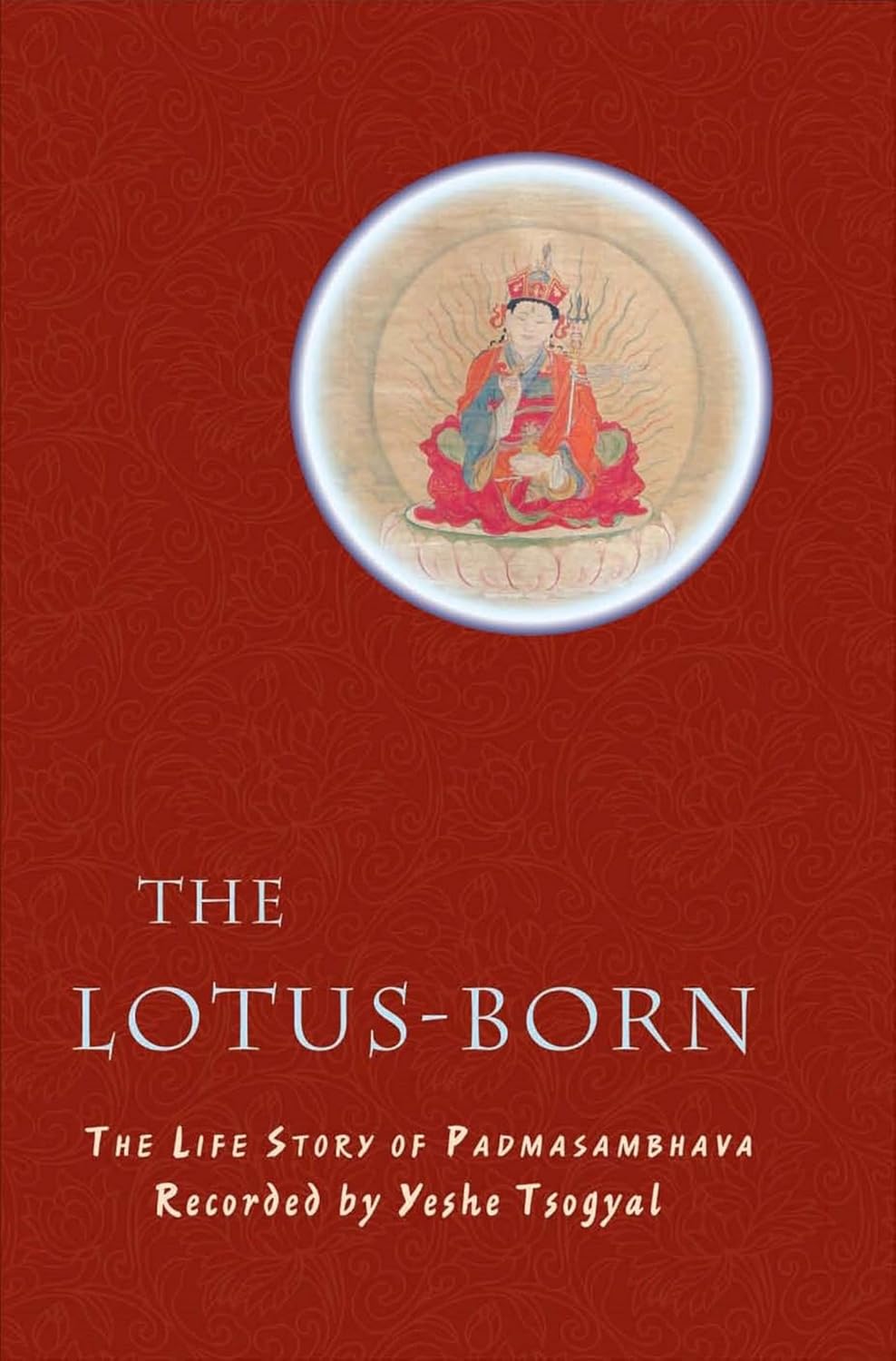
Compiled by Yeshe Tsogyal, translated by Erik Pema Kunsang (Shambhala, 1993)
The closest available thing to a first-hand account of the Padmasambhava legend. This biography was compiled by Yeshe Tsogyal from her direct experience of his teaching, making it qualitatively different from later scholarly reconstructions. It covers the full arc of his life: the miraculous birth on the Dhanakosha lake, his adoption into a royal household, his exile and formation, his arrival in Tibet at the invitation of King Trisong Detsen, and his transmission of Dzogchen teachings to his innermost circle. What makes this text irreplaceable is that Yeshe Tsogyal was present for much of what she describes, and her account preserves the texture of the teaching relationship rather than just its historical outline. For any reader wanting to understand who Padmasambhava actually was, this is the place to begin.
Guru Rinpoche: His Life and Times
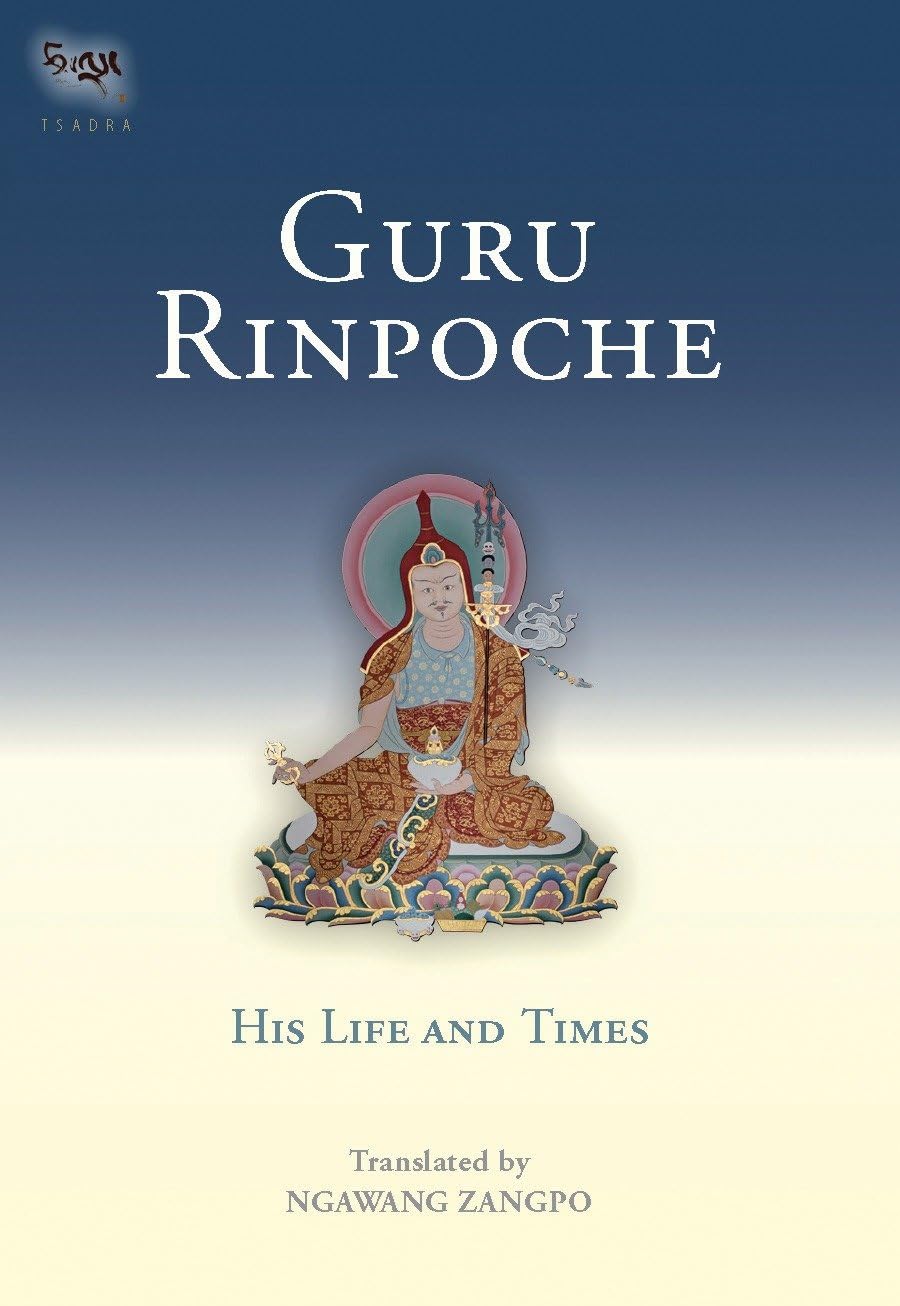
By Ngawang Zangpo (Snow Lion, 2002)
This is the most balanced single introduction to Padmasambhava available in English. Ngawang Zangpo situates the traditional sacred biography carefully within its historical context, addressing the tension between the miraculous accounts and what Buddhist studies scholarship can verify, without dismissing either. The book covers his relationships with Buddha Shakyamuni's lineage, his role in establishing the first Buddhist monastery at Samye, and his transmission of Vajrayana to Tibet.
Hidden Teachings of Tibet: An Explanation of the Terma Tradition
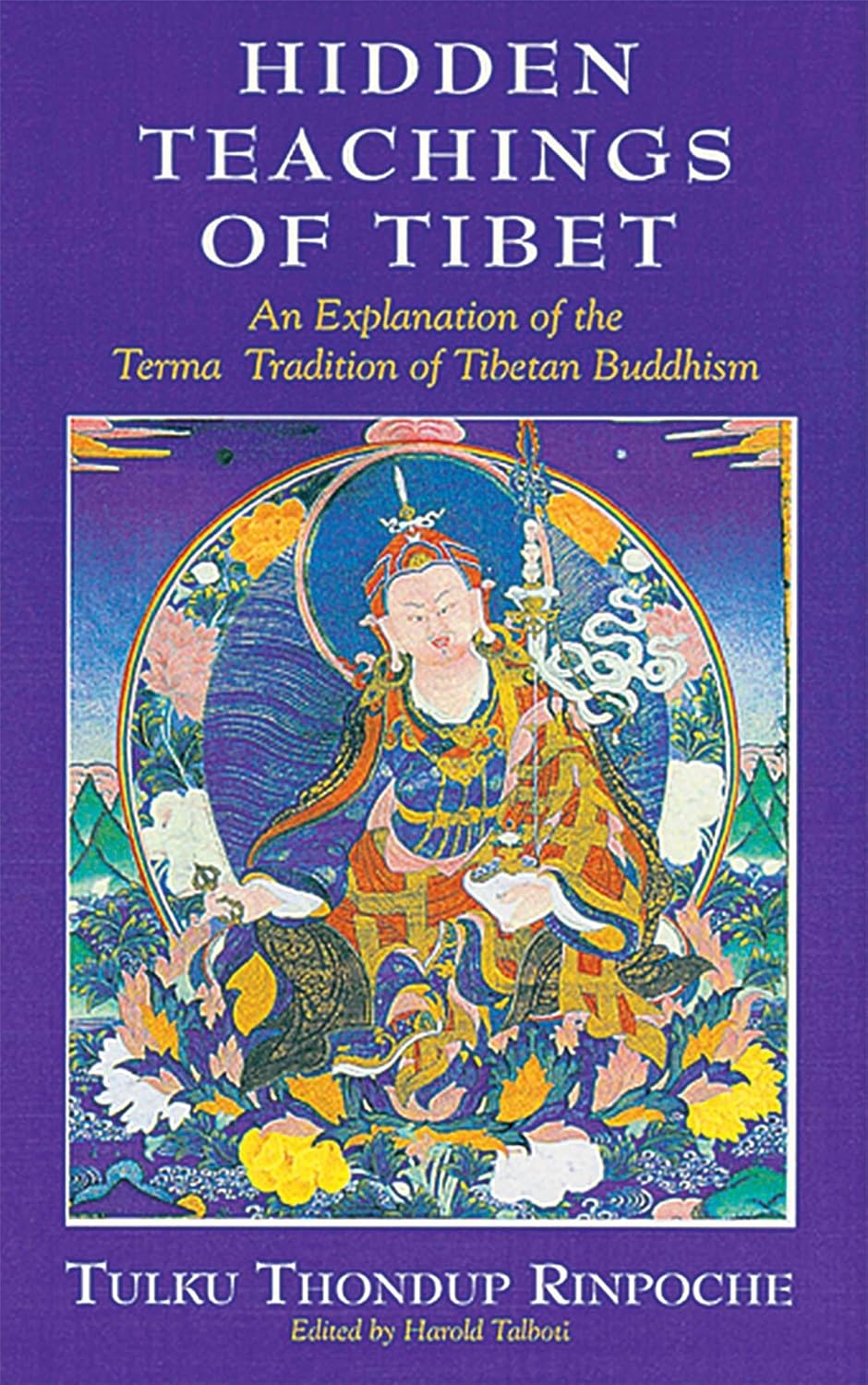
By Tulku Thondup Rinpoche (Wisdom Publications, 1986)
Before Guru Padmasambhava appeared to his future followers only as a historical figure, he arranged for his teachings to continue arriving across the centuries through the terma system, and this is the definitive English-language account of how that system works. Tulku Thondup explains what termas are, how they were concealed in earth, water, and the mind-streams of reincarnating disciples, how tertöns recognize and reveal them, and why the tradition understands this mechanism as a living transmission rather than an archaeological recovery. The book is scholarly in its precision but written for practitioners and interested general readers rather than for specialists.
Crazy Wisdom
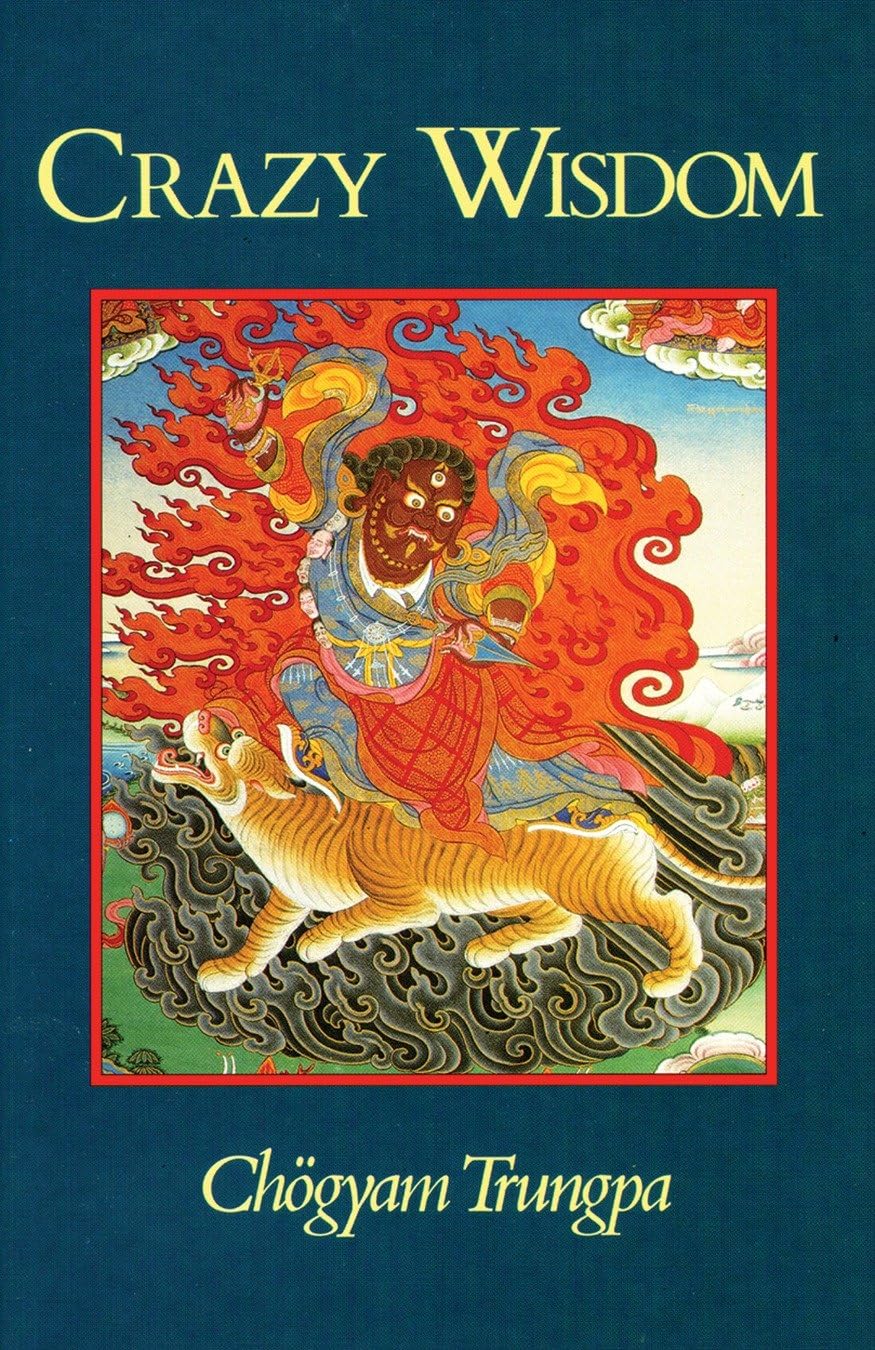
By Chögyam Trungpa Rinpoche (Shambhala, 1991)
This book began as a series of talks given by Trungpa Rinpoche to Western students, and it remains the most penetrating English-language exploration of what crazy wisdom actually is, both as a quality of Padmasambhava's enlightened activity and as a principle of the Vajrayana path more broadly. Trungpa traces the Sanskrit word vidya through the biography and teaching style of Padmasambhava, showing how his non-conventional methods, his apparent provocations, and his complete disregard for ordinary social logic were precise expressions of body, speech, and mind fully liberated from confusion. The book includes detailed teachings on the eight manifestations, among them Guru Senge, the wrathful lion-roar form, and on how each aspect of Padmasambhava's activity corresponds to a specific quality of awakening.
The Nyingma School of Tibetan Buddhism: Its Fundamentals and History
By Dudjom Rinpoche, translated by Gyurme Dorje and Matthew Kapstein (Wisdom Publications, 1991)
This is the most authoritative single work on the tradition Padmasambhava founded and is simultaneously a traditional account by the supreme head of the Nyingma school and a rigorous scholarly survey of its history, philosophy, and practice. There are two volumes. Dudjom Rinpoche covers the full doctrinal structure of the nine vehicles, the history of the terma tradition and its major tertöns, the philosophical framework of Dzogchen, the Tibetan pronunciation and meaning of the key liturgical terms, and the biographies of the lineage holders from Padmasambhava to the modern era. It is a reference work of the highest order, demanding sustained attention but returning it with depth that no other single source matches.
The Words of Padmasambhava: Eight Essential Teachings
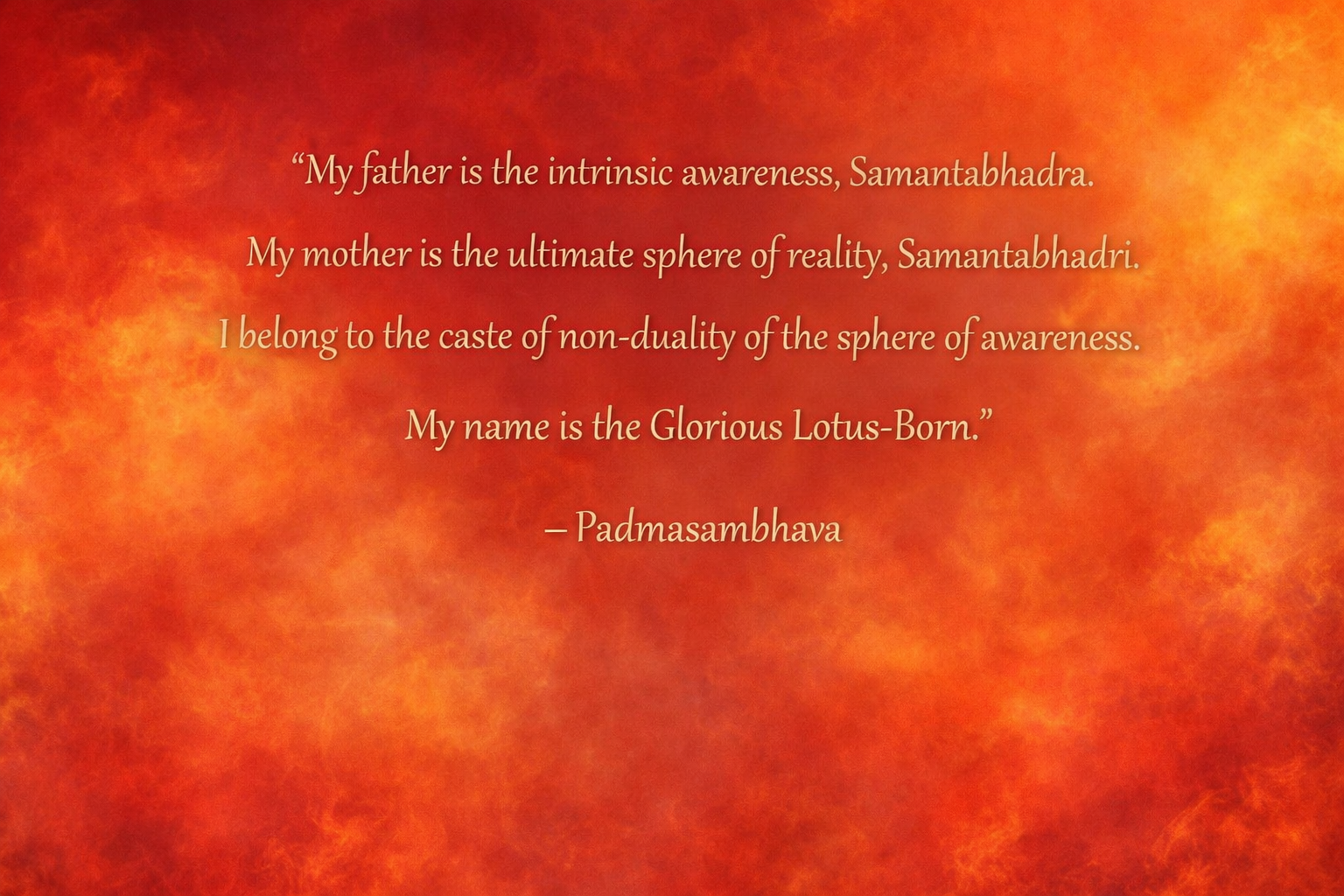
These are translations from Tibetan, itself translated or transcribed from Padmasambhava's original transmissions across oral and terma lineages. The meaning is considered authentic within the tradition, but the specific wording reflects the translator's hand as well as the source text.
"My father is the intrinsic awareness, Samantabhadra. My mother is the ultimate sphere of reality, Samantabhadri. I belong to the caste of non-duality of the sphere of awareness. My name is the Glorious Lotus-Born."
Source: The Padma Kathang (Chronicle of Padma), revealed by Orgyen Lingpa, translated by Erik Pema Kunsang
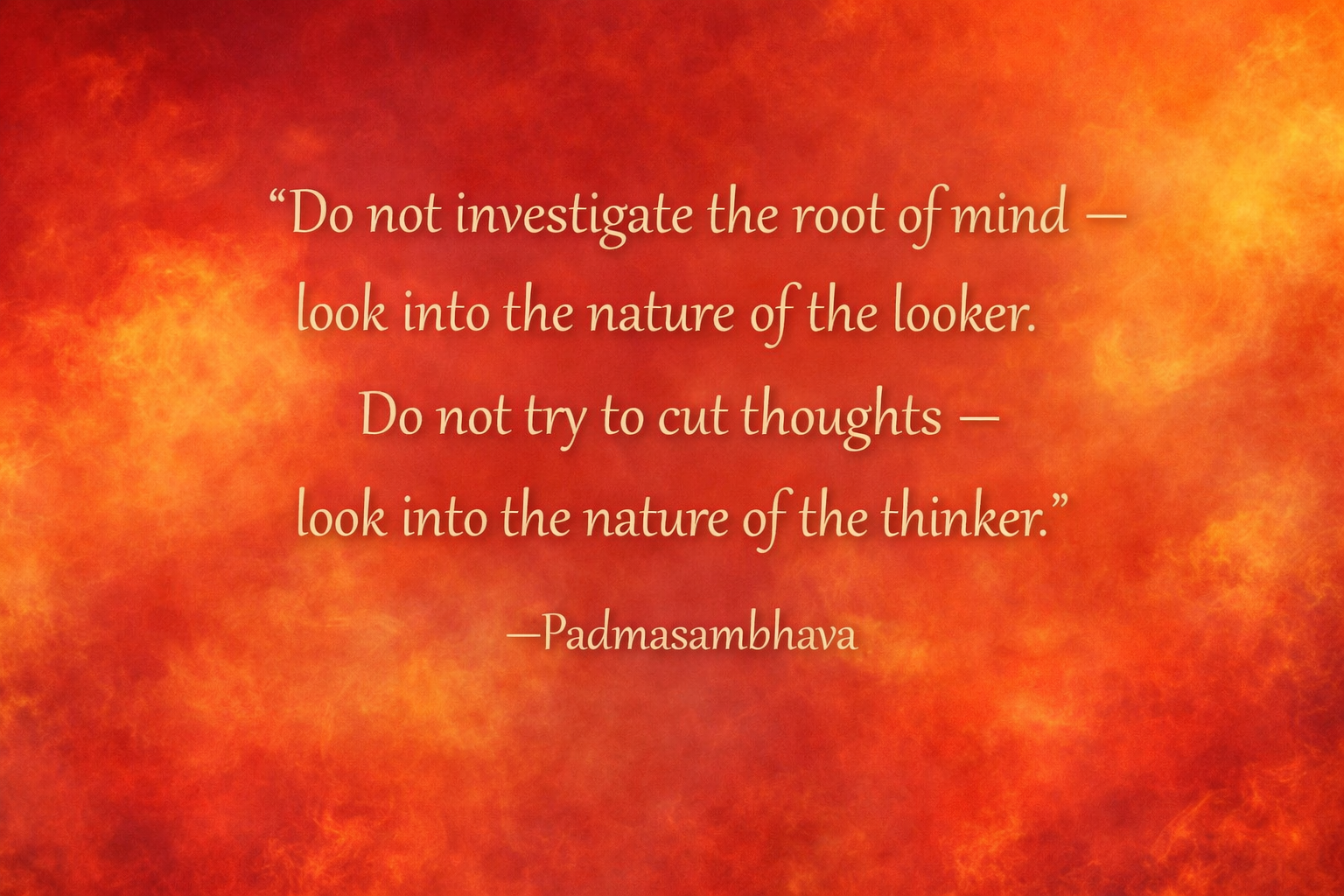
"Do not investigate the root of mind — look into the nature of the looker. Do not try to cut thoughts — look into the nature of the thinker."
Source: Advice from the Lotus-Born, translated by Erik Pema Kunsang (Rangjung Yeshe Publications, 1994)
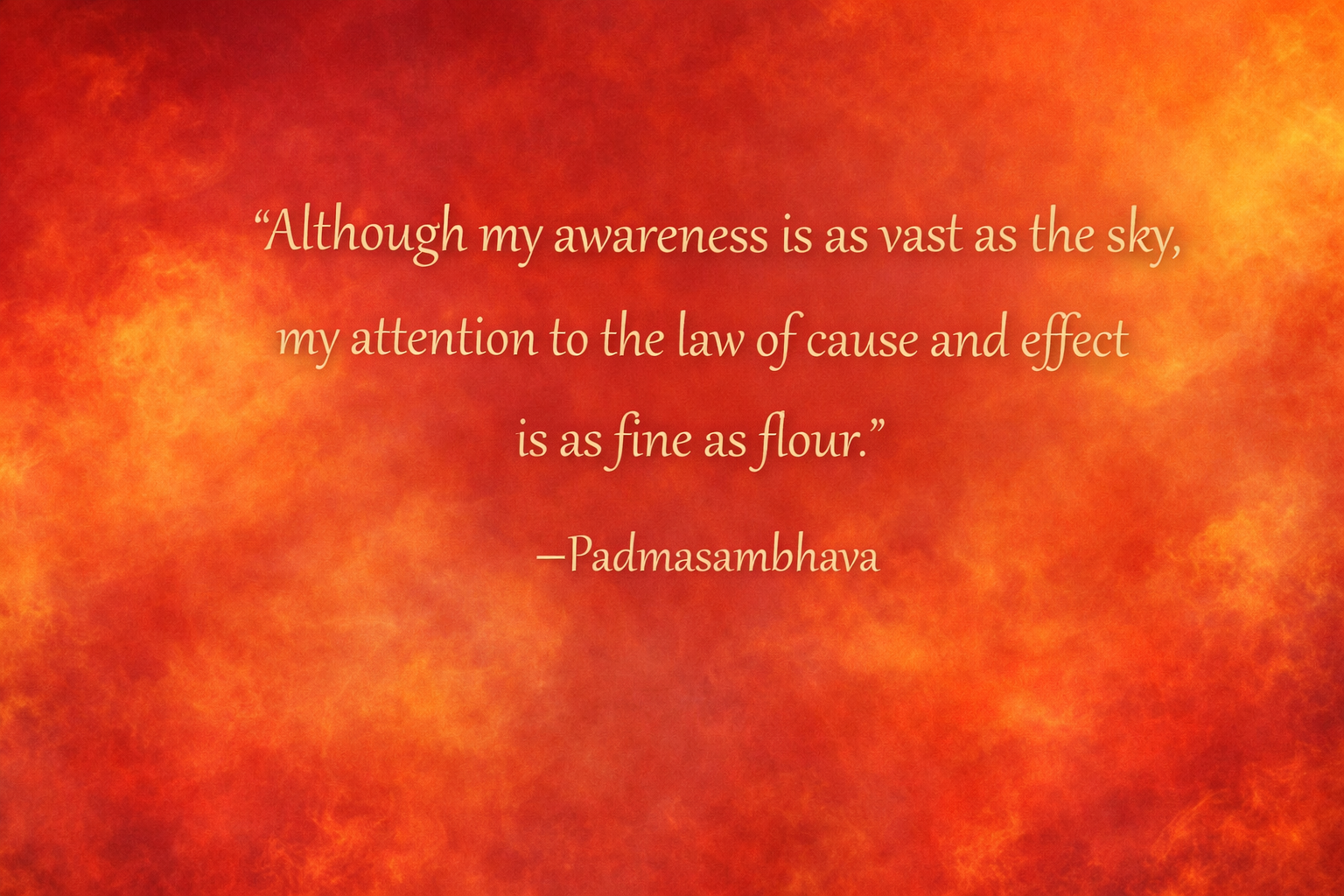
"Although my awareness is as vast as the sky, my attention to the law of cause and effect is as fine as flour."
Source: Dakini Teachings: Padmasambhava's Oral Instructions to Lady Tsogyal, translated by Erik Pema Kunsang (Shambhala, 1990)
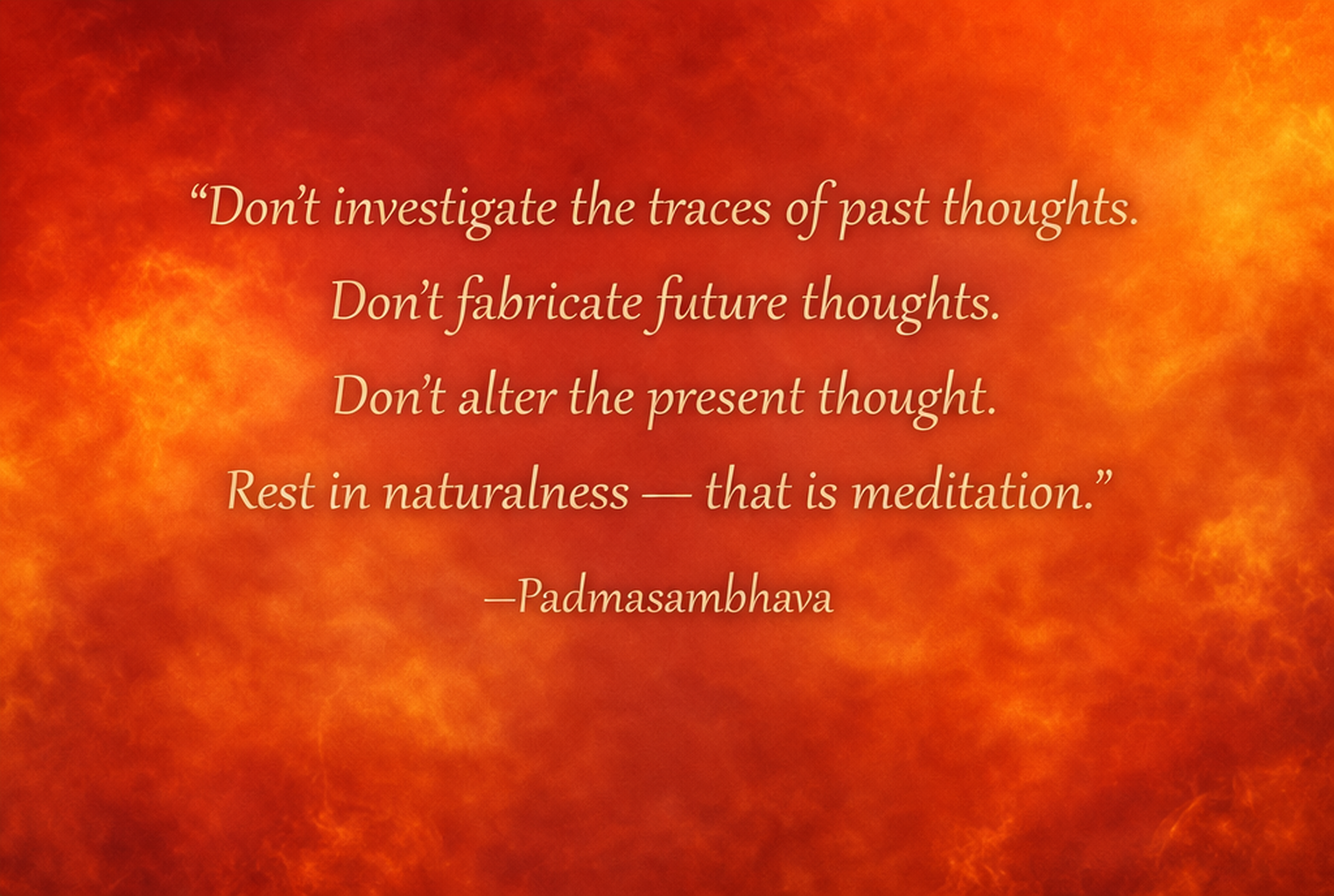
"Don't investigate the traces of past thoughts. Don't fabricate future thoughts. Don't alter the present thought. Rest in naturalness — that is meditation."
Source: Advice from the Lotus-Born, translated by Erik Pema Kunsang (Rangjung Yeshe Publications, 1994)
"The nature of mind is the light of primordial wisdom. It has no birth and no death. It is the buddha Amitabha himself. Knowing this one thing, all is liberated."
Source: The Tibetan Book of the Dead (Bardo Thodol), Padmasambhava's introductory verses, translated by Chogyam Trungpa and Francesca Fremantle (Shambhala, 1975)
"All phenomena are illusory displays of mind. Mind is without birth or death — it is naked awareness itself. Realizing this, you are liberated from birth and death. This is the meaning of the deathless vajra body."
Source: Dakini Teachings: Padmasambhava's Oral Instructions to Lady Tsogyal, translated by Erik Pema Kunsang (Shambhala, 1990)
"Do not be conceited about your meditation experience. Do not be proud of your learning. Do not be arrogant about your realization. Offer your practice to all sentient beings. This is the essential point of the path."
Source: Advice from the Lotus-Born, translated by Erik Pema Kunsang (Rangjung Yeshe Publications, 1994)
"I have not gone anywhere. I am present in the mind of every person who has devotion. I am always present before those with faith. I am always here for those who call upon me. My children, do not have the faintest trace of doubt about this."
Source: The Precious Garland of Lapis Lazuli, a terma cycle compiled in Masters of Meditation and Miracles by Tulku Thondup Rinpoche (Shambhala, 1996)