What Is a Dakini? A Guide to the Sacred Feminine in Vajrayana
Dec 16, 2025
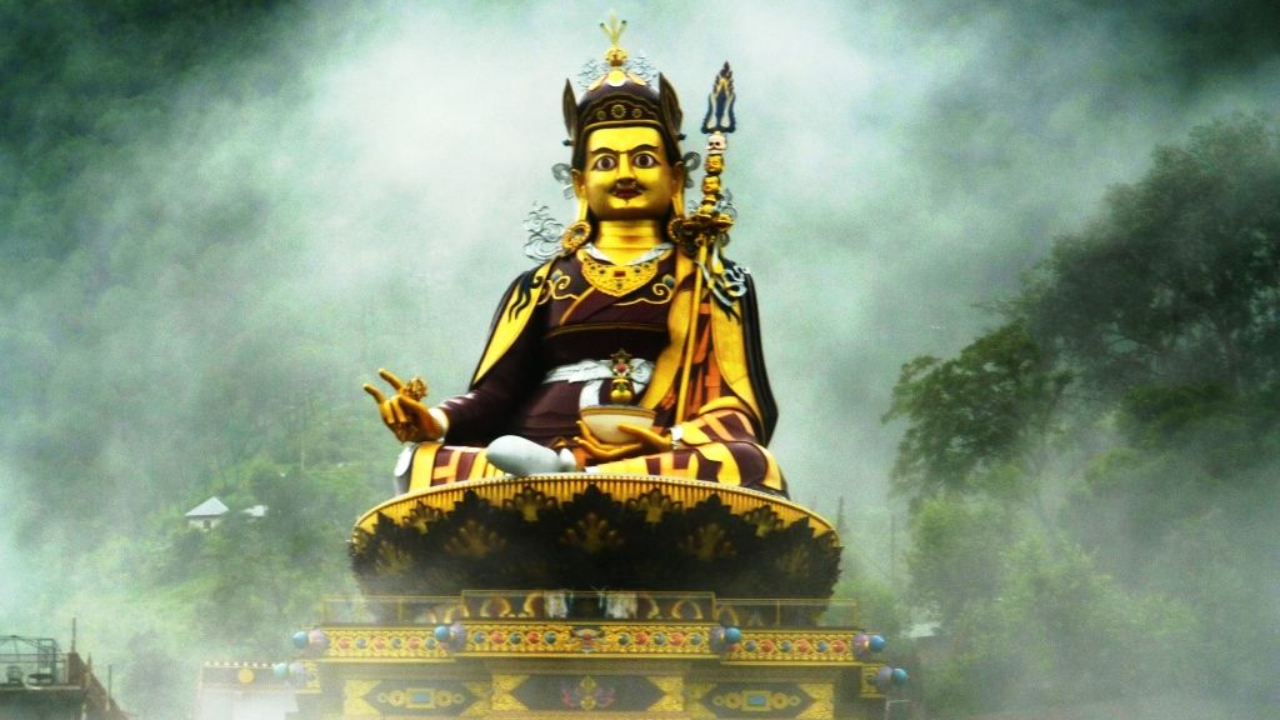
When I was in Ladakh, I heard stories of Naropa and Padmasambhava. I heard about the moments when each of them was approached by dakinis as actual encounters that changed the entire direction of their practice.
I heard how Naropa was confronted by dakinis who told him his intellectual understanding wasn’t enough, and that his real path required direct experience. I also heard Padmasambhava received essential Tantric instructions from dakinis who appeared precisely when he needed guidance for the next stage of his training.
This was the first time I heard the word dakini, in Sanskrit khecara, meaning “sky-goer.” A dakini is a being who arrives when a practitioner is ready for a deeper level of truth.
In Tibetan Buddhism, Vajrayana, and Tantra, the dakini is recognized as the embodiment of awakened feminine wisdom. She is a force guiding both men and women toward the recognition of their true nature.
This article opens into a deeper exploration of the dakini and her role, her manifestations, her teachings, and why she continues to be central to the Tantric path.
What Is a Dakini?
A dakini is best understood as a living movement of awakened feminine energy that shows up in many ways. It can show up as a meditational deity you visualize in Tantric practice or as a luminous field of spiritual power that ripples through you.
And sometimes a dakini shows up as an actual woman in the form of a teacher or consort, whose presence catalyzes an awakening. At the core of all this, a dakini is a female embodiment of enlightened energy.
When a dakini appears she is either (a) the shape you adopt in meditation to wake up (a yidam), (b) the felt quality of mind that cuts through confusion, or (c) a human expression of that energy whose teachings and behavior actually transmit divine insight.
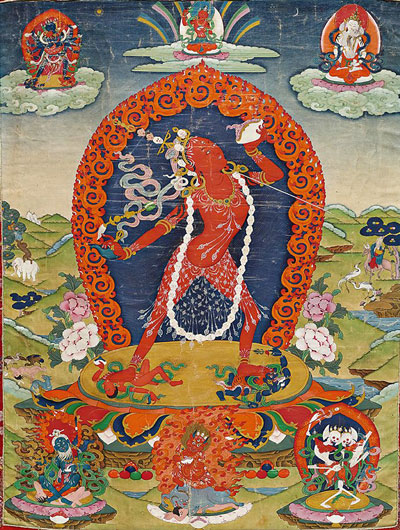
The Dakini in Tibetan Buddhism
In the Vajrayana practice the dakini functions as a force that produces breakthrough. The most well-known expression of this force is Vajrayoginī, the dakini-deity practitioners use to connect directly with the transformative feminine energy of the path.The tradition places her as one of the Three Roots, the Lama (the living teacher who transmits blessing and ethical guidance), the Yidam (the meditational form and method one practices), and the Dakini (the feminine presence that precipitates realization).
Practically speaking, the lama plants the seed, the yidam gives the method, and the dakini is the lightning strike that awakens the seed into direct seeing. This is why lineages insist that dakini contact whether visionary, dream-born, or embodied in a realized woman is central to real transmission.
Dakinis serve four functional roles on the path. Teacher, Initiatress, Mirror, and remover of bondage. As teacher, a dakini can deliver instructions, a single phrase or image that collapses years of conceptual practice (what Tibetans call a “pointing-out instruction”). As Initiatress she appears at decisive moments to give empowerments or direct instructions that a practitioner is now ready to receive.
As mirror, she reflects the exact self-fabricated habit the student may be clinging to, or through a dream, sometimes by appearing as a person who triggers the student’s shadow, thereby exposing the knot. As remover of bondage, she uses methods all meant to short-circuit egoic defenses and bring painful attachments into the light of awareness.
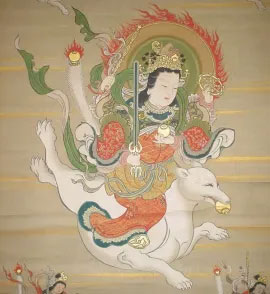
Dakinis Beyond Tibet: Japan, Shingon, and the White Fox
Although the dakini is often associated with Tibetan and Indian Tantra, her influence reached Japan centuries ago. In Japanese Esoteric Buddhism, particularly within the Shingon school founded by Kūkai, the dakini was adopted as Dakiniten (or Dakini Ten), a Goddess associated with clairvoyance and the force of desire. Unlike the Tibetan image of a sky-dancing yogini, the Japanese dakini is often depicted riding a white fox, a creature already deeply rooted in Japanese folklore as a shapeshifter and trickster spirit.
One of the most well-known legends is that of Kiko Tennō and the Dakini Fox. According to medieval accounts, an emperor Kiko Tennō was said to have been visited at night by a radiant woman riding a white fox. She appeared silently at the edge of his bedchamber, offering visions of increased power and the ability to see into the minds of those around him. Her gifts came with a clear condition that he must act with moral discernment.
The dakini did not punish or reward based on obedience alone; she responded to the ethical quality of intention. When the emperor acted with integrity, her presence enhanced his clarity and leadership. When he drifted into ambition and manipulation, her visits ceased, leaving him to confront the consequences alone.
The Hindu Roots of the Dakini
The Dakini's earliest appearance is in Indian Tantric and Hindu contexts, where a Dākinī was described as a fierce female spirit associated with cremation grounds and the consumption of human flesh or hearts. This image sounds shocking through a modern lens, but within early Tantra, these beings represented the raw, boundary-breaking forces that confronted a practitioner with impermanence. Their “flesh-eating” quality symbolized stripping a person of illusion, ego, and false identity.
When Buddhism absorbed Tantric practices during the 8th–10th centuries, the meaning of the dakini shifted. The frightening, liminal spirit became reinterpreted through a Mahayana lens as a wisdom-being, a feminine force that reveals the nature of mind.
Tibetan Buddhist Masters Who Encountered Dakinis
1. Naropa
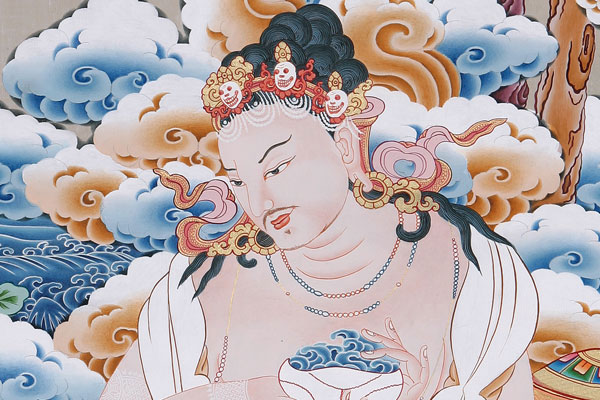
Before Naropa became one of the greatest Indian mahasiddhas, he was a brilliant scholar at Nalanda University, highly respected and deeply proud of his learning. According to traditional accounts, a Dakini appeared to him in the form of an old, ragged woman.
Osho shares this in Yoga: The Alpha and the Omega, Vol 5:
"Naropa was a great scholar, a great pundit. There are stories that he was a great vice-chancellor of a great university — ten thousand disciples of his own. One day he was sitting surrounded by his disciples. All around him were scattered thousands of scriptures — ancient, very ancient, rare. Suddenly he fell asleep, must have been tired, and he had a vision. I call it a vision, not a dream, because it is no ordinary dream. It is so significant, to call it a dream won’t be just; it was a vision.
He saw a very, very old, ugly, horrible woman — a hag. Her ugliness was so much that he started trembling in his sleep. It was so nauseating he wanted to escape — but where to escape, where so go? He was caught, as if hypnotized by the old hag. Her body was nauseating, but her eyes were like magnets.
She asked, “Naropa, what are you doing?”
And he said, “I am studying.”
“What are you studying?” asked the old woman.
He said, “Philosophy, religion, epistemology, language, grammar, logic.”
The old woman asked again, “Do you understand them?”
Naropa said, “Yes, I understand them.”
The woman asked again, “Do you understand the word, or the sense?”
This was asked for the first time. Thousands of questions had been asked to Naropa in his life. He was a great teacher — thousands of students always asking, inquiring — but nobody had asked this: whether you understand the word, or the sense. And the woman’s eyes were so penetrating that it was impossible to lie — she will find out. Before her eyes Naropa felt completely naked, nude, transparent.
Those eyes were going to the very depth of his being. and it was impossible to lie. To anybody else he would have said. “Of course, I understand the sense,” but to this woman. this horrible-looking woman, he couldn’t speak the lie; he had to say the
He said, “Yes, I understand the words.”
The woman was very happy. She started dancing and laughing.
Thinking that the woman has become so happy…. And because of her happiness her ugliness was transformed; she was no longer so ugly; a subtle beauty started coming out of her being. Thinking “I have made her so happy. Why not make her a little more happy?” he said, “And yes, I understand the sense also.”
The woman stopped laughing. She stopped dancing. She started crying and weeping, and all her ugliness was back — a thousandfold more.
Naropa said, “Why? Why are you weeping and crying? And why were you laughing and dancing before?”
The woman said, “I was dancing and laughing and was happy because a great scholar like you didn’t lie. But now I am crying and weeping because you have lied to me. I know — and you know — that you don’t understand the sense.”
The vision disappeared and Naropa was transformed. He escaped from the university. He never again touched a scripture in his life. He became completely ignorant: he understood that just by understanding the word, whom are you befooling; and just by understanding the word you have become an ugly old hag."
2. Padmasambhava
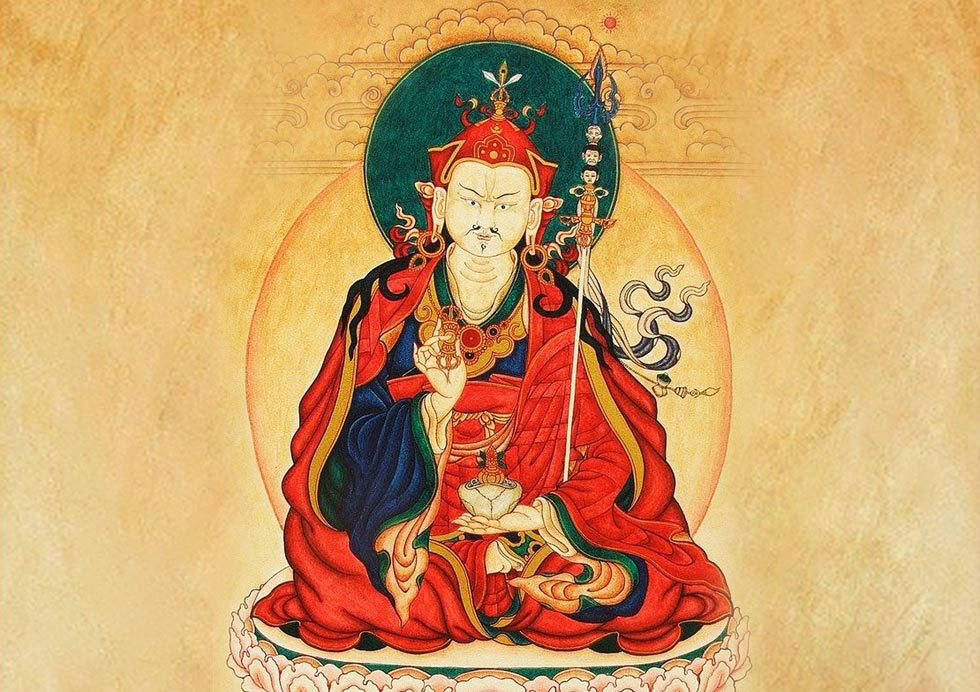
Padmasambhava, also known as "Guru Rinpoche," which means "precious master" in Tibetan, has a relationship with dakinis that is central to his life story. But one moment stands out; the dakini who appeared to summon him to Tibet. Padmasambhava was practicing in a cremation ground when a luminous dakini appeared and told him that a king in a distant land was seeking his help. Tibet was suffering under obstacles, and only he could tame the forces blocking the spread of Dharma.
This encounter was a command. The dakini told him that if he delayed, the window would close, and Tibet would fall deeper into chaos. Guided by her message, Padmasambhava traveled to Tibet, where he subdued hostile forces, established Vajrayana, and trained Yeshe Tsogyal as his principal disciple. In the classical biographies, the Dakini is the one who redirects his path and sets in motion the entire Tantric tradition that survives today.
When a Woman Acts as a Dakini for a Man in Tantra
In Tantra, a man cannot reach the depth of realization associated with “Shiva consciousness” unless he is opened and activated by Shakti. This is the foundation of Tantric union where Shiva is pure awareness, but without Shakti he remains asleep to the full range of experience. Shakti is the force that moves him into real transformation.
When this principle plays out between a woman and a man, the woman becomes a Dakini because her feminine presence brings him into true awareness. Shiva needs Shakti to become awake, and Shakti becomes the Dakini when her presence exposes where he is still unconscious.
This is why, in traditional teachings, the Dakini is described as the “gateway to realization” for the practitioner. In a Tantric partnership, the woman becomes that gateway for the man. Her energy awakens his capacity to feel, to surrender, and to see clearly. Without the Dakini, without Shakti, Shiva remains untouched.
Read: Shiva, Shakti, & The Soul: The Essence of Shaivism Kashmir
Books About Dakini's
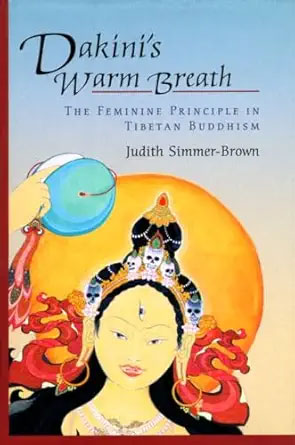
Judith Simmer-Brown’s Dakini’s Warm Breath (Snow Lion Publications)
This is the most comprehensive and respected study of Dakinis available in English. Simmer-Brown approaches the dakini through history, showing how the Dakini evolved from Indian Tantric origins into the refined Tibetan classifications. She makes it clear that the Dakini is an expression of awakened awareness that confronts and destabilizes the practitioner’s fixed identity.
What makes this book so valuable is that Simmer-Brown includes personal interviews and fieldwork, revealing how contemporary Tibetan teachers understand Dakini manifestation.
Her analysis helps the reader understand why the Dakini appears at moments of insight and breakthrough, and how she functions as the messenger of emptiness always pointing the practitioner back to the nature of mind.
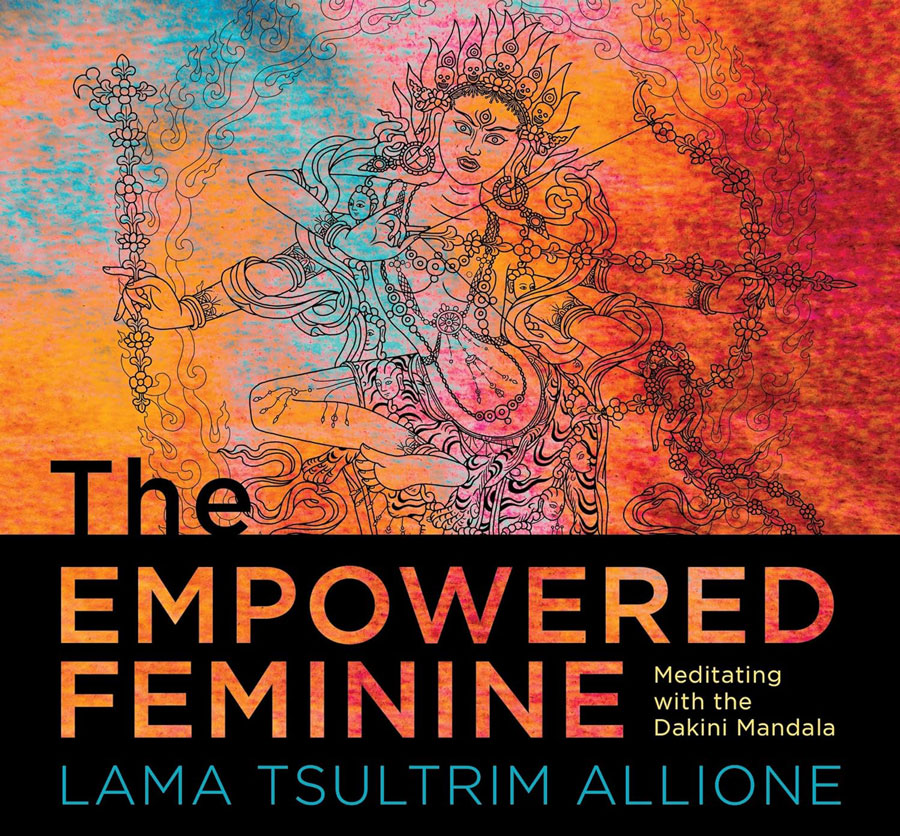
Lama Tsultrim Allione’s The Empowered Feminine: Meditating with The Dakini Mandala
Lama Tsultrim Allione’s Meditating with the Dakini is a practice-centered guide that introduces readers to the Dakini as a living force within meditation. In this text, Allione distills core
Vajrayana teachings into clear, accessible practices that help the practitioner meet emotional patterns directly.
She explains how the Dakini appears in meditation as a catalyst revealing energetic stagnation that keep awareness fragmented. Through guided visualizations, breathwork, and color-based contemplations drawn from the Five Wisdom Dakini mandala, she shows how each Dakini can be invoked as an internal teacher.
Michaela Haas’s Dakini Power (Shambhala Publications)
Haas profiles twelve contemporary female Tibetan Buddhist teachers, presenting their life stories, struggles, realizations, and contributions to the global transmission of Buddhism. Each woman embodies a facet of Dakini energy in real human form. Through detailed interviews and biographical narratives, Haas reveals the courage and uncompromising honesty that define these women’s paths. The book breaks the stereotype of Buddhist teachers as exclusively male monastics and highlights how female practitioners express the wisdom long associated with the dakini.
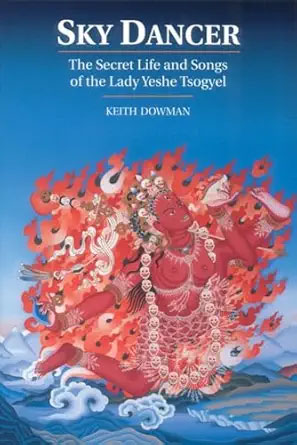
Keith Dowman’s Sky Dancer: The Secret Life and Songs of Lady Yeshe Tsogyal
This book tells the life story of Yeshe Tsogyal, widely considered the greatest human Dakini of Tibet and the spiritual partner of Padmasambhava. Through translations of her autobiographical writings and visionary songs, Dowman brings forward a woman who endured extreme hardship, undertook long solitary retreats, received direct transmissions from Dakinis, and achieved full realization. Her life story provides a living example of how Dakini wisdom expresses itself through uncompromising commitment to the path.

Lama Tsultrim Allione - The Mandala of the Enlightened Feminine
In her luminous work on the enlightened women of Tibet, Lama Tsultrim Allione resurrects the stories of yoginis, adepts, and wisdom-holders whose lives were largely hidden behind the more dominant masculine narratives of Tibetan Buddhism. These women were embodiments of the awakened feminine who walked through hardship, heartbreak, devotion, and ecstatic realization. Allione describes their spiritual accomplishments, and the qualities that allowed them to function as living Dakinis: women whose presence itself served as a transmission.

Sarita & The Mark She Was Born With
In Lama Tsultrim Allione’s book, the “mark of the Dakini” is described as a distinctive red or flame-colored marking that certain women are born with and is traditionally seen as a sign of Dakini lineage or Tantric realization carried across lifetimes. These marks often appear on significant energetic points of the body, especially the third eye, and were historically recognized as indicators of a woman whose path is intertwined with awakened feminine wisdom.
Sarita was born with exactly such a mark. She entered the world with a large red birthmark directly on her third eye, matching the very description Allione offers. Her mother worried it might remain on her face forever, but a doctor assured her it would fade, which it eventually did.
Yet the mark never truly disappeared. To this day, it still reappears whenever Sarita is excited or energetically opened, rising softly beneath the skin.
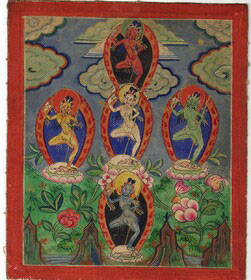
The Five Wisdom Dakinis
The Five Wisdom Dakinis are five expressions of awakened mind, arranged together in a mandala to show how our most familiar emotional struggles can be transformed into clarity and wisdom. Each Dakini belongs to one of the Five Buddha Families, and each represents a very specific shift in the movement from confusion into the exact quality of wisdom hidden inside it.
This mandala is a map of awakening and shows us the emotion we are stuck in, the wisdom it can become, the color and energy that support that transformation, and how meditation or Tantric practice works with that energy.
It’s important to note that these Five Wisdom Dakinis are not the same as the idea of a Dakini as an awakened woman. The Wisdom Dakinis are inner principles and tools used in visualization, meditation, and Tantra to understand how the mind transforms. The mandala shows how the mind awakens; the human Dakini shows what that awakening can look like in embodied form.
Vajra Dakini (Blue)
Vajra Dakini is connected to the Vajra family and appears in blue, symbolizing sharp, precise clarity. Her function is to cut through anger and mental tension by helping you see what is actually happening without distortion. When you practice with Vajra Dakini, you train yourself to observe your reactions directly instead of acting on them. This simple awareness turns emotional heat into a clear, undistorted view of reality. Vajra Dakini is the force that brings your perception back into accuracy whenever your mind has been clouded.
Ratna Dakini (Yellow/Gold)
Ratna Dakini belongs to the Ratna family and carries the warm, stabilizing energy of yellow or gold. She works with the feeling that something is missing. Her presence encourages a sense of inner stability and a feeling of enoughness. When you sit with her energy in meditation, the pressure to compare yourself to others relaxes, and you reconnect with the beauty of your divine essence.
Padma Dakini (Red)
Padma Dakini is part of the Padma or Lotus family, with the color red representing emotion and the heart. She works directly with desire and attachment, showing you how to feel desire without being pulled or confused by it. She guides you toward love that is present and discerning rather than entangled or clingy.
Karma Dakini (Green)
Karma Dakini is associated with the Karma family and appears in green, the color of movement and action. Her role is to organize the energy that becomes chaotic when you feel jealous, competitive, or overwhelmed by too many tasks. Practicing with Karma Dakini helps you pause and recognize what actually needs to be done so that you can act from a place of clarity rather than pressure. She makes your actions efficient and aligned, guiding you toward movement that is clean and purposeful.
Buddha Dakini (White)
Buddha Dakini stands at the center of the mandala in white, representing spacious awareness. Her wisdom is the ability to see everything within a wider, open field rather than getting stuck in confusion or fogginess. When you work with Buddha Dakini, you practice relaxing the mind and letting everything settle. This opens a natural clarity, an awareness that is calm and able to hold all experiences without being overwhelmed.
FAQ
What does a Dakini do?
In Tibetan Buddhism and Vajrayana Buddhism, a Dakini, in Sanskrit, khecara, which literally means “sky goer” acts as the force within a practitioner’s path that cuts through confusion and accelerates awakening. She appears in different ways depending on the practitioner’s capacity, sometimes as a meditational deity, sometimes as luminous energy rising through Tantric yoga, and sometimes in physical form as a woman whose presence delivers clarity more directly than any text or teacher.
Traditional teachings describe her as the feminine principle of awakened mind, a being who reveals the inseparability of bliss and emptiness and guides practitioners toward their true nature. The Five Wisdom Dakinis demonstrate how she transforms emotional patterns, anger, pride, desire, jealousy, and ignorance, into awakened wisdom.
Is a Dakini good or bad?
A Dakini is not “good” or “bad” in the way we typically define those words. She is a manifestation of enlightened energy, and her methods reflect whatever a practitioner needs for liberation. In the context of worldly Dakinis, especially those found in Japanese Buddhism, such as Dakini Ten, who sometimes appears riding a white fox, her actions may look unpredictable or even fearsome, especially to those who approach her with impure intention.
How do you know if you are a Dakini?
In the modern context, many women resonate with Dakini energy because they feel connected to the sacred feminine. But in traditional Tibetan Buddhism, a woman is recognized as a dakini when her life and presence naturally express the qualities associated with mkha’ gro ma (khandroma). This means she must have clarity that disrupts illusion, a grounded relationship with desire, integrity in action, and the ability to transmit insight through her very being.
When Lama Tsultrim Allione, author of Dakini’s Warm Breath from Snow Lion Publications, speaks of Dakini embodiment, she emphasizes that a Dakini is a manifestation of awakened feminine intelligence.
Is a Dakini a deity or a spirit?
A Dakini can take the form of a deity, a spirit, or a human embodiment, depending on the level of teaching being referenced. In the ritual and meditational systems of Vajrayana Buddhism, she is a full deity, sometimes a single Goddess such as Vajrayoginī, sometimes a mandala of forms like the Five Wisdom Dakinis who appear throughout the Mahāvairocana Tantra and other tantric texts.
In the visionary and energetic dimensions of practice, she appears as a spirit-like presence or wave of clarity, what the Princeton Dictionary describes as an emanation of “female enlightened energy.” And in everyday life she may appear in physical form as a woman whose presence awakens others, echoing the long lineage of female practitioners, yoginis, and teachers who acted as catalysts for realization.
In Shingon Buddhism during the middle ages, the Dakini took on a more spirit-like identity as Dakini Ten, often associated with the fox and linked to esoteric rites that blended Buddhism with folk traditions. Yet whether she appears as Goddess, spirit, or woman, she is the feminine principle of awakened mind whose power is to guide practitioners toward enlightenment and liberate them from illusion.