Matsyendranath, Hatha Yoga, & The Nath Tradition
Mar 03, 2026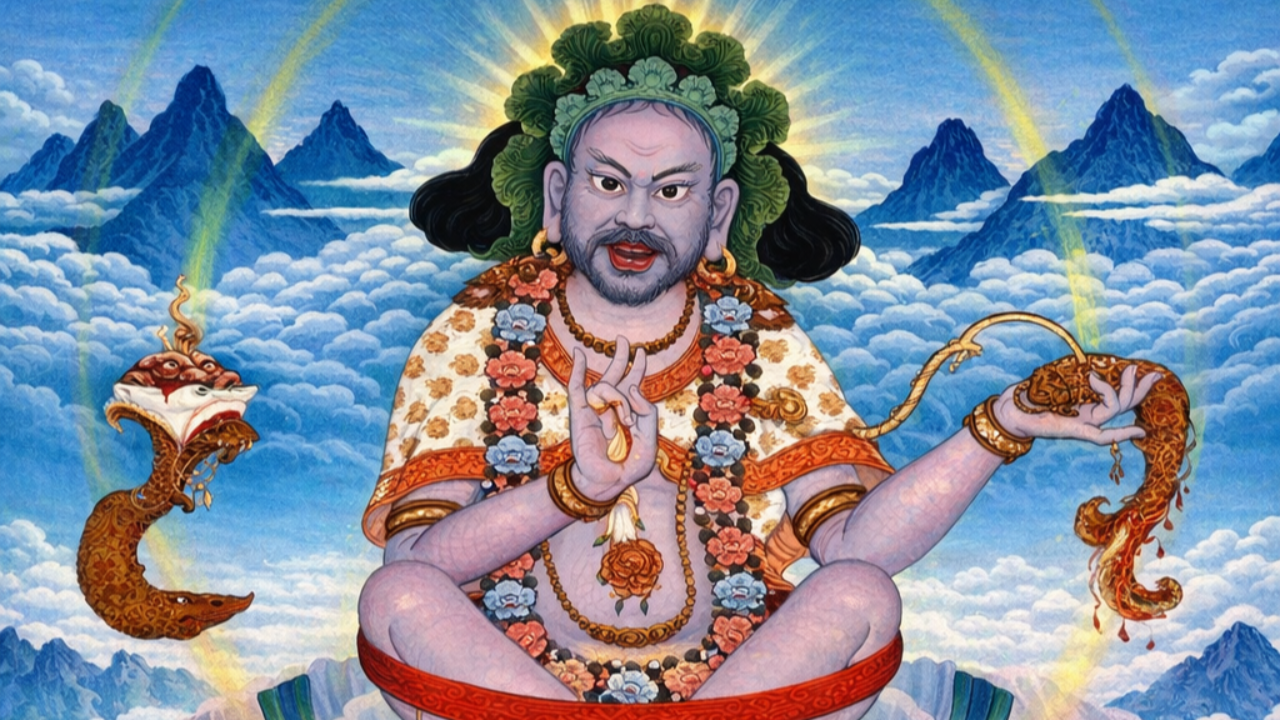
Matsyendranath was a practitioner, a siddha, who developed and transmitted some of the earliest methods for using the body as tools for awakening.
He is remembered across multiple traditions under different names, as the founder of the Nātha yogis in North India, as Machamuni in the Tamil Siddha lineage, as Minapa in Tibetan Buddhism, and as Rato Macchindranath in Nepal. He changed the course of yogic history by showing that the body itself could be the site of liberation.
Born in Kāmarūpa and cast into the ocean as an infant, he was swallowed by a fish and lived inside its body for twelve years. There, according to legend, he overheard Shiva teaching Parvati the most secret practices of Tantra.
The Mythic Origin: Fish, Serpents, & the Secrets of Shiva
Popular belief holds that Matsyendranath’s origin is surrounded by miraculous and legendary events. The earliest accounts of Matsyendranath’s life emerge from Kaula Tantric scriptures, Nātha oral tradition, and Tibetan siddha biographies. In the Navnath Bhaktisar, he appears as the first master of the Nāth lineage. In the Kaulajñānanirṇaya, he is the unnamed listener, the one who receives Shiva’s esoteric teaching without being directly addressed. In the Caturaśīti-siddha-pravṛtti, a Tibetan text chronicling the eighty-four Mahāsiddhas, he is known as Minapa, a fisherman from the eastern plains of India who attained realization inside the belly of a fish. Many legend exist about his early life and miraculous survival.
The region of Kāmarūpa, in present-day Assam, is where his life is said to have begun. At the time, this was a stronghold of śākta Tantra. Astrologers reading his birth chart interpreted a dangerous alignment of stars, and declared that the child’s presence would destabilize his entire village. The remedy given was ritual exile. His parents, under social and religious pressure, cast him into the sea shortly after birth.
In Nath hagiography, this is his beginning. A giant fish swallowed the infant whole, and he survived. For twelve years, he lived inside the fish’s belly. This dark, fluid space became his first retreat. After twelve years, he was set free from the fish, symbolizing liberation and spiritual awakening. Within that chamber, he overheard a transmission of Lord Śiva instructing Pārvatī in the secret anatomy of yoga, receiving knowledge pertaining to advanced tantric and yogic practices.
A verse from the Kaulajñānanirṇaya, one of the core texts aligned with Matsyendra’s teachings, captures this moment:
“He who knows the union of the red and white,And drinks the nectar between the brows,He alone crosses the ocean of becoming.”(Kaulajñānanirṇaya, 3.14)
The Tibetan siddha texts echo the imagery:
“He heard the dharma in darkness, And practiced where light could not follow. He burned ignorance inside a fish.” (Caturaśīti-siddha-pravṛtti, Minapa’s account)
Historical & Cultural Placement: Siddha Lineages in Medieval India
The Nātha Lineage: Master of Embodied Alchemy
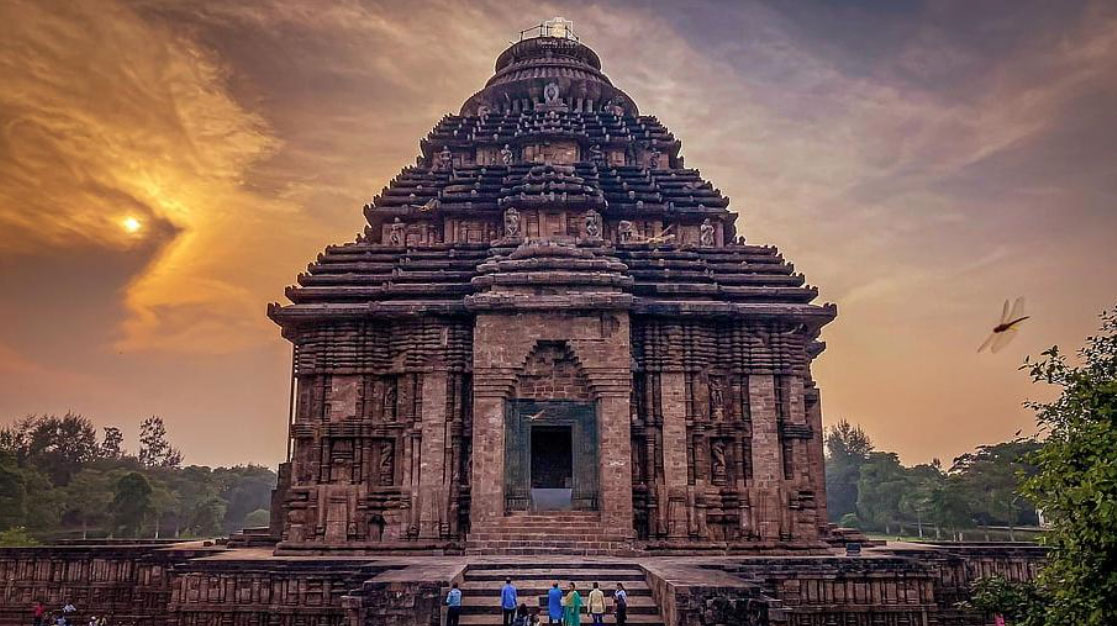
Emerging between the 9th and 11th centuries in northern and central India, this lineage took shape in a period when Tantric Śaivism, Buddhist Vajrayāna, and Siddha medicine were actively exchanging techniques. The Nāthas organized themselves around initiation, secrecy, and transmission through lived practice. Their teachings weren’t systematized through scripture until centuries later.
Unlike the Vedantic sannyāsins or Buddhist monks, Nātha yogis wore earrings split through the cartilage (kanphaṭa), a mark of physical initiation. Their practice emphasized the mastery of internal fire (agni), breath retention (kumbhaka), and seminal preservation (vajrolī mudrā).
The Siddhar Lineages: Southern Echoes of a Northern Sage
The Tamil Siddhar tradition is one of the oldest streams of esoteric practice in South India. Rooted in the Śaiva and Śākta landscape of the Tamil-speaking regions, this lineage traces its origin through 18 primary siddhars, who were mystics and alchemists that practiced medicine, yoga, sexual tantra, and elemental transmutation.
These siddhars wrote in Tamil verse, concealed their knowledge in cryptic poetry, and passed on teachings through palm-leaf manuscripts that described techniques for attaining immortality, manipulating breath and heat, and refining bodily substances. Their worldview treated the human body as a laboratory (kāya kalpa), where herbs, metals, minerals, and internal fluids could be processed to preserve vitality and access supernatural states of perception.
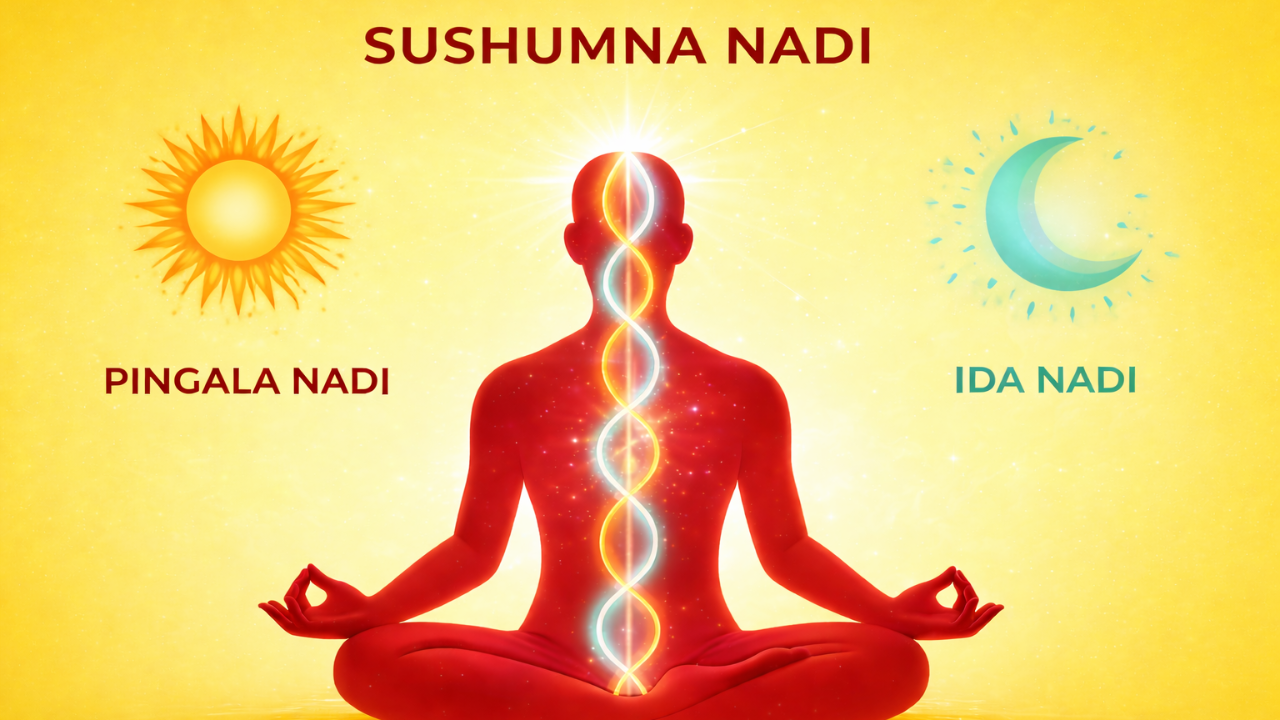
The siddhars used a technical vocabulary - rasāyana (alchemy), vāyu (prāṇa or wind), nāḍī (subtle channels), and bindu (sexual essence) - to describe processes nearly identical to those found in Nātha and Kaula Tantra. The ultimate goal was kāya siddhi, the transformation of the physical body into an incorruptible vessel.
Within this lineage, Matsyendranath is remembered as Machamuni, one of the canonical 18 siddhars, and is also called Minanatha in some traditions. His name appears in poems and oral verses attributed to Bogar and Agastyar, two of the most revered Tamil siddhars. In these texts, Machamuni is described as a yogi who mastered the breath-wind system, activated the spinal fire, and stabilized the body until it no longer aged. The Siddhar tradition regards the attainment of the state of a perfect yogi as an ideal, and Matsyendranath is seen as embodying this ideal. He is credited with having achieved kāya siddhi through the use of retained bindu, lunar breathwork, and herb-based alchemy, which was a convergence of siddha medicine and tantric internal ritual.
Vajrayāna Buddhism: The Mahāsiddha Minapa
Vajrayāna Buddhism developed during the latter half of the first millennium CE as an esoteric path within the broader Mahāyāna stream. Rooted in the northeastern and northwestern regions of the Indian subcontinent - Bengal, Bihar, Odisha, Kashmir, and the Swat Valley - it was marked by rapid, ritual-based methods for awakening that relied heavily on the transformation of the body. Monasteries like Nālandā and Vikramaśīla preserved scholastic Buddhism, but tantric practice unfolded in parallel, often outside the institutional framework.
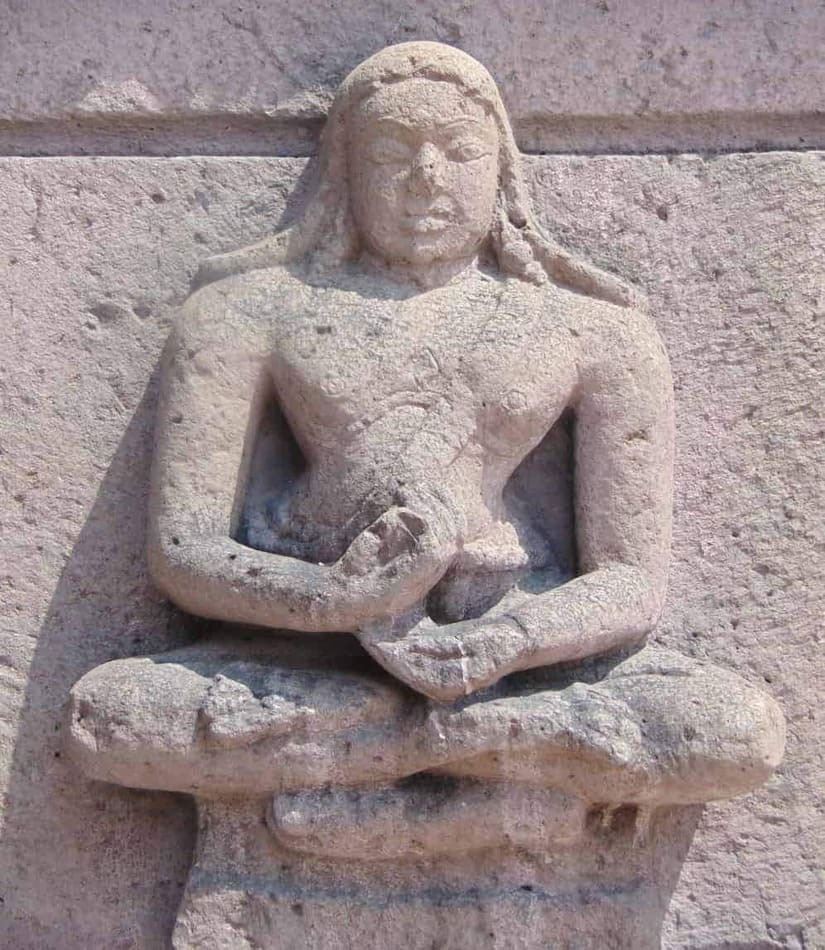
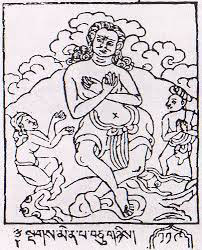
The Mahāsiddhas, 84 legendary figures, are remembered as those who achieved complete realization outside traditional monastic settings. One of them is Minapa, identified in both Indian and Tibetan sources as a form of Matsyendranath. Matsyendranath is notable for being included in both the lists of the 84 Mahāsiddhas and the nine Nathas, highlighting his recognized status across different spiritual traditions.
His story also includes mention of Oddiyāna, a kingdom located in the Swat region, regarded as the spiritual cradle of Vajrayāna. Minapa is said to have traveled there to deepen his training with ḍākinīs who ruled the inner tantric realms. While no historical records confirm this, the persistent association across Tibetan and Nepalese lineages suggests that Matsyendranath’s teachings were indeed transmitted into Vajrayāna ritual systems. In Buddhist traditions, Minapa is sometimes regarded as a Buddha-to-be or bodhisattva, reflecting his semi-divine status and connection to compassion and enlightenment. In this form, he becomes Macchindranātha, invoked in tantric healing rites, especially those involving the womb, blood karma, and sexual vitality.
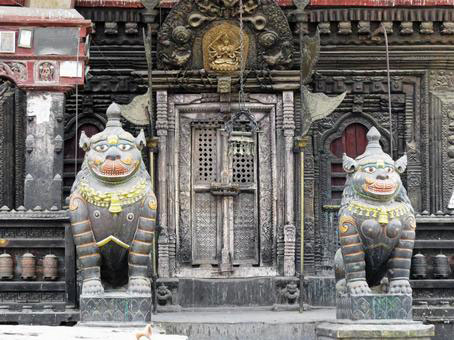
The Nepalese Deity: Macchindranāth of Patan
Every spring, in the city of Patan (Lalitpur), the Rato Macchindranāth Jatra begins. This is a month-long chariot festival in which an enormous wooden ratha, built without nails and carried by hundreds of people, moves through the ancient crossroads of the city.
The chariot represents a moving temple, carrying Macchindranāth’s presence as a rain-bringer, an embodied force called upon to restore balance between sky and soil. The festival originated in response to a historic time when Patan faced drought; according to the Bungamati Chronicles, the drought was broken only when Gorakṣanāth, in deep meditation, was persuaded to rise at the arrival of his guru, Matsyendranath. With his rising, the rain-showering serpents—nagas, serpent deities associated with rain and subterranean water—were released, and the monsoon returned.
Macchindranāth’s presence is honored in masked dances, ancestral spirit invocations, and offerings of blood, water, and fermented grain, all of which speak to his liminal identity as a yogi, a god, and a guardian of natural rhythms. His worship and associated practices are observed in different temples across the region. His temple in Bungamati, a small village near Patan, houses his idol for half the year, after which it is transported to Patan for the procession.
Sahaja & Siddha-hood: Liberation Without Renunciation
In Matsyendranath’s transmission, sahaja refers to the awakened condition in which the body, senses, and awareness operate as a single current. The term means “innate” or “natural,” but its realization requires a total presence with the raw elements of embodiment. It is the inner state where breath and sensation are synchronized, where impulses arise and dissolve without distortion, and where the energy within the body flows unimpeded.
Matsyendranath taught that this condition appears in the pulse, the gaze, the voice, and the quality of movement. A practitioner who enters sahaja begins to speak more slowly, their digestion shifts, and their sexual desire no longer fractures into compulsion or withdrawal. They begin to live in rhythm with their body’s intelligence, rather than outside of it.
He lived and practiced in sites that intensified this alchemical awareness. In each place, he engaged with the elements. Fire became an offering ground. Water became a mirror for reflection. Earth became the ground for ritual posture and breath retention. When he practiced yoni pūjā under the lunar calendar or invoked the goddess through inner fire rituals.
A siddha in his lineage is someone whose practice has matured to the point that their body no longer obstructs awareness. The spine becomes receptive to upward currents, the senses remain alert without reaching and the nervous system can hold intensity without collapse.
Texts, Sayings, and Doctrinal Contributions
Matsyendrasamhitā
The Matsyendrasamhitā is a tantric manual rooted in Kaula practice, written in the form of instructional dialogue and encoded ritual procedure. The text outlines detailed practices of maithuna (ritual union), retention of bindu (sexual fluid), and breath-centered kriyā designed to awaken kuṇḍalinī. It offers sequences for activating energy channels (nāḍīs), using mudrā to control internal flow, and employing mantra to stabilize altered states of awareness. The body is treated as a vessel to be trained, pressured, and opened. Sexual fluids are described as energized carriers of śakti, and the text gives explicit instructions for how to reverse their habitual direction and use them as fuel for transmutation.
Kaulajñānanirṇaya
The Kaulajñānanirṇaya is a core tantric scripture of the Kaula tradition, composed as a direct transmission between Śakti and Śiva in the form of goddess-to-devotee instruction. Unlike abstract metaphysical treatises, this text delivers pragmatic, intimate guidance for practitioners engaged in inner ritual. It maps the body as a living shrine, where breath, fluids, and desire become tools for awakening. Central to the text are teachings on the upward flow of bindu (seminal or sexual essence), the manipulation of lunar and solar currents through breath, and the identification of karmic residues stored in specific bodily regions, especially the heart, throat, and pelvis. It gives methods for their release through mantra, mudrā, and visualization. The text focuses on internal alignment - timing breath with the moon, synchronizing sexual union with mantra, and refining sensation until it opens into śakti awareness.
Matsyendranath appears in the Kaulajñānanirṇaya as the interlocutor, the student of the goddess, the one receiving and anchoring the teaching. This positioning reflects his standing in Kaula tradition as a realized practitioner whose capacity made him a vessel for divine instruction. His name is invoked with reverence in multiple manuscripts, and the intimacy of the goddess’s voice throughout the text implies a student already immersed in practice.
Haṭha Yoga Pradīpikā
The Haṭha Yoga Pradīpikā, compiled by Svātmārāma in the 15th century, is one of the foundational manuals of physical and energetic yoga practice in India. It systematizes detailing āsanas, prāṇāyāmas, bandhas, mudrās, and meditation sequences aimed at awakening kuṇḍalinī and attaining liberation through the body. The text is practical and instructional, designed for those already committed to sādhanā. Each section focuses on physiological control and energy redirection, emphasizing breath retention (kumbhaka), pelvic and throat locks (mūla and jālandhara bandha), and inner fire activation. What distinguishes this work is its insistence on the body as a crucible for transformation, a legacy that can be traced back to the Kaula and Nātha yogis who preceded its codification.
Matsyendranath’s name appears in the opening invocations of the Haṭha Yoga Pradīpikā as one of the original siddhas of the lineage. The techniques laid out in the text, like vajrolī mudrā, breath-lock sequences, and spinal pressure kriyās, were passed down from Matsyendra through his personal discipline.
Conclusion
Matsyendranath developed the core methods that define serious yoga practice like breath retention, energy locks, seminal fluid control, and inner fire techniques. Some of these are the foundations of Hatha Yoga and appear in texts like the Haṭha Yoga Pradīpikā because of him.
He showed that liberation happens through the body. His teachings were rooted in daily sādhanā, breath, posture, ritual, and the redirection of desire. He trained Gorakshanath, formalized the Nātha lineage, and influenced the Kaula tradition, the Siddhar tradition, and Vajrayāna Buddhism.
Today, his impact lives on wherever practitioners work with bindu, vāyu, and agni. If you practice Hatha Yoga seriously, you are working with Matsyendranath’s system, whether or not his name is mentioned.
FAQ
Who were the disciples of Matsyendranath?
Matsyendranath’s most well-known disciple was Gorakshanath, often credited with shaping and spreading the Nātha tradition across medieval India. In most accounts, Matsyendranath, also called Matsyendra Nath or Minanatha, initiated Goraksha through direct transmission. He is regarded as Gorakshanath’s guru, and this relationship forms the backbone of the Nātha sampradāya.
According to Nātha lineage texts, Matsyendranath had eight disciples in total, known as the eight traditional masters, who each contributed to spreading yoga teachings in different regions of India. These disciples carried his practices through the siddha tradition, especially into the fields of alchemical body work, kundalinī awakening, and Kaula Tantra.
How was Matsyendranath born?
The story of Matsyendranath’s birth begins in Kāmarūpa, a sacred site in Assam, India. One legend states he was born under an inauspicious star, which led local astrologers to declare him a danger to his village. Out of fear and religious pressure, his parents cast him into the sea. There, he was swallowed by a giant fish, and for twelve years, he lived inside the fish’s belly.
Inside this dark, enclosed space, he heard Lord Shiva teaching the secrets of Kaula Tantra to Parvati. According to some versions of the legend, Shiva or Parvati fell asleep during the teaching, which allowed Matsyendranath to overhear these secrets. These yoga sutras weren’t meant for him, but he listened. And through practicing sādhanā in complete isolation, his body became a crucible for transformation. By the time the fish swam ashore and he emerged, he had become a fisherman turned siddha, the Lord of the Fishes, Matsyendra Nath.
What were the teachings of Matsyendranath?
Matsyendranath’s teachings formed the root of what we now call Haṭha Yoga.. He taught through embodied practice: control of the breath, retention of sexual fluids, visualization of deities in the chakras, and igniting sacred fire through repetition and discipline.
In the Nātha tradition, Matsyendranath’s work focused on the alchemical transformation of the body through techniques now recorded in texts like the Haṭha Yoga Pradīpikā. He taught how to teach yoga through direct energetic instruction. His approach blended Kaula Tantra, Nātha siddha practices, and rituals honoring the divine feminine.
His influence extended beyond India, with Tibetan renditions calling him Minapa and including him among the 84 Mahāsiddhas. His impact shaped every major stream of yoga tradition that came after.
What is the legend of Gorakhnath?
Gorakhnath, the most famous of Matsyendranath’s disciples, is often described as the one who formalized the Nātha sect. As the direct disciple of Matsyendranath, he carried his guru’s body-based methods into a structured path of Nātha yogis that spread across northern and southern India.
One legend says that Goraksha was a young man born from yogic power, found by Matsyendranath near a riverbank. Others say he was born of a dancing girl who had been blessed (or cursed) by Matsyendra himself. In either version, Gorakshanath becomes the one who could hold the teachings, expand the reach of the Nātha sect, and build the foundation for Haṭha Yoga as a religious movement that placed great emphasis on the body, breath, and sexual energy.
He is credited with organizing the Navnath Sampradāya (the nine traditional masters), who established the Nātha tradition across Uttar Pradesh, Nepal, Maharashtra, and other parts of the subcontinent.