The Truth About Male Self Pleasure No One Talks About
Feb 27, 2026
The teachings shared in this article are explored more deeply in my book, Divine Sexuality, which expands into many additional facets of both male and female sexuality.
Male self-pleasure is one of the most misunderstood and least examined relationships a man will ever have. It is usually framed as a habit to control or a release to manage. Most often, it is a private act to rush through and forget. Rarely is it spoken about as something that deeply impacts a man's emotional and spiritual life. And yet, for most men, self-pleasure is the very first way they learn to relate to their own life force.
Masturbation, a form of autoeroticism in which a person sexually stimulates their own genitals for sexual arousal or other sexual pleasure, is a common and healthy behavior among men regardless of relationship status.
Long before fantasy or even desire, a male body learns pleasure as a form of comfort and connection. Touch is foundational. What changes over time is not the instinct to touch, but the way it is conditioned and stripped of meaning.
In Tantra, rather than treating self-pleasure as a release of excess energy, it understands it as a doorway back into wholeness. A place where sexual energy can circulate and expand beyond the genitals. A place where sex and love are not separate, and where orgasm is a state to inhabit. Masturbation is also widely recognized for its health benefits and is considered by clinicians to be a normal part of sexual enjoyment.
This article is an invitation to look at male self-pleasure, and to understand how early experiences shape adult sexuality and how rushed habits limit pleasure. We also look at how love, when directed inward, can restore the ecstasy and vitality that many men sense is possible, but rarely experience.
Male Masturbation & Self Pleasure
View this post on Instagram
A man’s relationship with self-pleasure begins at the very start of life. Even before birth, the developing body instinctively explores sensation. Research and observation now show that the fetus naturally touches its genitals in the womb, not out of sexuality, but as an early encounter with feeling and comfort.
After birth, this instinct continues. A baby boy reaches for his genitals because it soothes him, grounds him, and helps him sense himself from the inside. This touch is one of the first ways he discovers the vitality moving through his body. There is no agenda and no self-consciousness, only a natural curiosity and an embodied sense of pleasure as regulation.
Masturbation is frequent in both sexes and has been depicted in art since prehistoric times, highlighting its universality and naturalness.
Modern child-rearing practices, however, often interrupt this relationship almost immediately. When a baby is consistently covered and contained, his access to his genitals and anus is limited. With that limitation, he loses an innate way the body self-regulates and feels whole. This is not a critique of nappies themselves, but an acknowledgment that constant restriction removes an early source of comfort.
Read: The Spirituality of Sexuality: How Pleasure Becomes Sacred
Innocence, Energy Flow, & the Natural State of the Male Body
In many traditional cultures, early childhood is approached differently. In parts of India, for example, babies are not routinely kept in nappies. Instead, the mother becomes deeply familiar with her child’s rhythms and responds intuitively, taking the baby outside when needed.
When possible, allowing a child time to move freely and unrestricted by constant covering or containment supports a natural relationship with the body. Moments of naked play allow the nervous system to relax and the body to remain in connection with itself.
A baby boy, at this stage of life, carries no shame or negative association around his genitals. Touch arises naturally, without self-consciousness or judgment. Through this contact, the body’s most foundational energetic center is awakened. The root of the body comes alive, and energy begins to circulate.
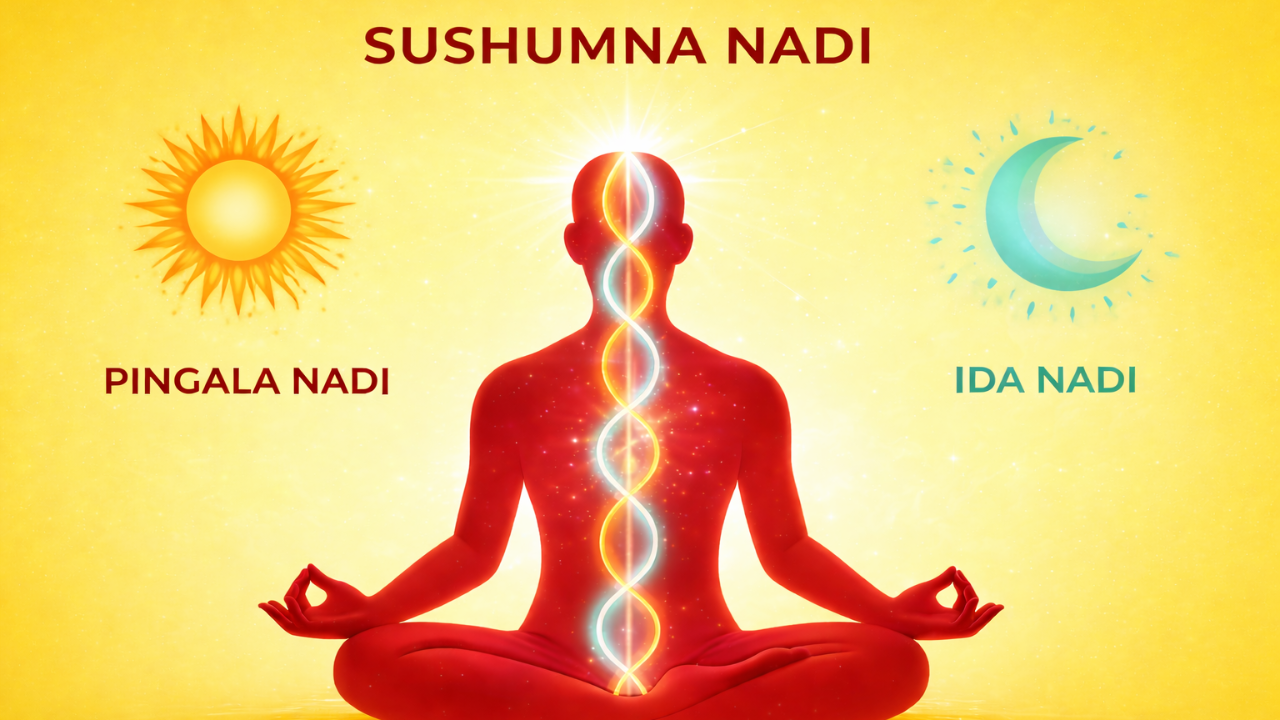
As this energy moves upward through the spine, it links the sexual center with the higher centers of awareness, creating a vertical current within the body. In this flow, the child experiences himself as whole. There is no fragmentation between body and consciousness, no sense of separation from life.
This early state of embodied unity is not something that must be created later in life. It already exists. What follows, for many men, is not the discovery of pleasure, but the gradual forgetting of it.
The Loss of Innocence & the Formation of Sexual Patterns
In early childhood, the body exists in a state that could be described as effortless harmony. There is a natural sense of belonging within oneself and with life as a whole, a kind of inner paradise that does not need to be named to be felt. Although this state fades from conscious awareness as we grow, its imprint remains. In adulthood, it often resurfaces as a deep, wordless longing. Across cultures and traditions, mystics have spoken of awakening as a return to this original innocence, or as a second birth into wholeness.
During these formative years, everyday interactions leave powerful impressions on the body. When a parent cleans a young boy with gentleness and care, the child absorbs a felt sense that his body is safe, accepted, and worthy of kindness. This creates a positive internal relationship with that area of his body, one that can last a lifetime.
When the same care is offered with discomfort, impatience, or aversion, a very different message is received. Even without words, the body learns to associate parts of itself with rejection or shame. These early, preverbal imprints often follow a boy into adulthood, quietly shaping how he relates to his body, his pleasure, and his sense of self.
As the child grows, social cues often reinforce this distancing. He may learn, directly or indirectly, that touching his own body is inappropriate or something to hide. Over time, this contributes to a gradual disconnection from the natural flow of energy within him. What was once effortless and whole becomes fractured.
Then puberty arrives, bringing with it a sudden surge of intensity. Hormonal changes introduce ejaculation, a powerful and unfamiliar experience marked by a strong buildup and release of sensation. For the boy, this is not initially about sexuality as relationship or desire; it is simply a new capacity the body reveals, seemingly without warning.
This new sensation draws attention back to the genitals, but the energy of puberty is frequently channeled toward release alone. If earlier messages around touch were negative or confusing, the boy may no longer know how to connect with his body gently or lovingly. Instead, self-pleasure becomes rushed and secretive, something done quickly and quietly, without space for presence or exploration. Masturbation can also be a way to relieve stress and clear one's head before engaging in other activities.
Over time, this hurried approach becomes habitual. The body learns speed and release rather than energy circulation. Eventually it becomes a repetitive pattern that leaves little room for depth or integration. For many men, this pattern carries directly into their adult sexual relationships, limiting the range of pleasure and fulfillment available to them.
And so, without realizing it, many men live their lives within a narrow expression of sexuality, unaware of the vast terrain of experience that remains unexplored because the path back to it was never shown.
Compulsive masturbation, like any compulsive behavior, can disrupt an individual's daily life, work, or relationships. While masturbation is a natural and healthy practice with emotional and physical benefits, it may become problematic if it interferes with responsibilities or affects your sex life with your partner.
Free Guide - The Anatomy of Male Pleasure
If this conversation has sparked curiosity, we’ve created something deeper for you. Download our free guide to understanding male sexual energy, pleasure zones, and the subtle mechanics behind full-body ecstasy. It’s a grounded, insightful exploration of male pleasure designed to transform the way you approach intimacy and connection.
Love as the Pathway Back to Wholeness

Touching one’s own body is not something that needs to be justified or corrected, it is a natural and healthy expression of being alive. What many men lose over time is not the impulse to touch, but the sensitivity and presence with which they do it. To restore what has been lost, self-touch must be relearned as an act of care.
Masturbation offers significant well-being and health benefits, including stress relief, improved sleep quality due to the release of oxytocin and prolactin, and even a boost in immunity by increasing white blood cell count after orgasm.
When touch is guided by attention and warmth, it invites energy to move. This movement reawakens possibilities the body once knew instinctively, when pleasure was not confined to one place, but flowed through the whole system. The key to this reconnection is love.
Through loving contact with himself, a man can access a deep and stabilizing sense of wellbeing. The release of endorphins during self-pleasure not only enhances feel good sensations but also provides natural pain relief. His body begins to feel like a place he can rest inside, rather than a mechanism to use or discharge. In this state, sexual energy nourishes him deeply.
What is commonly understood as male self-pleasure or masturbation is often a limited expression of what is possible. Tantra describes orgasm as an expansive, full-bodied experience that engages emotion, breath, and awareness.
Love is what allows the transition. When a man brings care and presence to his own touch, sexuality naturally opens into something larger than sensation alone.
Loving Yourself as a Man: From Release to Expansion
When a man brings his hands to his body with genuine care, self-touch becomes an intimate meeting with himself. Most guys are familiar with a version of self-pleasure that follows a predictable path: stimulation builds, tension increases, and ejaculation brings release.
There is nothing inherently right or wrong way to enjoy this experience. It serves a purpose, and at times it may be exactly what is desired. But the limitation arises when this is the only pathway a man knows. When sexual energy is always driven toward discharge, it never has the chance to circulate within his energy centers and be a force of transformation.
By including not just the genitals but the surrounding pelvic area, and by staying present with sensation rather than rushing toward an endpoint, the body begins to awaken more fully. Exploring other erogenous zones, such as the perineum, testicles, and the penis head, all rich in nerve endings, can enhance pleasure and lead to more intense orgasms. Energy gathers and spreads, often settling into the lower belly, creating a sense of fullness.
As this energy builds, expression may arise naturally. Sound may emerge as an instinctive release of intensity and feeling. These expressions allow sensation to move upward instead of remaining concentrated in one place. The buildup of fluids in the prostate and seminal vesicles can also enhance the experience, and the prostate gland, often called the male G-spot, can provide intense sensations when gently rubbed or stimulated.
Movement often follows. The spine may want to ripple or stretch. The body may shift positions without conscious direction, such as sitting, lying in bed, or changing from the same position to improve pelvic floor muscle tone and increase blood flow to the penis. At this stage, whether the genitals are being touched or not becomes secondary. The body has taken the lead.
When this flow reaches the chest, a profound transition can occur. Sexual energy meets the heart, and the familiar divide between desire and emotion dissolves. Pleasure becomes tender as well as powerful. In this state, a man may recognize that what he has been seeking through sensation is actually connection, first with himself, and then with life.
Emotions may surface here. Laughter, grief, anger, or softness can arise as stored tension releases. These responses are signs that energy is moving where it has long been held. When allowed, they deepen the experience.
As surrender continues, the sense of a separate self may soften. Pleasure expands beyond the personal and becomes something vast and immersive. In this state, orgasm becomes a quality of being, an openness in which the body feels permeated by sensation and presence.
At this level, whether ejaculation occurs or not becomes less important. The intensity of pleasure has found new routes through the body, and self-pleasure transforms into a sacred exploration of masculine potential.
A man who has met himself in this way carries a different presence into intimacy. Having experienced depth within his own body, he approaches partnership without division. Masculine and feminine energies move fluidly within him, circulating in an ongoing exchange that has no fixed beginning or end.
Read: How To Experience Deeper Sexual Intimacy With Your Partner

Masculine Energy, Polarity, & the Chakra Pathway
Male sexuality is structured around a natural polarity that moves through the body in a precise way, and confusion arises when this is ignored. At the base of the male body, at the first chakra, or root chakra, sexual energy originates as an outward-moving force. This is why desire initially feels physical and directional, because it wants to move, to penetrate, to initiate.
But beneath that impulse is the need to feel met with love. When a man’s desire arises from a place where he feels accepted and wanted, his sexual energy remains grounded and stable. When it does not, desire accelerates, becoming tense or compulsive, because the body is seeking reassurance and a feeling of belonging through release.
As this energy builds, it naturally moves into the lower belly, where it must be received rather than pushed. This is where many men lose the thread. Instead of allowing sensation to spread and settle, they override it with stimulation. When energy is allowed to stay here, pleasure deepens and becomes fuller and less urgent.
Regular ejaculation is not only a natural part of this energetic process but also supports prostate health. Scientific studies suggest that frequent ejaculation may lower the risk of prostate cancer, highlighting a practical health benefit.
From this receptive layer, sexual energy then gathers upward into the solar plexus, where it transforms into strength and presence. This strength is the quiet authority of being at home in oneself. When a man is connected here, he does not need to prove; his presence carries weight on its own. If energy continues upward rather than collapsing back downward into ejaculation, it enters the heart.
Here, the separation between sex and emotion dissolves. Sexuality becomes capable of tenderness. Love enters as a physical sensation in the chest, changing the entire quality of arousal. Expression then arises naturally from this integration without effort or self-consciousness. Finally, as awareness opens further, the need to direct or control the sexual experience fades, and the sense of polarity itself dissolves.
At this level, masculine and feminine are no longer roles or opposites but movements within the same current. Desire, pleasure, strength, emotion, and awareness circulate together. When this full movement is allowed, sexuality no longer ends in depletion. It leaves the man feeling deeply alive, because the energy that was once forced outward has been allowed to complete its natural journey through the entire body.