What’s the Difference Between Classical Tantra & Neo-Tantra?
Jan 09, 2026
NeoTantra is a modern approach to the ancient Tantric path, a tradition that uses awareness of the body, breath, and sexual energy as a catapult into expanded consciousness.
It brings the essence of classical Tantra into everyday life, where sacred sexuality is understood as one of many ways to live with greater aliveness and joy.
Classical Tantra began in India and Southeast Asia and was deeply woven into spiritual study and ritual. It viewed every human experience as part of the spiritual journey. NeoTantra developed in the 1970’s when Osho coined this term as an offshoot of his Neo-Sannyas. In Osho’s vision of Tantra, ancient teachings from Great Masters of Tantra were interwoven with modern insights from psychology, body-based therapy, and modern relationship work, all held in the crucible of meditation.
At its core, Neo Tantra is about connection and focuses on how we relate to ourselves, others, and to life. It teaches that awareness lives in the small moments, like in how we breathe, listen, speak, or touch.
Because it is a living practice, NeoTantra keeps evolving. Each generation brings new understanding, integrating what helps people feel more present and connected.
What is NeoTantra?
The word “Neo” means new. Neo Tantra, often called Navatantra or modern Tantra, is the contemporary evolution of the ancient Tantric path, a reawakening of Tantra for a modern world that had lost touch with the sacred in the body.
Classical Tantra, born thousands of years ago in India and Southeast Asia, was a vast spiritual science that included Meditation, Mantra, Mudra, Yoga, Ritual, and Philosophy, all rooted in the idea that everything in existence is divine. NeoTantra took this understanding and reshaped it for a new time, focusing on direct experience.
The New Age Movement, of which Neo Tantra is a part, began to take form in the 1960s and 70s, during a period of enormous social and cultural change. Many young people from the West traveled the “hippie trail” through India and Nepal in search of meaning. Along their journey, they encountered living traditions of Yoga, Meditation, and Tantra. What they found was radically different from the Western idea of religion, a spirituality that included the body and saw consciousness as something to be lived.
These travelers spent time in ashrams and spiritual communities in places like Rishikesh, Pune, and Kathmandu, studying with Indian masters. When they returned home, they carried those seeds with them. But rather than recreate Tantra as it was, they adapted it to the culture they were returning to, one shaped by the sexual revolution and the growing field of body-based therapy.
This fusion gave birth to a new way of interpreting Tantra, a living, evolving form of Tantra focused on personal growth and intimate connection. It reframed sexuality as a path to consciousness rather than sin or indulgence.
Centers like Esalen in California and communes across Europe became hubs for this new wave of exploration. Teachers and seekers began weaving Tantric principles into therapy and couples work, introducing ideas of sacred sexuality into the Western vocabulary.
Influential Figures in Neo Tantra
John Woodroffe (Arthur Avalon): John Woodroffe, better known by his pen name Arthur Avalon, was a British scholar who played a crucial role in introducing Tantra to Western audiences. His detailed translations, especially The Serpent Power (1919), explored Kundalini, chakras, and Tantric cosmology. Though academic in style and rooted more closely in traditional sources, his work laid the intellectual foundation that later teachers would adapt into the more experiential practices of Neo Tantra.
Pierre Bernard: Pierre Bernard, famously dubbed “the Great Oom,” was one of the first Americans to bring Tantra into the spotlight, though in a highly sensational way. Born Perry Arnold Baker in Iowa, he reinvented himself as a spiritual master, blending yoga, secrecy, and hints of erotic ritual that captivated and scandalized audiences alike.
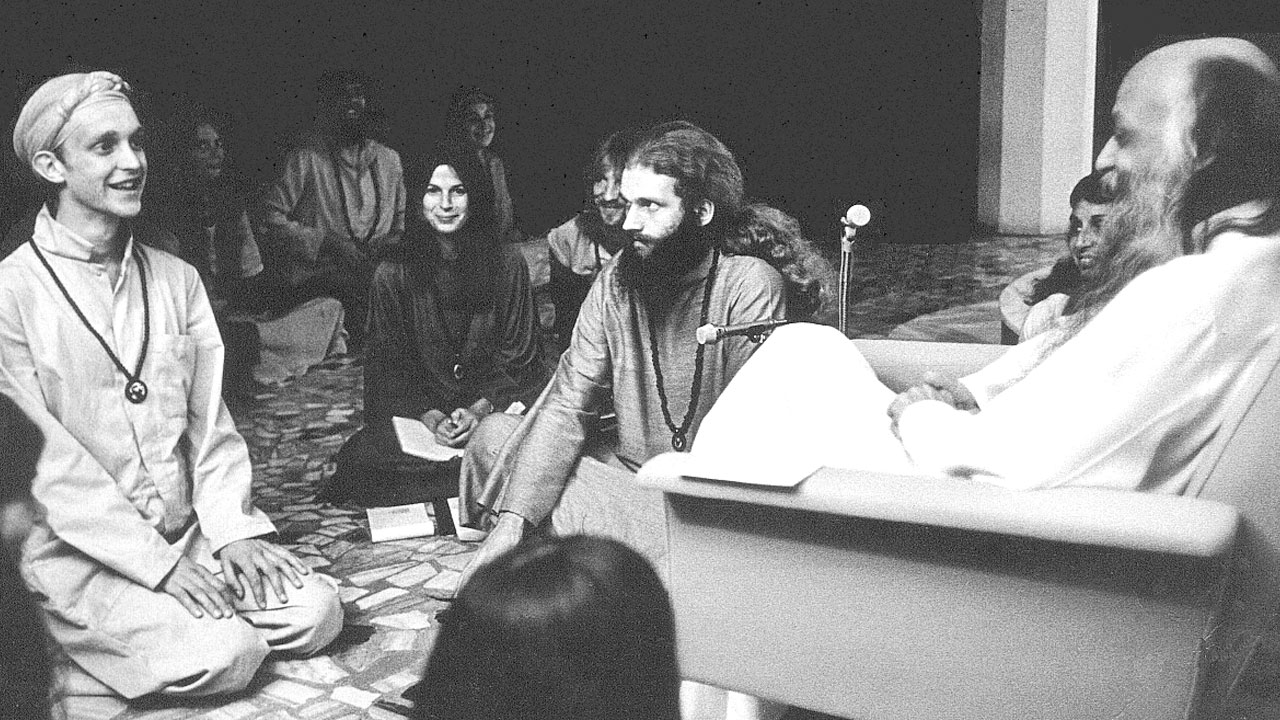
Osho: Osho was the most influential figure in shaping Neo Tantra as a path of liberation. He reframed sexuality as sacred energy that, when embraced consciously, could lead to spiritual awakening. In the 1970s and 80s, his movement grew rapidly, culminating in the creation of Rajneeshpuram, a vast commune in Oregon that drew thousands of followers from around the world.
Ma Ananda Sarita: Ma Ananda Sarita is one of the foremost living teachers of Neo-Tantra, known for carrying forward the experiential wisdom of Osho into a deeply embodied, heart-centered practice. She spent over 26 years in his communes in India and around the world, studying and living the teachings of meditation and love from the inside out. Through her international school, Tantra Essence, she has trained teachers and guided thousands through workshops and trainings on Tantra as a path to enlightenment. Her teachings, based in meditation, also includes a 7 level Tantra Training for couples which teaches couples the art of sacred sexuality.
Margot Anand: Margot Anand, from France, is a renowned Tantra Teacher, coming from the world of Osho. She helped bring Neo Tantra into mainstream Europe and North America through her Sky Dancing Tantra methodology. Through her bestselling books and experiential workshops, most famously The Art of Sexual Ecstasy (1989) she translated Tantric principles into practical tools for intimacy and conscious lovemaking. Her accessible, relationship-focused approach made sacred sexuality accessible for everyday couples, cementing her reputation as one of the most influential voices in popularizing Neo Tantra worldwide.
Stanislav Grof: A pioneer of transpersonal psychology, Stanislav Grof explored altered states of consciousness through methods like Holotropic Breathwork. While not strictly a Tantric teacher, his work paralleled Tantric understandings of energy, ecstasy, and transformation, influencing how Neo Tantra integrated breath and expanded awareness into healing practices.
Alexander Lowen: Founder of bioenergetics, Alexander Lowen emphasized the release of stored tension and trauma through movement, breath, and body-centered therapy. His focus on embodied expression and freeing energy resonated with Tantric ideas of awakening vitality, and his methods inspired later practitioners who blended bodywork with sacred sexuality.
Charles and Caroline Muir: Often called the “parents of the modern Tantra movement” in the United States, Charles and Caroline Muir began teaching Tantra workshops in the late 1970s. At places like the Esalen Institute, they developed accessible, hands-on practices for couples that combined intimacy, communication, and spirituality.
Wilhelm Reich: Wilhelm Reich was a controversial psychoanalyst and a student of Sigmund Freud whose work profoundly influenced body-based psychotherapy and Neo-Tantric thought. Reich focused on sexual energy, muscular “armor,” and the capacity for full-body orgasm as essential to psychological health. Although he lacked the spiritual language and symbolic framework of Tantra, his work closely parallels Tantric understandings of Kundalini and life force. Osho later remarked that had Reich been born in India, he might have been recognized as a great Tantra master rather than dismissed as insane. Reich’s ideas laid the groundwork for later integration of sexuality, energy, and therapy in Neo-Tantra.
Neo-Tantra vs. Traditional Tantra
The reason people so often equate Tantra with sexuality comes largely from the fact that Great Britain Colonised India into their British empire. During the Victorian age, scholars were translating Sanskrit texts, trying to understand the vast network of Hindu and other spiritual teachings from India. The Victorian age was sexually very repressive so when scholars found descriptions of some Tantric Rituals which included utilising sexual energy, they dubbed Tantra as the ‘Cult of Sex.’ This label stuck, and many people, even today, believe that Tantra is only about sex when in actual fact it is a very refined science for bringing heightened awareness and expanded consciousness into each and every aspect of life.
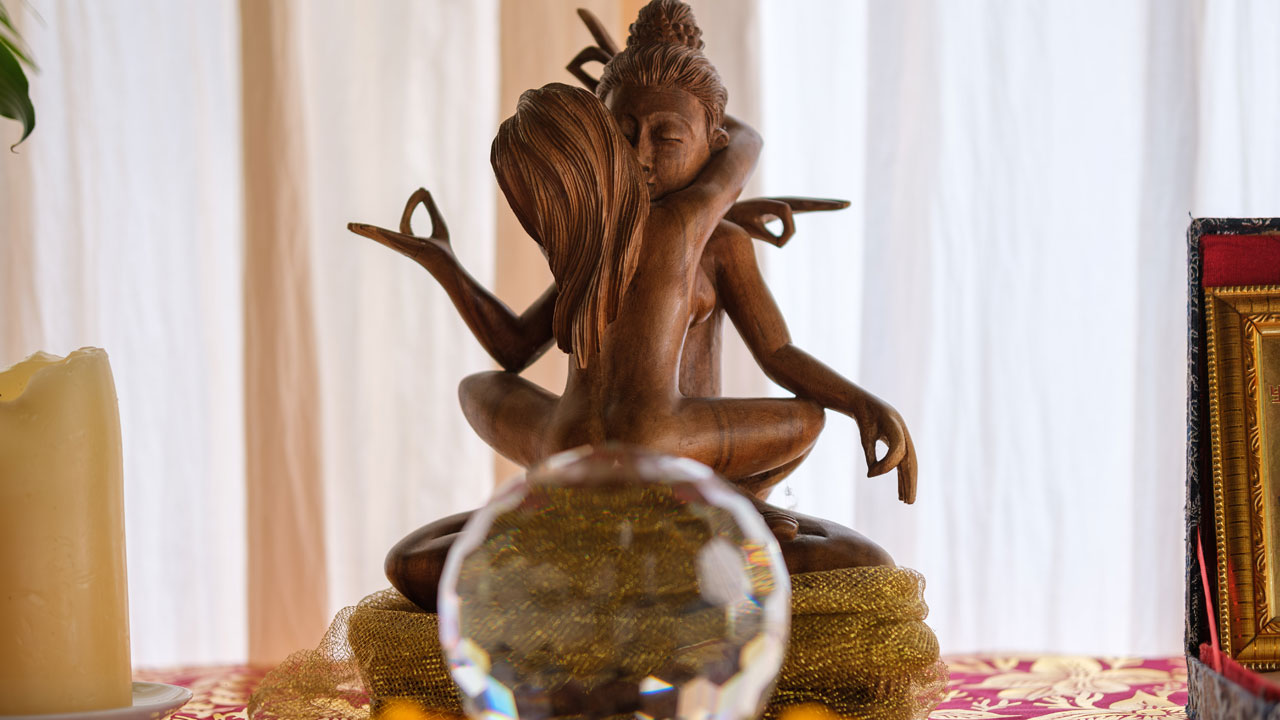
In truth, Tantra has unfolded along two very different paths. Classical Tantra grew out of ancient Hindu and Buddhist traditions, with rituals and philosophy designed to awaken the deepest layers of consciousness. Neo-Tantra reframed those ideas in ways that speak to contemporary needs for intimacy and embodied connection as well as meditation. Though their methods may look very different, both share the same underlying aim of spiritual awakening.
Traditional Tantra & Sacred Sexuality
Though none can say exactly when Tantra definitively developed, classical Tantra experienced a renaissance in India and neighboring regions between the 5th and 13th centuries CE, developing within both Hindu and Buddhist contexts. It was not a single school, but a constellation of teachings found in texts such as the Tantras, Agamas, and Samayas. These texts described ritual technologies, yogic disciplines, and philosophical systems designed to awaken Kundalini, the dormant spiritual energy, and realize the unity of Shiva (pure consciousness) and Shakti (creative power).
Traditional Tantra functioned as an initiatory path. Students received dīkṣā (initiation) from a qualified guru after years of preparation. Instruction was often secret, transmitted only within a specific lineage to ensure the depth and integrity of the practice. Rituals, involving mantra, yantra (sacred geometry), and visualization were acting as tools to expand awareness beyond duality.
Contrary to popular belief, sexual rituals made up only a small and highly advanced part of Tantric practice. For most initiates, sex was treated symbolically, representing the union of the divine masculine and feminine principles. When practiced literally, it was done in ritual form under strict discipline and reverence..
Classical Tantra was grounded in sophisticated metaphysical systems like Kashmir Shaivism, Shakta Tantra, and Vajrayāna Buddhism. These traditions viewed the world as inherently divine, meaning enlightenment was not escape from matter, but full realization of divinity within it. The body, the senses, and even desire were understood as instruments of consciousness rather than obstacles to it.
The final goal was moksha, liberation through direct realization of the self as pure awareness. Sexual energy, mantra, and ritual were all means to awaken that awareness.
Neo Tantra
Neo-Tantra developed in the 20th century as ancient teachings met Western psychology, the sexual revolution, and the human potential movement. Where Classical Tantra was a closed system of initiatory ritual, Neo-Tantra is experiential and relational. It translates Tantric principles into accessible practices. The emphasis is on presence and the ability to stay aware through pleasure and emotion.
Neo-Tantra blends spirituality with psychology. Many practices draw from body-based therapies and trauma healing, recognizing that emotional wounds prevent access to pleasure, intimacy and spiritual awakening. Here, liberation is a return to wholeness, releasing shame and disconnection so that love and awareness can flow naturally.
In Neo-Tantra, enlightenment is lived through embodiment. The focus shifts from renunciation to integration, learning to experience the divine in daily life and in relationship. It has moved away from rigid hierarchy and guru dependence. While this democratization makes Tantra available to more people, it also means that depth and authenticity depend on the integrity of each teacher or school.
Tantric Sex as a Form of Meditation
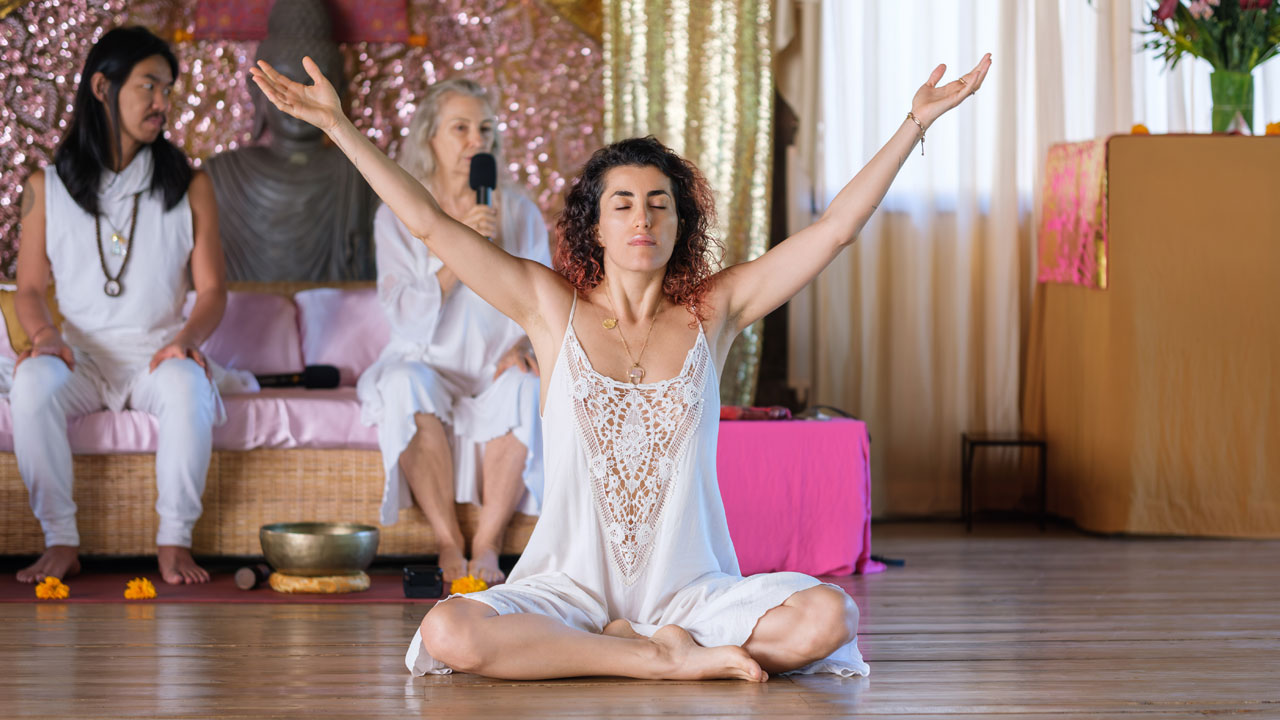
In Tantra, meditation is the art of staying fully present to what is happening inside and around you without judgment or escape. In Neo Tantra, sex becomes one of the most powerful ways to practice that kind of presence.
During Tantric sex, the focus is not on achieving a goal such as orgasm or performance. It is on staying aware through every stage of connection, such as attraction, touch, emotion, arousal, and even stillness. The body provides the sensations, but the meditation is the awareness that is infused into each bodily experience.
When two people meet in this way, they treat intimacy as a mirror for consciousness. Every reaction becomes something to observe rather than suppress or act out. In this sense, Tantric sex trains the mind in exactly the same way seated meditation does, by noticing what arises, relaxing the resistance, and returning to awareness again and again.
The breath is the anchor. It keeps attention from scattering into thought or fantasy. When breath deepens, awareness widens, and both partners begin to sense the rhythm of connection itself. The experience becomes about witnessing the movement of life through the body.
Instead of swinging between tension and release, the body learns to rest in sustained awareness, alert yet relaxed. In this way, Tantric sex becomes meditation because it demands the same qualities of surrender and awareness. The sensations of the body replace the mantra or breath count of traditional practice, but the principle is identical, to stay awake within experience.
Neo Tantra Practices
- Spiritual sex
- Conscious lovemaking rituals
- Eye gazing
- Breathing techniques
- Tantra massage
- Sacred Spot Massage
- Energy orgasms
- Tantra yoga-inspired movement and postures
- Pranayama and bandhas
- Elemental rituals (earth, fire, water, air & ether)
- Group Tantra workshops
- Guided meditations and trance journeys
- Somatic therapy and trauma-informed touch
- Inner child work
- Gestalt dialogue
- Energy circulation practices
- Chakra awareness exercises
- Partnered presence practices
- Conscious communication rituals
- Kundalini awakening practices
- Vigyan Bhairav Tantra Meditation practices
- Rituals utilizing Sacred Geometry and Yantra
- Bringing vital energy in and up rather than down and out
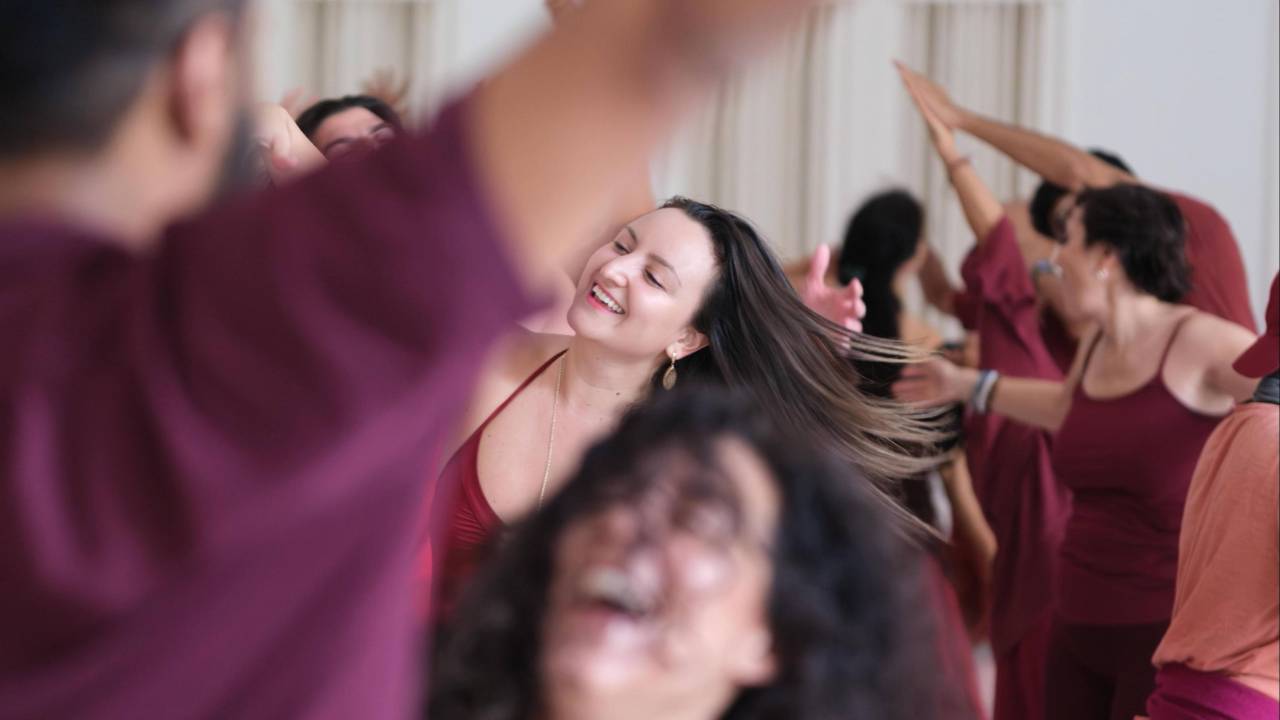
- Dance as Meditation
- Exploring the senses as an awareness practice
Recommended Books & Teachers on Tantra
The following books and authors are recommended for readers who want a deeper, more accurate understanding of both Classical Tantra and Neo-Tantra.
Classical Tantra & Historical Foundations
Tantra from the Ice Age to the New Millennium – Nik Douglas
This is one of the most comprehensive historical surveys of Tantra available in English. Douglas situates Tantra within a broad human context, tracing its roots through prehistoric ritual, Hinduism, Buddhism, art, mythology, and sexuality. The book is well-researched and detailed, making it valuable for readers who want historical scope. It clearly demonstrates that Tantra is far more than sexual ritual and has always included cosmology, meditation, and philosophy.
Books by Madhu Khanna
Madhu Khanna’s work is essential for understanding Tantra from within Indian cultural and religious frameworks. Her books focus particularly on Shakta Tantra, goddess worship, and sacred sexuality as understood in traditional Hindu contexts. She writes as a scholar, offering clarity on symbolism, ritual meaning, and historical development.
The Serpent Power – Arthur Avalon (John Woodroffe)
This text was one of the first serious introductions of Tantric philosophy, Kundalini, and chakra systems to Western audiences. It is academic and technical in nature, drawing directly from Sanskrit sources. While not experiential or relational, it provides important theoretical grounding and helps distinguish traditional Tantric metaphysics from later reinterpretations.
Read: Sir John Woodroffe (Arthur Avalon): The Jurist Who Gave the West Tantra
Books and teachings of Daniel Odier
Daniel Odier is a key modern transmitter of Kashmir Shaivism, a non-dual Tantric tradition. His work emphasizes direct experience and recognition. Odier’s books are often autobiographical or story-based, reflecting how Tantra has traditionally been transmitted through lived encounters. His teaching is particularly valuable for readers interested in non-duality and embodied awareness.
Works by Nik Douglas and Penny Slinger
Douglas and Slinger collaborated on several influential Tantra-related books that integrate art, sexuality, ritual, and consciousness. Their work sits between Classical Tantra and Neo-Tantra, retaining ritual depth while exploring erotic symbolism and embodied spirituality. These books are best suited for readers comfortable engaging with explicit imagery in a spiritual and cultural context.
Tantric writings and discourses by Osho
Osho was instrumental in shaping Neo-Tantra by reframing sexuality as a legitimate doorway into meditation and awareness. His teachings integrate classical Tantric ideas with modern psychology, emotional release, and relationship inquiry. His work clearly influenced most contemporary Neo-Tantra schools and teachers. His commentaries on the Vigyan Bhairav Tantra are particularly relevant for understanding Tantra as a meditation-based path.
Our Approach at Tantra Essence
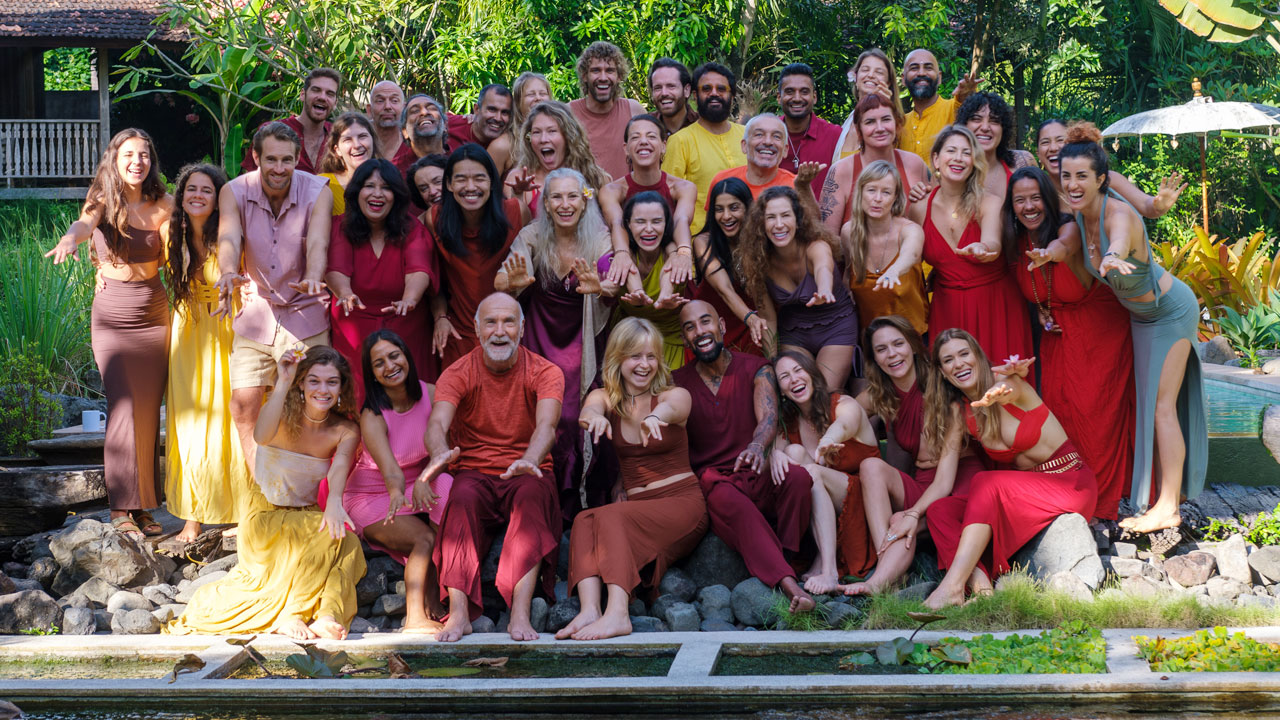
At Tantra Essence, our work is rooted in the original teachings of classical Tantra that views all of life as sacred. Classical Tantra teaches that awakening happens through awareness. It is a path of direct experience, guided by the understanding that consciousness expresses itself through the body, emotion, breath, and relationship.
The ancient Tantric texts, such as the Vigyan Bhairav Tantra and the Tantra Sutras, describe hundreds of ways to enter meditation through everyday experience, such as through the senses, sound, breath and love. This principle forms the heart of our teaching. We bring sacred awareness into every aspect of living.
Building on this classical foundation, we also draw from Neo-Tantra, which brings the Tantric view into contemporary life. In this integration, sacred sexuality becomes a vehicle for awakening as a return to our natural state of openness and sensitivity. We explore how masculine and feminine energies exist in every person, and how their conscious meeting can create balance and wholeness.
We also hold a simple truth at the center of our work: our natural state is one of bliss. Over time, conditioning and fear make us contract and forget this essence. The purpose of Tantric practice is to remember, to clear the patterns that obscure our innate joy and to reconnect with the current of life that is already flowing within. Through meditation and conscious practices, we guide people to rediscover this inner bliss.
Author