Marpa Lotsawa & The Kagyu Lineage in Vajrayana
Apr 01, 2026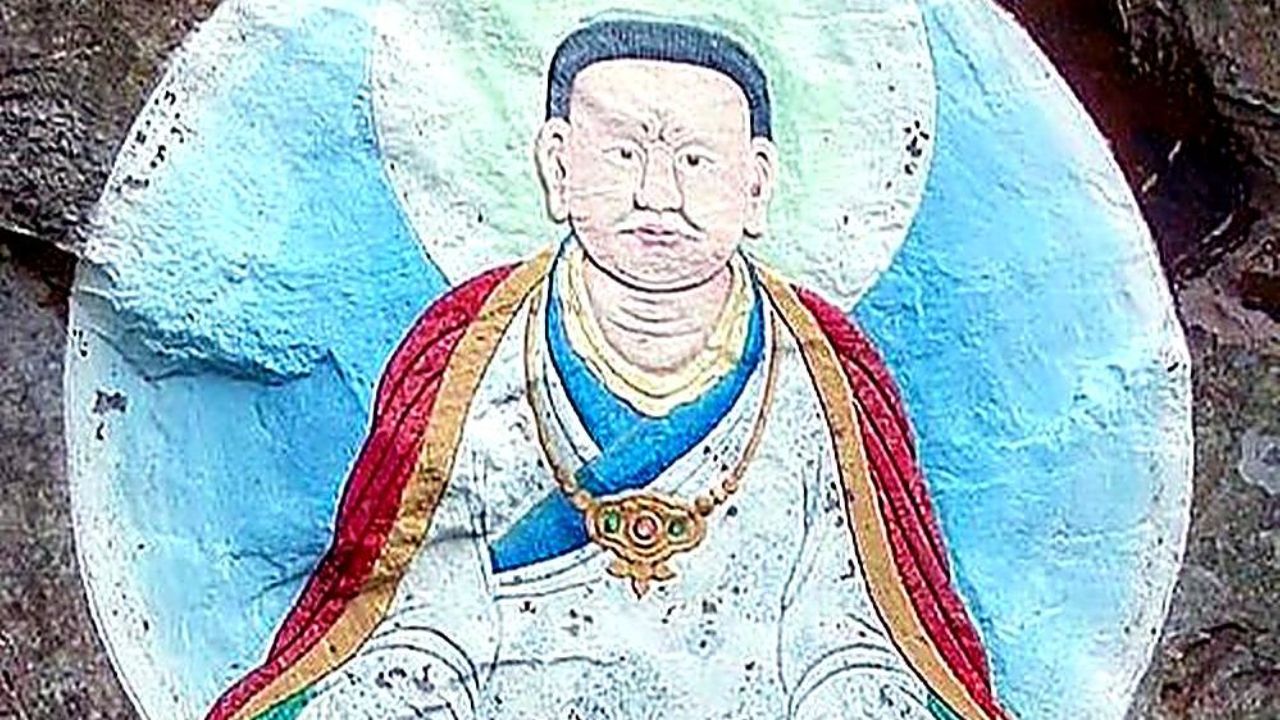
Born in 11th century Tibet into a family that expected him to stay put, Marpa was difficult from the start. He was hot-tempered and unable to accept secondhand knowledge. He studied Buddhist texts and found them pointing at something he couldn't reach from where he stood. The living transmission of Vajrayāna existed in India, he was convinced. So he converted everything he owned into gold, crossed the mountains, and spent twelve years moving between Tibet and India to find it.
Nāropa, who would become his root teacher, tested him without mercy before acknowledging him at all. But Marpa kept showing up. Eventually Nāropa declared him a lineage holder and prophesied that he would carry the heart of Vajrayāna back to Tibet. Before they parted for the last time, he transmitted the Aural Transmission directly to Marpa, the essence of Mahāmudrā.
This article follows Marpa through all of it. We explore the valleys where he grew up, the pilgrimages that consumed his middle years, and the work he did to root Indian Tantra permanently in Tibetan ground.
Early Life and Origins

Marpa Chökyi Lodrö was born around 1012 in the fertile valley of Lhodrak, in southern Tibet. His family, prosperous farmers with local standing, raised him among the practical routines of managing land, livestock, and the seasonal rituals that bound their community. Marpa’s family expected him to shoulder the responsibilities of their land and lineage.
From an early age, Marpa earned a reputation for his restless, willful nature. Local accounts recall a boy quick to challenge authority, whose intensity and appetite for learning set him apart from his siblings. He clashed with elders and resisted conventional discipline, often turning away from village lessons in favor of solitary study. Despite his parents’ hopes, it became clear that Marpa’s ambitions extended beyond tending fields or following ritual.
Marpa’s family sent him first to study with local teachers, and later to the renowned translator Drokmi Lotsawa Shakya Yeshe. Drokmi, newly returned from years of scholarship in India, was among the few Tibetans fluent in Sanskrit and deeply versed in Indian tantric texts. Under Drokmi’s tutelage, Marpa was introduced to Sanskrit scripture, and the demanding practices of translation, skills that would become the foundation of his life’s work. By his early twenties, Marpa’s hunger for knowledge outstripped what Tibetan teachers could offer. He returned to Lhodrak a changed young man, but the teachings he sought lay far beyond his homeland.
Decision to Travel to India
In 11th-century Tibet, Buddhist teachings were fragmented. Marpa’s early studies, even under the most learned local masters, left him unsatisfied. Tibetan Buddhism at the time was marked by scattered lineages, and rumors of profound practices kept alive only in distant Indian monasteries. The greatest teachers, including Drokmi Lotsawa, Marpa’s own mentor, spoke with awe of Indian pandits and siddhas whose living realization went beyond anything available in Tibet.
It was these stories of realized Indian masters, living embodiments of Vajrayāna and Mahāmudrā, that ignited Marpa’s determination. He heard firsthand accounts of teachers such as Nāropa and Maitrīpa, whose lineages were rumored to hold the complete and unbroken Tantric transmissions. Marpa became convinced that true awakening depended on receiving these transmissions directly, in their original form, from those who embodied the practices.
Unlike later periods, travel to India was perilous, expensive, and uncertain. Marpa spent years accumulating gold and treasures, selling family land and heirlooms to finance the voyage and secure teachings. This was a break from his family’s expectations; such an act signified turning away from the comfort and status his birth had afforded him.
The Three Journeys to India
The First Journey: Setting Out as a Seeker
Marpa’s initial journey to India began around age thirty. Motivated by the conviction that authentic Vajrayāna teachings survived only among Indian siddhas, Marpa crossed the treacherous Himalayan passes on foot, braving bandits and harsh weather. He carried with him gold and gifts, offerings painstakingly assembled to secure audiences with the era’s greatest masters. In India, he first sought out the renowned scholar and translator Nāropa at the monastic university of Pullahari. Nāropa tested Marpa rigorously before accepting him as a disciple. Under Nāropa’s guidance, Marpa received foundational empowerments and instructions. This period also included study with other Indian masters, such as Jñānakīrti and Kukurīpa.
The Second Journey: Deepening and Refinement
Despite years of study, Marpa recognized that the transmissions he received were incomplete. Returning to Tibet, he soon realized that true mastery required further initiation and understanding. On his second journey to India, Marpa focused on deepening what he had already received and sought specific empowerments that would solidify his realization. He sought out Maitrīpa, another towering figure in the Indian Buddhist world, whose instructions on Mahāmudrā would become central to Marpa’s teaching. He continued his relationship with Nāropa, receiving further direct instructions and clarification of advanced practices.
The Third Journey: The Seal of Lineage
Marpa’s third and final journey to India came later in his life, driven by a persistent sense that the heart of Nāropa’s transmission had not yet been fully given. Now older, Marpa risked the journey one last time. Guided by dreams and omens, he eventually found Nāropa in the remote forest hermitage of Puṣpahari. Over the course of seven months in retreat, Nāropa entrusted Marpa with the esoteric “Aural Transmission”, oral teachings considered too subtle and direct to be committed to writing. These transmissions, given in the seclusion of forest meditation, were said to confer the deepest realization of Mahāmudrā, unmediated by conceptual study or ritual formality. With this final blessing, Marpa was recognized as a fully empowered lineage holder, authorized to transmit these teachings in their entirety to the next generation.
The Translator’s Work
Marpa’s contribution to Tibetan Buddhism rests above all on his work as a translator and transmitter of Indian tantric teachings. At a time when few Tibetans could access the original Sanskrit, Marpa became one of the era’s most accomplished “lotsawa”, translators able to bridge entire worlds of practice.
Marpa brought Indian paṇḍitas, most notably Chitherpa and Kukkuripa, back with him to Tibet, so that the translation process could be anchored in authentic oral transmission. Working together, they rendered core Vajrayāna texts such as the Cakrasaṃvara Tantra, the Hevajra Tantra, and their associated sādhanās (ritual practice manuals) directly into Tibetan.
Return to Tibet and Householder Life
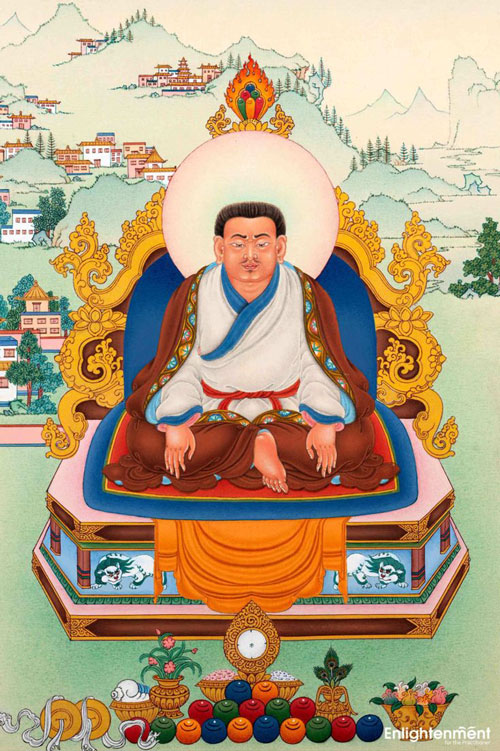
After completing his journeys to India, Marpa returned to Lhodrak with a reputation as one of Tibet’s most learned and accomplished yogis. Unlike many Buddhist teachers of his time, Marpa chose not to become a celibate monk or retreat entirely from society, remaining connected to his family lineage . Instead, he embodied the ideal of the “householder-yogi”, a practitioner who maintains family, work, and spiritual discipline side by side. Marpa married Dagmema and together they raised children and managed the daily affairs of their farmstead.
Rather than separating teaching from daily life, Marpa wove his spiritual practice into the routines of family and rural labor. His home became a gathering place for students from across Tibet. Marpa offered initiations and teachings in the same rooms where his family ate and worked.
Accounts from his disciples describe a household alive with ritual activity, of fields tilled by day, sacred texts translated and recited at night, offerings and ceremonies performed in the presence of children and livestock.
Marpa’s ability to integrate the deepest tantric practices into ordinary life established a new model for spiritual attainment in Tibet. His example demonstrated that realization could be pursued within the fabric of family and work. Disciples such as Milarepa and Ngok Chöku Dorje, completed cycle of transmissions at Marpa’s home, laying the foundation for the Kagyu lineage’s emphasis on direct, experiential realization.
Return to Tibet and Householder Life
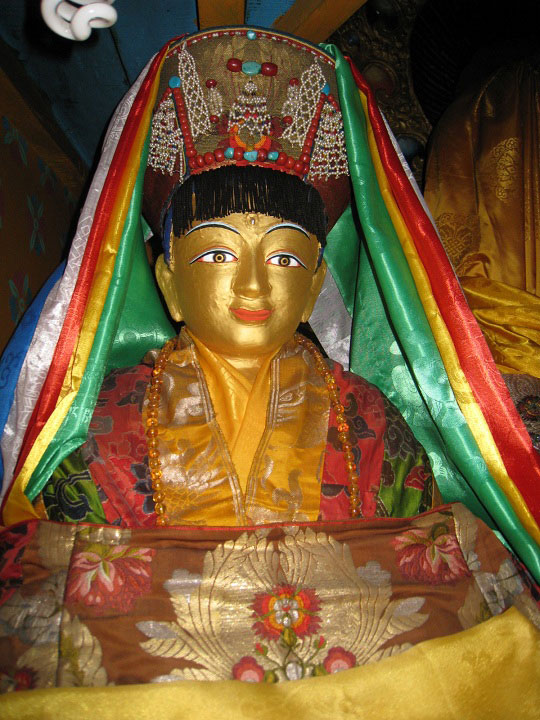
Milarepa met Marpa in the late 11th century, after a life scarred by violence and desperation. Born in Tibet, Milarepa’s early years were marked by the loss of his father and the cruel theft of his family’s inheritance. Under his mother’s urging, he learned black magic to avenge these wrongs, killing many and earning a reputation for dark sorcery. Consumed by regret, Milarepa sought redemption and heard of Marpa the Translator.
Milarepa’s journey to Marpa was not a single meeting, but a sequence of trials. He arrived at Marpa’s home as a penitent stranger, hoping for immediate teaching. Instead, Marpa refused to grant him teachings or initiations. For years, Milarepa served Marpa with relentless physical labor, hauling stones, building towers, destroying the same towers, and facing repeated humiliation and rejection.
Other students received instructions and blessings, while Milarepa was ordered to dismantle his own work and begin again, sometimes falling ill or collapsing from exhaustion.
Marpa’s wife, Dagmema, observed Milarepa’s hardship. Quietly, she tried to ease his suffering, providing food and once even attempting to intervene on his behalf. Still, Marpa remained resolute. Only when Milarepa reached utter despair and surrender did Marpa reveal the truth to him, as he did with his other major disciples , that these ordeals were deliberate purification, necessary to burn away the karma of Milarepa’s violent past. With this, Marpa finally initiated Milarepa into the core teachings, the Mahāmudrā and the Six Dharmas of Nāropa, passing on the full transmission he had received from his own masters.
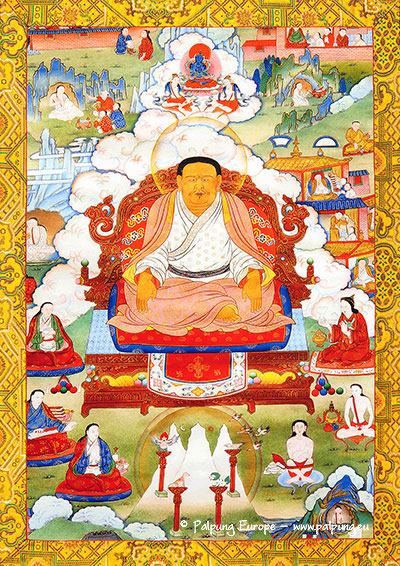
Tantric Legacy and the Kagyu Lineage
Marpa’s greatest legacy was the establishment of the Kagyu lineage, one of the four principal schools of Tibetan Buddhism. The word “Kagyu” means “oral lineage” or “lineage of direct instruction.”.
The next link in the chain was Gampopa, a former physician and monk who combined the Kagyu yogic tradition with the discipline and structure of Buddhist monasticism. Gampopa’s students, most notably the First Karmapa, established the principal Kagyu sub-schools, including the Karma Kagyu, Drikung Kagyu, Drukpa Kagyu, and Barom Kagyu. Each of these branches maintained the core transmissions Marpa had received, especially Mahāmudrā and the Six Yogas, and preserved their oral, practice-based character.
Through Marpa’s work, the Kagyu lineage became known for its emphasis on direct transmission from teacher to student, a focus on meditative retreat, and the pursuit of realization through both tantric and contemplative means.
The Six Dharmas of Nāropa
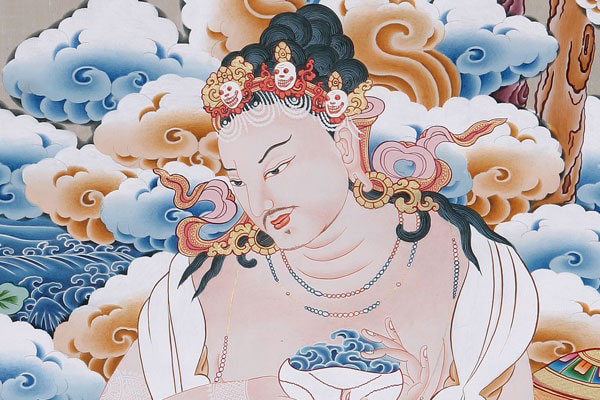
The Six Dharmas of Nāropa are a set of advanced completion stage yogas within Vajrayāna Buddhism. Their goal is the full realization of Mahāmudrā, the union of great bliss (mahāsukha) and emptiness within this lifetime, using this very body as the path.
While Nāropa compiled and systematized these practices in India based on instructions from his own guru, Tilopa, it was Marpa Chökyi Lodrö who received them in full and carried them across the Himalayas into Tibet. He is the original Tibetan transmitter of these yogas. Without Marpa, the Six Dharmas, especially in their oral, body-to-body transmission, would not have entered the Tibetan world in their complete form.
The Origins of the Six Dharmas
Nāropa (1016–1100) received these practices through direct experience and initiation from Tilopa, who gathered them from a constellation of earlier Indian siddhas such as Nāgārjuna (the tantric alchemist, not the Madhyamaka philosopher), Lawapa, Krishnacharya, and Luipada. The teachings drew heavily from three central Anuttarayoga Tantras: the Guhyasamāja Tantra, Hevajra Tantra, and Cakrasaṃvara Tantra, texts concerned with transforming desire, death, and perception at the subtlest level of being.
They are completion stage yogas, only to be practiced after a foundation in generation stage deity yoga and the preliminaries (ngöndro). They require empowerment (wang), oral instruction (lung), and personal guidance (tri) from a lineage-holding guru.
Marpa’s Role: From Translator to Transmitter
On his first journey, Marpa studied the foundational tantric texts and received initiation into the Hevajra and Cakrasaṃvara cycles. But Nāropa did not immediately grant the Six Dharmas. He tested Marpa, repeatedly and intensely, to ensure he had purified his karma and cultivated the inner strength to handle the practices.
During the second journey, Marpa received further instruction and clarifications, especially from Maitrīpa on Mahāmudrā. However, the complete transmission of the Six Dharmas did not occur until the third journey, when Nāropa, now living in retreat at Puṣpahari, bestowed the Aural Transmission (snyan brgyud), a direct oral lineage considered too refined to be written down.
This transmission included the Six Dharmas as practiced in Nāropa’s own body, refined through experience, not abstracted into theory. Nāropa formally declared Marpa as his lineage holder, and prophesied that Marpa would carry these yogas into Tibet, initiating a new line of awakened householders.
The Six Dharmas in Practice: A Yogic Curriculum
Each of the Six Dharmas builds upon the previous:
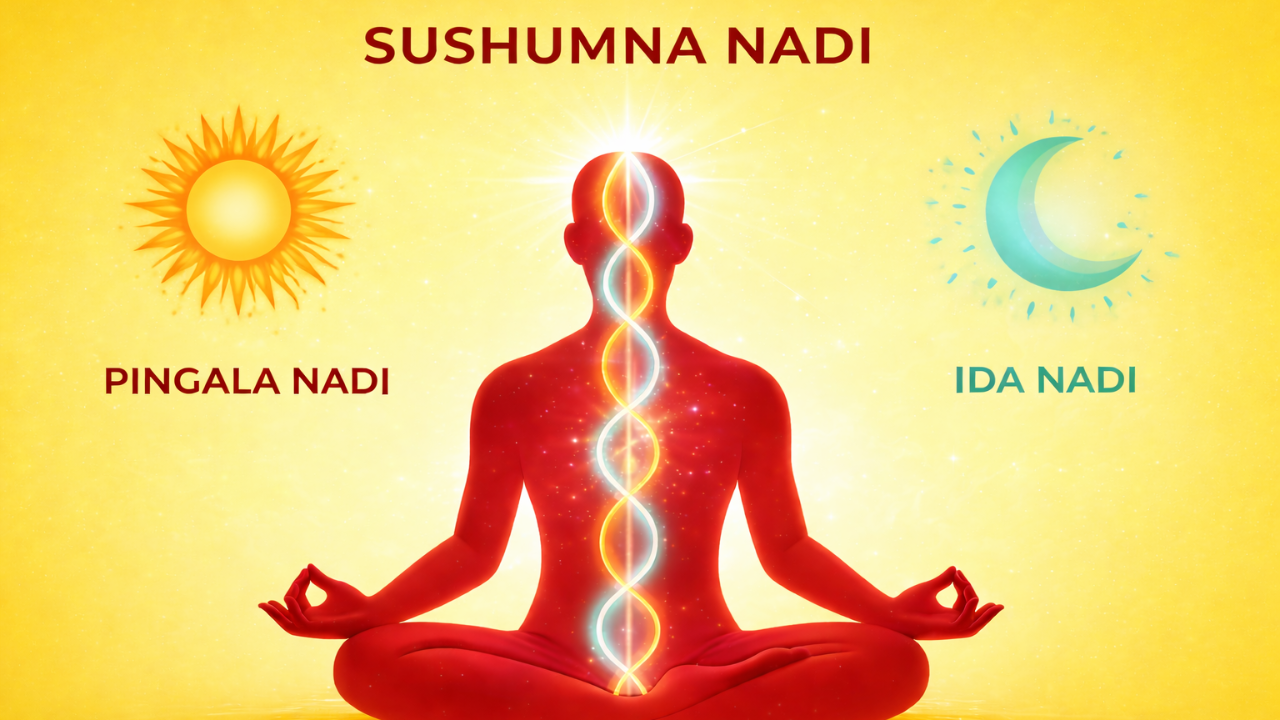
- Tummo (inner heat) is the foundation. Practiced with vase breathing (kumbhaka), visualizations of the central channel (avadhūti) and syllables (especially the AH at the navel), tummo melts the white bodhicitta drop stored in the crown chakra, generating the four blisses.
- Illusory Body trains the practitioner to dissolve clinging to appearance. One learns to see the self, body, and world as luminous projections, like moonlight on water. Clear Light accesses the luminous ground of mind, particularly during
- Dream Yoga develops awareness during the dream state. The practitioner remains lucid, uses the dream to practice deity yoga or cut through habitual patterns, and learns to recognize that all appearances, waking or dreaming, are equally empty.
- Bardo Yoga trains one to recognize clear light and maintain meditative awareness in the bardo after death. It is often said that successful dream yoga is the best preparation for successful bardo yoga.
- Phowa is used at the moment of death to project consciousness into a pure land or state of liberation. Unlike other practices, phowa can be done even by those who haven’t mastered the previous five, if guided by a qualified teacher.
Marpa's Embodiment: The Householder Yogin
One of Marpa’s greatest contributions was to show that you do not need to be a monastic to realize these teachings. Unlike other Tibetan masters, Marpa lived as a householder. He had a wife (Dagmema), children, and land to manage. He practiced tummo between planting and harvest. He transmitted the Six Dharmas while raising a family.
Sacred Sites Dedicated To Marpa
Lhozhol Ngamdzong Ngorong Monastery (Lhodrak, Tibet)
Founded by Marpa Chökyi Lodrö in the 11th century, this monastery sits on the southern slopes of Lhodrak and is the most direct site linked to Marpa’s life. At 3,800 m elevation, it’s surrounded by alpine streams and juniper forests. The main prayer hall features murals and shrines that chronicle Marpa’s three visits to India, his encounters with Naropa, and his role in bringing the full transmission of Vajrayāna back to Tibet. Annual ceremonies like the Marpa Drupchen festival reenact elements of his journey and inner practices. The site also preserves rare manuscripts tied to his years translating Buddhist scriptures.
Sekhar Gutok Tower (Lhodrak, Tibet)
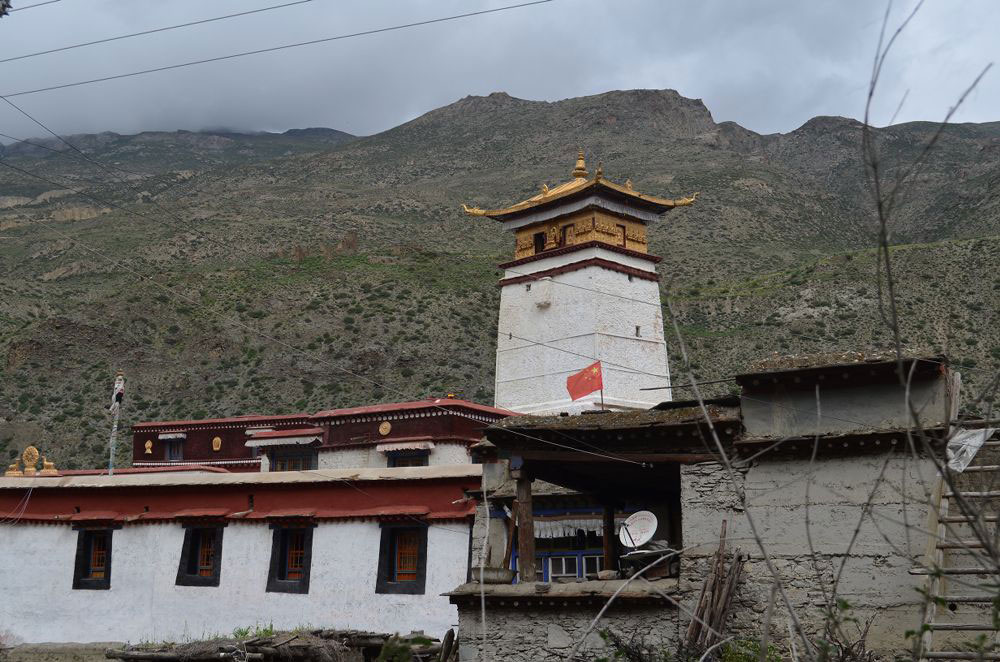
Not far from Marpa’s seat is the dramatic nine-story sky tower commissioned by Marpa for Milarepa, his most famous student and key pillar within the Kagyu lineage. This structure is a physical symbol of Milarepa’s purification trials under Marpa’s guidance and is deeply associated with stories of resilience and the living transmission that Marpa upheld.
Stongdey Monastery (Zanskar Valley, Ladakh, India)
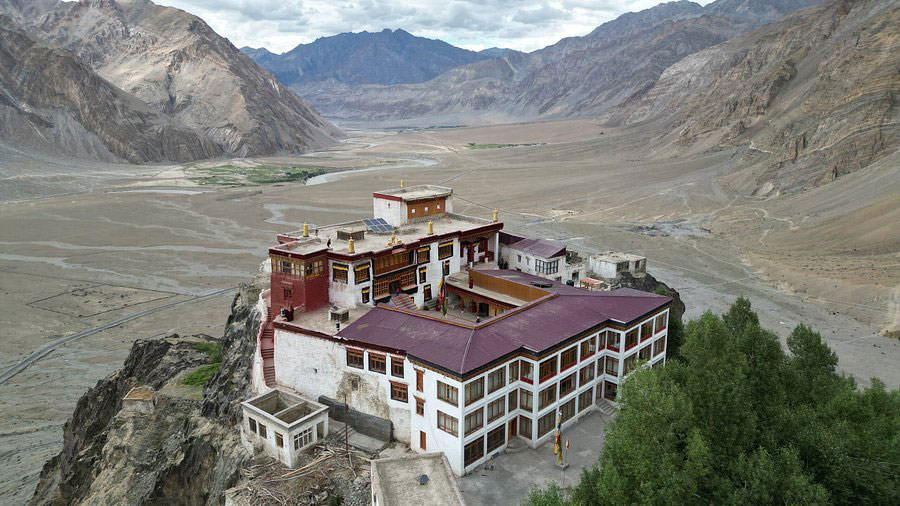
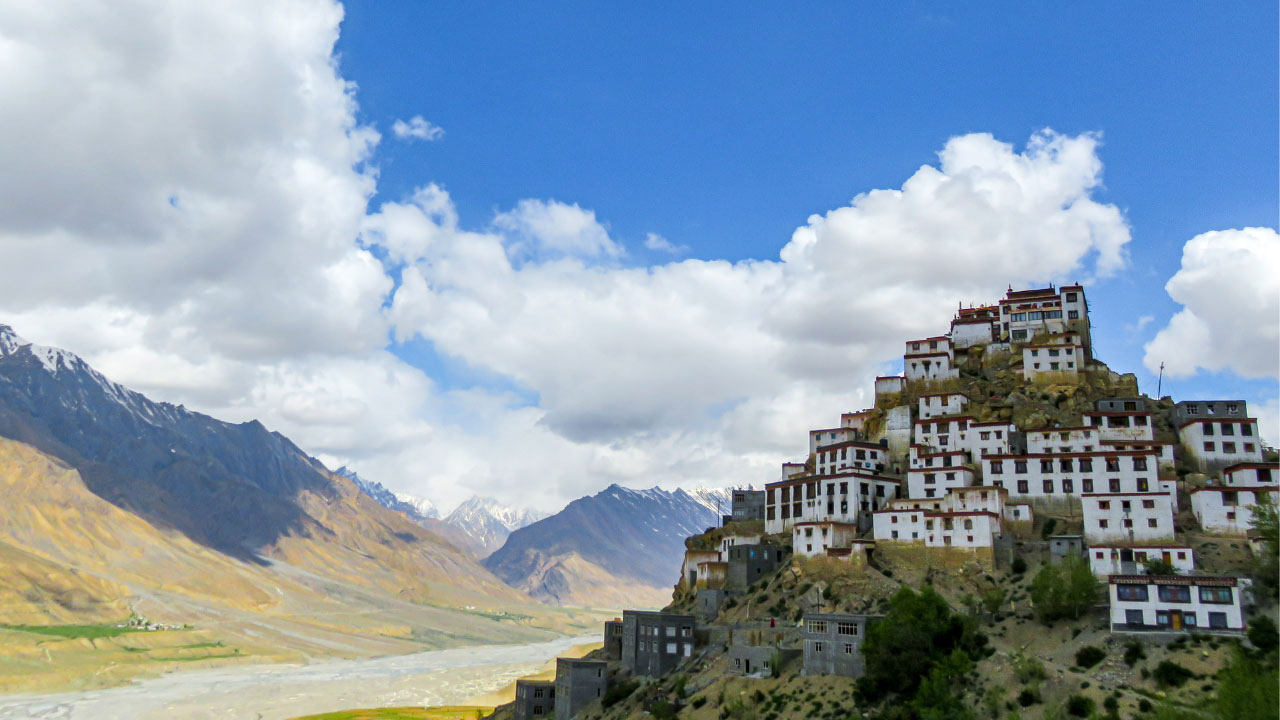
While not in Tibet, Stongdey Monastery was established by Marpa in 1052 CE during his travels, marking one of the few surviving physical sites he founded outside Tibet. The monastery overlooks the Zanskar River valley and retains art and architecture from the time of Marpa’s visit. It represents Marpa’s broader impact across the Himalayan Buddhist world.
Nalanda and Pullahari Region (India/Nepal)
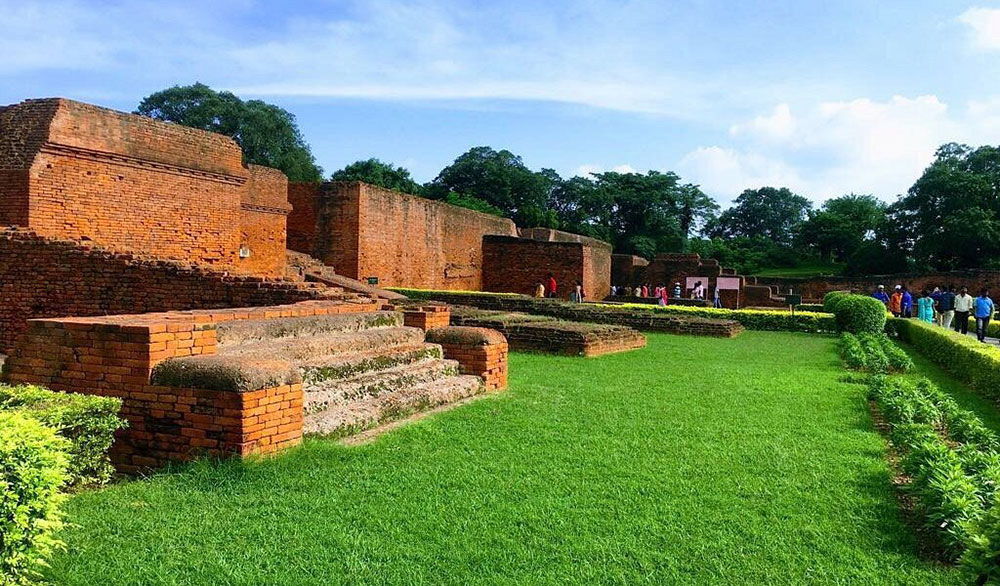
Though the original Nalanda monasteries no longer stand intact, the region of Pullahari, where Marpa studied with Naropa, remains a core pilgrimage area. From here, Naropa issued empowerments, tested Marpa during multiple visits, and eventually gave him the final teachings, including the Aural Transmission. Pilgrims walk the terrain in homage to Marpa’s twelve years of dedication and travel expenses paid through sacrifice, reflection, and unwavering devotion.
Khumbum Stupa & Pilgrimage Sites Near Swayambhunath (Nepal)
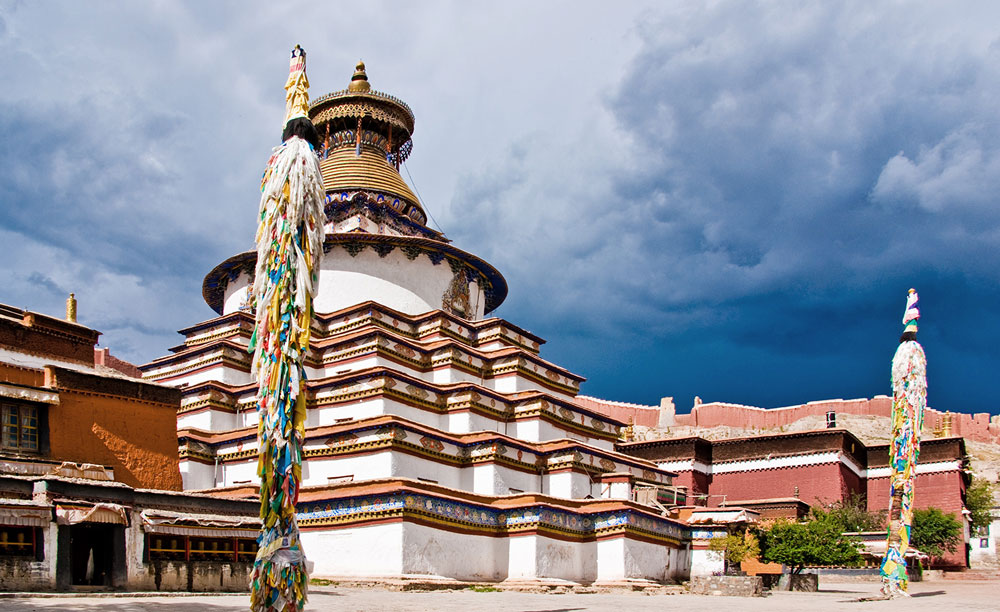
Marpa is depicted in iconography around the Khumbum stupa complex, including pilgrim routes to Swayambhunath, which appear in historiographies linking Marpa and other Tibetans in dialogue with Indian masters, Naropa taught in that region, and Marpa studied there under other great Indian gurus. The painted depictions of Marpa and Milarepa in cave shrines reinforce the lineage that Marpa transmitted.
FAQ
Who is MARPA in Buddhism?
Marpa Chökyi Lodrö is one of the most pivotal figures in Tibetan Buddhism. Born in the southern part of Tibet, he was untamed compared to other children in his community, showing from a young age a fierce determination to seek truth beyond the limits of his family lineage. He began studying with Tibetan teachers, but his hunger for authentic teachings drove him to India, where he spent twelve years over three years of travel, crossing dangerous terrain and sacrificing his entire inheritance to cover the travel expenses.
Marpa spent these years learning from renowned Indian Buddhist masters, including Nāropa, Maitrīpa, and other great Indian gurus. At Nalanda and other centers of learning, including places connected to the Nalanda translation committee, he received profound instructions. Naropa taught Marpa the essential Tantric practices, including Mahāmudrā and the Six Dharmas. During their third visit, Naropa formally declared Marpa his lineage holder and gave him the final teachings.
Who was MARPA's wife?
Marpa’s wife was Dagmema, a powerful and devoted woman who played a crucial role in holding their household together while Marpa spent years abroad. After Marpa returned home to Tibet, Dagmema supported him as he taught students and continued his translation work. Unlike many spiritual figures of his time, Marpa Chökyi Lodrö did not abandon his family lineage. Instead, he lived as a householder, balancing practice, teaching, and domestic life.
While Marpa was often severe with his major disciples, including his famous student Milarepa, Dagmema brought a grounding presence to their shared life. During the difficult years when Marpa refused to teach Milarepa, Dagmema showed compassion, feeding and caring for the student even when Marpa withheld blessings. Her presence in Marpa’s life illustrates the unique integration of worldly and spiritual life that he modeled, grounded in family, built on devotion, and held in the fire of deep practice.